01. Edit your form online
Type text, add images, blackout confidential details, add comments, highlights and more.

Type text, add images, blackout confidential details, add comments, highlights and more.

Draw your signature, type it, upload its image, or use your mobile device as a signature pad.

Send it via email, link, or fax. You can also download it, export it or print it out.
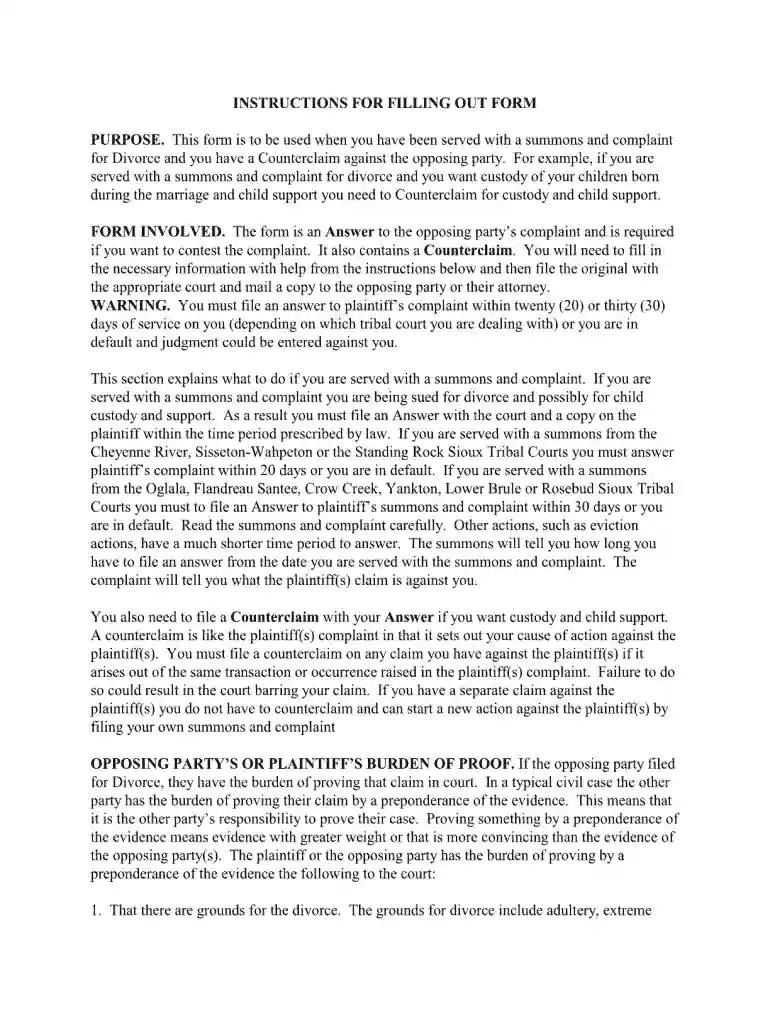
The New York Divorce Answer Counterclaim Form is a legal document used during divorce proceedings in the state of New York. When one spouse files for divorce, the other spouse, known as the respondent, can file this form in response. It allows the respondent to answer the claims made in the divorce petition and to assert their own counterclaims. This form is essential for expressing agreement or disagreement with the petitioner's statements and for introducing any additional demands or defenses.
The New York Divorce Answer Counterclaim Form includes several critical components:
The form can be acquired from several sources:
Typically, the respondent in a divorce case uses this form. It is particularly relevant for:
Submitting the New York Divorce Answer Counterclaim Form within the specified time frame is crucial, as it:
New York has distinct rules that affect the use of this form:
Consider a scenario where a spouse disagrees with the petitioner’s allegations of cruelty. The form allows the respondent to deny these allegations and, simultaneously, assert a counterclaim for shared custody of children, providing a structured means to address grievances legally.
Understanding and properly using the New York Divorce Answer Counterclaim Form is crucial for respondents to protect their rights and interests during divorce proceedings.
We've got more versions of the new york divorce answer counterclaim form form. Select the right new york divorce answer counterclaim form version from the list and start editing it straight away!
| Versions | Form popularity | Fillable & printable |
|---|---|---|
| 2017 | 4 Satisfied (34 Votes) |
At DocHub, your data security is our priority. We follow HIPAA, SOC2, GDPR, and other standards, so you can work on your documents with confidence.