01. Edit your resume rubric online
Type text, add images, blackout confidential details, add comments, highlights and more.

Type text, add images, blackout confidential details, add comments, highlights and more.

Draw your signature, type it, upload its image, or use your mobile device as a signature pad.

Send resume rubric template via email, link, or fax. You can also download it, export it or print it out.
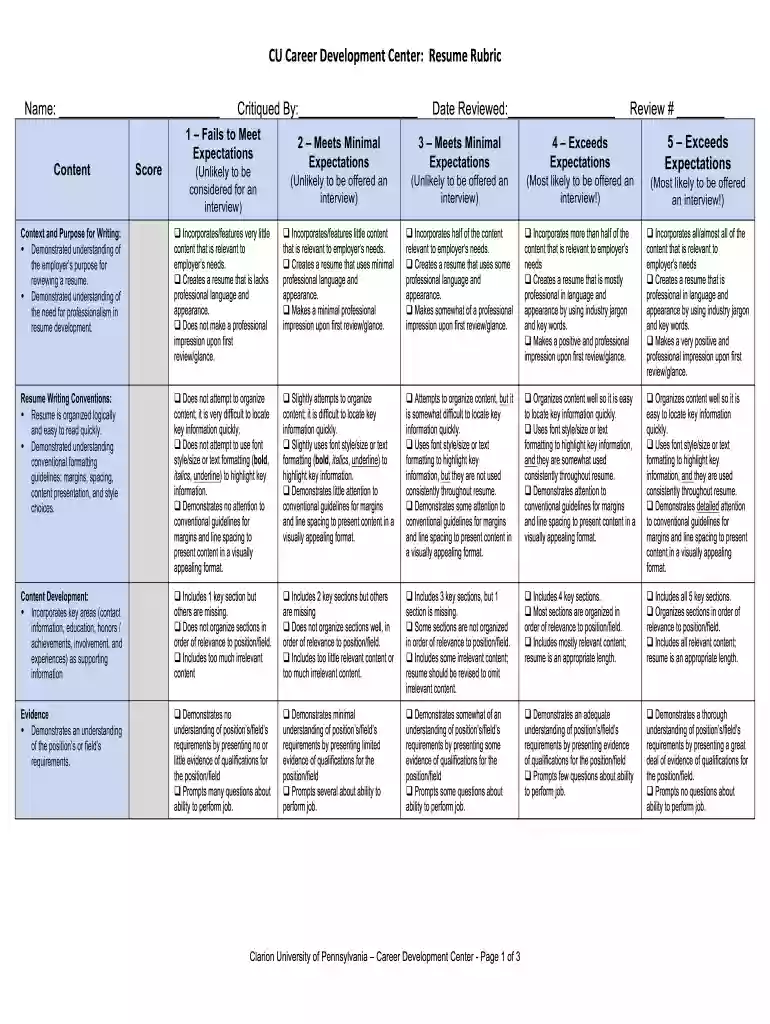
A resume rubric template serves as a systematic tool for evaluating resumes, enabling both job seekers and educators to assess the effectiveness of a resume against established criteria. This structured evaluation method promotes clarity and consistency in the hiring process.
Content Relevance: Evaluators assess how effectively the resume content aligns with the job description. This includes the inclusion of relevant experiences, skills, and accomplishments.
Organization: This criterion examines the logical flow of information. A well-organized resume is easy to read and visually appealing, making it simpler for recruiters to find key information quickly.
Mechanics: Proper grammar, punctuation, and spelling fall under this category. Errors in these areas can create a negative impression and may lead to disqualification from consideration.
Specific Sections: The rubric evaluates critical sections such as:
A typical scoring system ranges from one to five, with clear descriptions for each level. For example:
Score of One: Indicates that the criteria have not been met at all. The resume lacks key information or contains significant errors in formatting and content.
Score of Two: Represents minimal fulfillment of criteria, showcasing major areas needing improvement.
Score of Three: Signifies a satisfactory level, where the resume meets some fundamental requirements but lacks depth or refinement.
Score of Four: Reflects a strong grasp of the criteria with only minor issues noted.
Score of Five: Indicates excellence, where the resume fully meets all expectations and stands out among peers.
Using a resume rubric template can significantly enhance the hiring process in various contexts:
For Job Seekers: Individuals can self-assess or seek peer reviews based on the rubric criteria, allowing them to identify strengths and weaknesses in their resumes.
For Educators: Career centers or academic institutions can implement the rubric to provide structured feedback to students preparing entry-level resumes for internships or jobs.
For Employers: Human resources professionals can use the rubric to standardize evaluations during the hiring process, resulting in more objective assessments.
Consistency and Fairness: By applying the same evaluation criteria across all candidates, employers can ensure a level playing field.
Constructive Feedback: The detailed scoring system allows individuals to receive specific guidance on how to improve their resumes, which can lead to better job applications in the future.
Time Efficiency: Using a structured template helps hiring managers quickly identify top candidates without subjective biases affecting their evaluations.
While many resume rubric templates exist, tailoring them can make them even more effective:
Targeted Criteria: Customize the rubric based on the specific job role or industry standards to ensure it accurately reflects what employers in that field require.
Weighting Factors: Adjust scoring weight for various categories according to their importance for the specific position being filled. For example, technical skills may be weighted more heavily for a tech position, whereas soft skills might be more crucial for customer service roles.
Despite their usefulness, some challenges can arise when implementing a resume rubric template:
Subjectivity: Even with a detailed rubric, personal biases may still influence scores. It is essential to maintain objectivity and ideally have multiple reviewers.
Overemphasis on Structure: While format is essential, an overemphasis on organization can lead to overlooking unique and creative elements that may set a candidate apart.
Need for Updates: Job market trends often change, necessitating periodic updates to rubric criteria to remain relevant.
Incorporating the right resume rubric template into your evaluation process can significantly improve how resumes are assessed and increase the chances of securing ideal candidates for any position.
We've got more versions of the resume rubric form. Select the right resume rubric version from the list and start editing it straight away!
| Versions | Form popularity | Fillable & printable |
|---|---|---|
| 2017 | 4.8 Satisfied (43 Votes) |
At DocHub, your data security is our priority. We follow HIPAA, SOC2, GDPR, and other standards, so you can work on your documents with confidence.