






Definition & Purpose of the Alaska Oil and Gas Corporation Net Income Tax Return
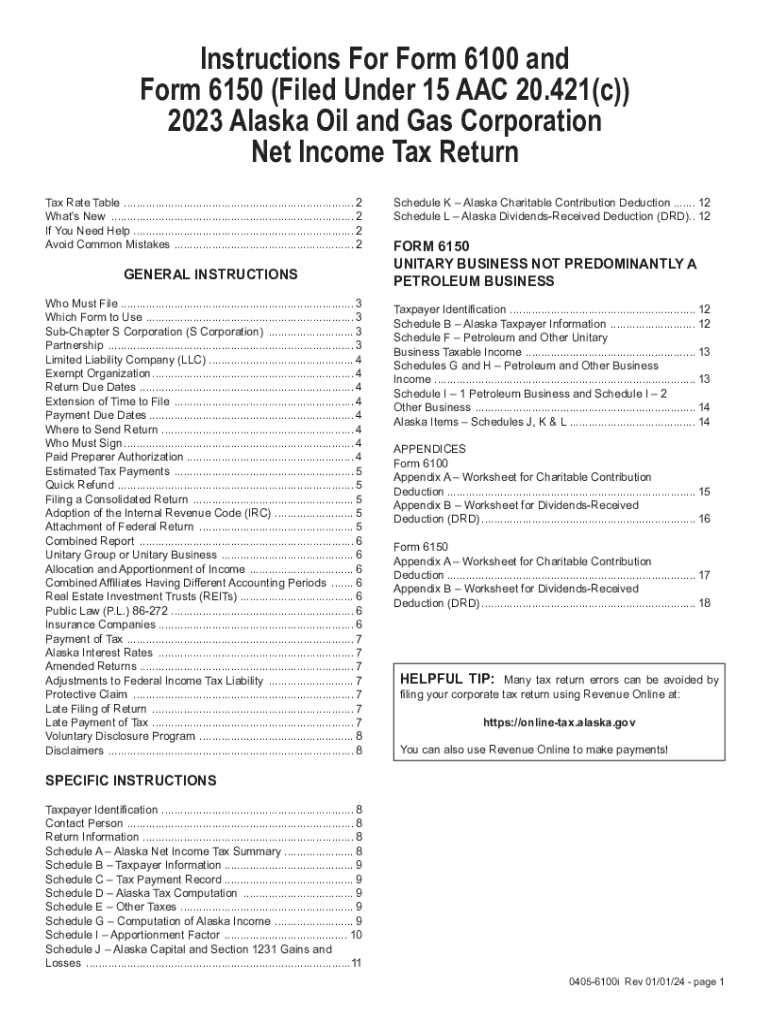
The Alaska Oil and Gas Corporation Net Income Tax Return is a specialized tax document required for corporations involved in the oil and gas industry within the state of Alaska. This return is used to report the corporation's net income and calculate the appropriate state tax obligations. The form plays a critical role in ensuring corporations comply with Alaska's tax regulations, which include specific considerations for the oil and gas sector.
Steps to Complete the Alaska Oil and Gas Corporation Net Income Tax Return
-
Gather Required Documents: Start by collecting financial statements, profit and loss statements, balance sheets, and any prior tax returns. Ensure all data is current for the tax year.
-
Determine Applicable Forms: Depending on the corporation type, ensure you have Forms 6100 and 6150 ready for submission. This will impact the reporting structure.
-
Calculate Net Income: Use financial documents to accurately determine the net income, factoring in revenues, expenses, and any allowable deductions specific to the oil and gas sector.
-
Complete Form Sections: Fill in all required information, ensuring accuracy in financial calculations. Pay attention to fields like dividends and charitable contributions.
-
Review for Mistakes: Double-check entries for any errors or omissions, as these can lead to compliance issues and penalties.
-
Submit the Form: Utilize online filing systems for expedited processing or mail physical copies if preferred. Ensure submission before the stipulated deadlines.
Who Typically Uses the Alaska Oil and Gas Corporation Net Income Tax Return
This tax return is primarily used by corporations operating within Alaska's oil and gas industry, such as:
- Large Corporations: Companies with significant operations in exploration, extraction, or processing of oil and gas in Alaska.
- S Corporations and Partnerships: Entities that require specific tax treatment due to their structure, needing detailed reporting under Alaska's requirements.
- Unitary Businesses: Businesses part of a combined group that needs to report taxes jointly due to interconnectivity of operations.


Required Documents for Filing
For precise reporting, a variety of documents are necessary, including:
- Annual Financial Statements: Provides a snapshot of the corporation's financial activities over the reporting period.
- Balance Sheets and Income Statements: Offers detailed insights into the income, expenses, and financial health.
- Previous Tax Returns: Useful references to ensure consistency and identify changes year-over-year.
Ensuring all documents are accurate and up-to-date is crucial for a smooth filing process.
Legal Use of the Alaska Oil and Gas Corporation Net Income Tax Return
Filing this return correctly is a legal requirement for compliant operation in Alaska. It involves:
- Adhering to State Regulations: Align with Alaska's specific tax laws for oil and gas operations.
- Accurate Reporting: Misreporting can lead to audits and potential penalties, making precision essential.
- Disclosure Obligations: All activities and financial transactions related to oil and gas must be transparently declared.
Filing Deadlines and Important Dates
- Annual Filing Date: Generally coincides with federal tax deadlines but check any state-specific requirements for exact dates.
- Estimated Tax Payments: Corporations must meet deadlines throughout the year as set by state guidelines to avoid interest on late payments.
Accurate observance of these dates ensures compliance and prevents any unnecessary penalties or interest charges.
Penalties for Non-Compliance
Failure to file or incorrectly filing can result in severe consequences, such as:
- Financial Penalties: Includes fines or increased tax liabilities.
- Interest on Late Payments: Accrues from the due date until the tax is paid.
- Legal Repercussions: Persistent non-compliance can lead to further legal actions by the state.
Understanding these risks underscores the importance of accurate and timely filing.
State-Specific Rules and Considerations
Alaska has unique tax considerations for the oil and gas industry:
- Special Deductions and Credits: Corporations can avail themselves of specific deductions related to oil and gas exploration investments.
- Combined Reporting Requirements: Unitary businesses must comply with combined reporting regulations to accurately reflect intercompany activities.
These state-specific rules require meticulous attention to ensure full compliance and optimal tax liability handling.
Key Elements to Ensure Compliance
- In-Depth Understanding of Forms: Familiarize yourself with Forms 6100 and 6150, applicable to different business structures.
- Attention to Detail in Reporting: Carefully list income, deductions, and credits to reflect accurate tax obligations.
- Continuous Update of Tax Codes: Stay informed about any changes in Alaska's taxation laws affecting the oil and gas sector.
These proactive measures are crucial for successful filing and minimizing liability risks for the corporation.