Definition and Meaning
The "Nebraska Legislature - Revised Statutes Chapter 24" refers to one of the chapters within the comprehensive legal code that governs the judicial branch and court-related matters in the state of Nebraska. This chapter outlines various rules, procedures, and definitions that apply to the judicial system. For legal professionals and entities involved in legal proceedings in Nebraska, understanding Chapter 24 is fundamental to ensure compliance and effective navigation of the state's court system. This chapter addresses a range of topics, from court jurisdiction to the appointment and duties of judicial officers, offering a detailed legal framework that is crucial for judiciary operations.
Key Elements of the Nebraska Legislature - Revised Statutes Chapter 24
Chapter 24 encompasses several key elements critical for legal practitioners and judicial members. It specifies:
- Court Structure and Jurisdiction: Defines the organization and jurisdiction of different courts within Nebraska, including district courts, county courts, and specialty courts.
- Judicial Appointments and Responsibilities: Details the process for appointing judges, including qualifications and duties specific to each judicial office.
- Procedural Rules: Provides guidelines on how various legal processes are conducted within the courts, including filing procedures, brief submissions, and case management.
- Disciplinary Actions and Ethics Oversight: Outlines the procedures for handling ethical violations and misconduct among judicial officers, ensuring accountability and integrity within the judiciary.
Legal Use of the Nebraska Legislature - Revised Statutes Chapter 24
Attorneys, judges, and other legal practitioners use this chapter to guide their actions and decisions within the Nebraska judicial system. Key uses include:
- Court Proceedings: Ensures that all court actions are conducted in compliance with state laws, providing a framework for fair and consistent judicial processes.
- Judicial Review: Acts as a reference for reviewing court decisions and actions, ensuring they adhere to the appropriate legal standards.
- Legal Education and Training: Serves as an educational tool for law students and new practitioners to understand the structure and procedural requirements of Nebraska courts.
Steps to Complete Processes in Chapter 24
Legal processes within Chapter 24 are defined by a series of steps to ensure order and efficiency:
- Initial Filing: Submit required documents to the court clerk based on the procedural guidelines.
- Pre-Trial Procedures: Engage in discovery and pre-trial conferences, following the rules on evidence submission and case management.
- Trial and Hearing: Conduct trials as outlined, adhering to evidence and testimony protocols.
- Post-Trial Motions: File motions such as appeals or rehearings if necessary, using the chapter's guidelines on deadlines and acceptable arguments.
- Order of Judgment: Ensure all judgments are documented and enforced in line with procedural rules.
Important Terms Related to Chapter 24
Understanding specific legal terms is vital for interpreting Chapter 24 accurately:
- Jurisdiction: The official power to make legal decisions and judgments.
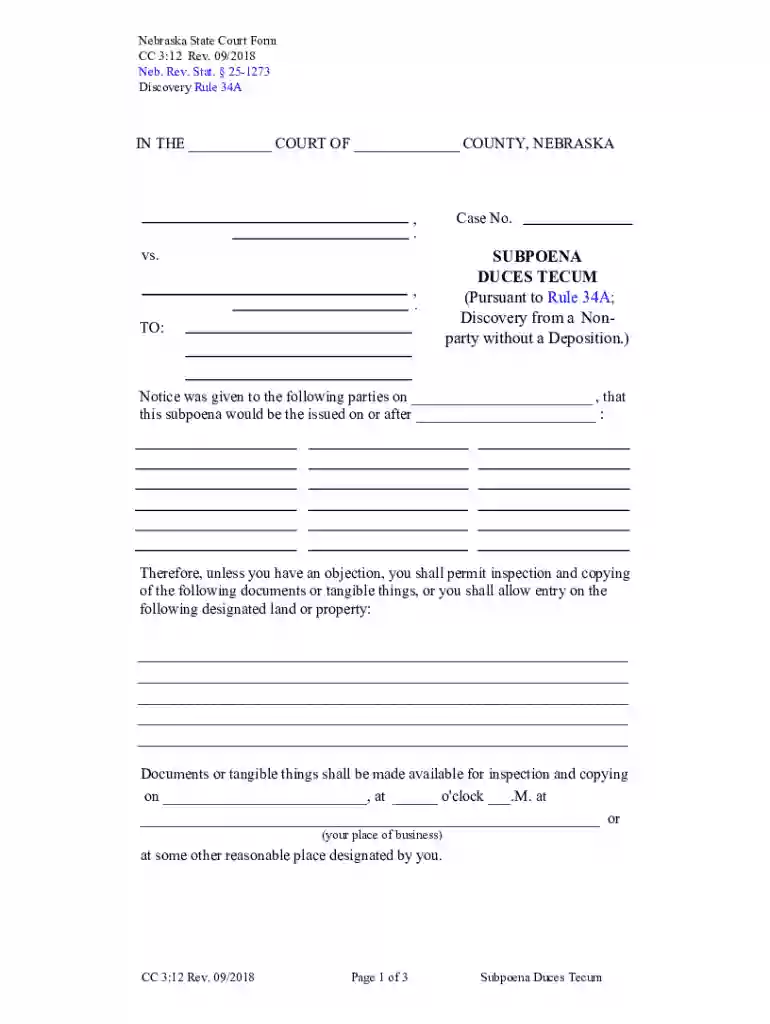
- Subpoena: A writ ordering a person to attend a court.
- Motion: A formal request made to a judge for an order or ruling.
- Deposition: Witness testimony taken under oath, outside of court.
State-Specific Rules for Chapter 24
Nebraska has unique provisions within Chapter 24 that distinguish its court system:
- Judge Selection and Retention: Specific processes for how judges are selected and reappointed, reflecting Nebraska’s commitment to judicial impartiality.
- Specialty Courts: Guidelines for drug, juvenile, and family courts, which address specific societal issues through tailored judicial processes.
- Public Accessibility: Rules ensuring court proceedings are generally open to the public, promoting transparency in the judicial system.
Examples of Using Chapter 24
Several real-world scenarios illustrate the application of Chapter 24:
- Initial Court Filing: An attorney references Chapter 24 for filing procedures when initiating a civil lawsuit.
- Judicial Ethics Case: A review board uses the chapter to address a complaint against a judge, following state protocols for investigatory and disciplinary actions.
Penalties for Non-Compliance
Non-compliance with Chapter 24 can result in various penalties:
- Contempt of Court: Failing to adhere to court orders may lead to contempt charges, potentially resulting in fines or jail time.
- Dismissal of Cases: Improper filing or procedural missteps can lead to cases being dismissed, causing delays in justice.
- Sanctions on Legal Representation: Attorneys who violate procedural rules may face sanctions, including fines or disbarment, depending on the severity of the infraction.
Disclosure Requirements
Chapter 24 mandates specific disclosure requirements to ensure fairness in proceedings:
- Financial Disclosures: Judges must disclose financial interests to maintain impartiality.
- Evidence Disclosure: Parties must share evidence during the discovery process, following the detailed rules within the chapter to prevent trial surprises.
Software Compatibility for Legal Reference
To ensure efficient access and utilization of Chapter 24, legal professionals may rely on software tools compatible with this legal framework:
- Document Management: Systems like DocHub support the creation and editing of legal documents related to Chapter 24.
- Legal Research Software: Platforms such as Westlaw or LexisNexis provide in-depth access to Nebraska statutes, facilitating quick reference and analysis.
Who Issues the Guidelines
The Nebraska state government, through its legislative body, issues and updates Chapter 24. This process involves:
- Legislature Approval: Proposed changes pass through legislative scrutiny and debates.
- Governor's Sign-Off: Final approval is given by the state governor, cementing changes into law.
- Court Implementation: Courts incorporate these statutes into their operational procedures, ensuring alignment with the latest legal standards.
Form Submission Methods
Understanding available methods to submit related legal documents ensures compliance:
- Online Submissions: Many courts accept electronic filings, using secure systems to transmit legal documents efficiently.
- Mail: For jurisdictions that require paper submissions, mailing remains a valid method, with adherence to deadlines.
- In-Person Delivery: Direct submissions at the court clerk's office can ensure timely receipt and avoid delays.