
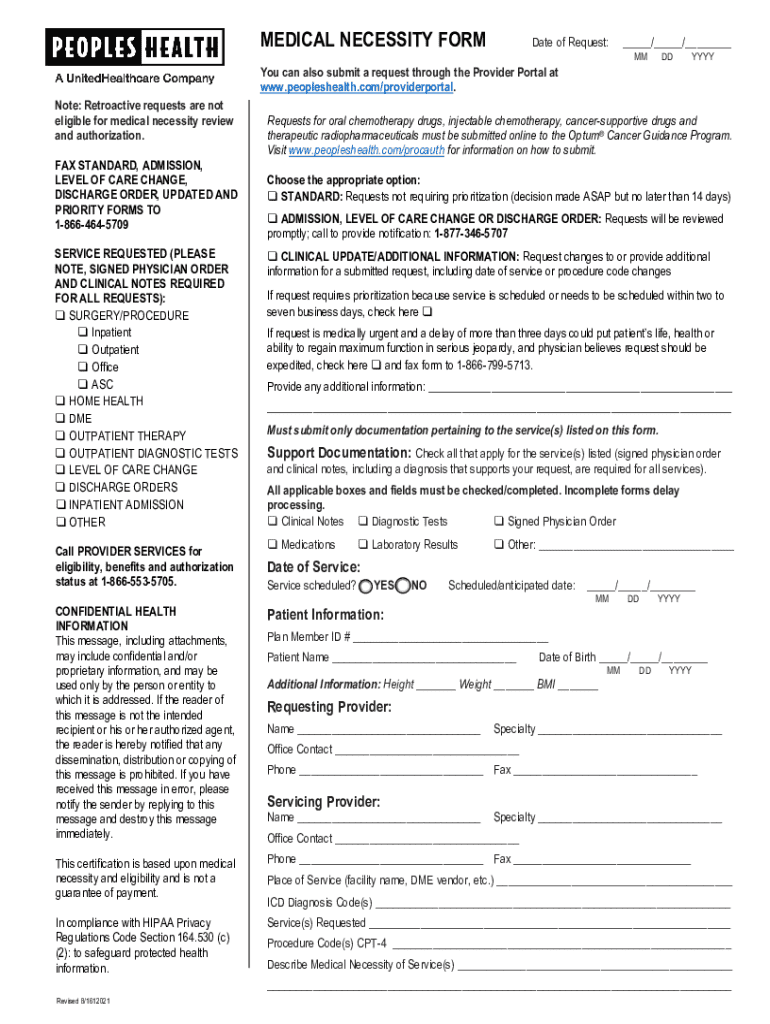







Definition and Purpose of the Medical Necessity Form
The Medical Necessity Form is essential for requesting authorization for medical services such as surgeries, inpatient admissions, and outpatient therapies. It serves as a formal request to insurance companies or healthcare providers, ensuring that proposed medical procedures are deemed necessary based on established clinical guidelines. The form helps patients access medical treatments that require verification of necessity, thereby preventing unnecessary or non-covered medical interventions.
How to Use the Medical Necessity Form
Filling out the Medical Necessity Form requires comprehensive details about the patient, the medical procedure, and the reasoning behind the necessity. Users must ensure all sections are completed accurately to avoid processing delays. The form typically includes sections for patient identification, medical provider details, specific treatment or procedure requested, and a detailed justification for medical necessity supported by clinical notes or physician orders.
- Patient Information: Complete with full name, date of birth, and insurance details.
- Provider Information: Include details of the healthcare provider requesting the procedure.
- Procedure Details: Describe the medical procedure and provide any relevant CPT codes.
- Justification: Provide medical evidence and rationale supporting the necessity of the procedure.
Steps to Complete the Medical Necessity Form
- Gather Required Documentation: Collect clinical notes, physician's orders, and any supporting data.
- Fill Out Patient Details: Include all necessary patient identifiers such as name and insurance ID.
- Enter Provider Information: Input healthcare provider’s contact and identification details.
- Describe Proposed Procedure: Clearly state the medical procedure and associated codes.
- Provide Medical Justification: Attach documentation and provide a detailed explanation of the medical need.
- Review and Sign: Carefully review the form for any errors or omissions, then sign as required.
- Submit the Form: Send the completed form via the designated submission method (mail, online portal, etc.).
Key Elements of the Medical Necessity Form
The form comprises several critical elements that ensure proper evaluation:
- Patient Demographics: Vital for correct identification and correspondence.
- Treatment Description: Specifics about the treatment or service requested.
- Physician Orders: Signed orders that validate the medical need.
- Clinical Notes: Detailed medical documentation supporting the necessity.
- Approval Criteria: Based on insurance provider’s specific necessity guidelines.
Who Typically Uses the Medical Necessity Form?
The form is primarily used by healthcare providers, insurers, and patients. Physicians or healthcare facilities initiate the form completion when requesting authorization for procedures that require confirmation of necessity. Insurers utilize the form to determine coverage eligibility, while patients often need this form to ensure that their insurance plans will cover the proposed medical services.


Legal Use and Compliance
The legal framework surrounding the Medical Necessity Form ensures that medical procedures are justified and necessary under health insurance policies. Compliance with regulations like the Health Insurance Portability and Accountability Act (HIPAA) is mandatory, safeguarding patient information during form submission and processing. Providers must adhere to payer-specific guidelines ensuring that the information submitted is accurate and complete, adhering to medical necessity criteria defined by insurers.
State-Specific Regulations
State-specific regulations may affect how the Medical Necessity Form is completed and submitted. Healthcare providers need to stay informed about any regional differences in medical necessity criteria, submission processes, or documentation requirements to ensure compliance and prevent delays in authorization. States may have unique guidelines on what constitutes a necessary medical procedure based on local healthcare policies and standards.
Form Submission Methods
Submitting the Medical Necessity Form can be done through various methods depending on the insurer’s requirements:
- Online Portals: Some insurers offer digital platforms for easy submission and tracking.
- Mail: Completing and sending physical copies to the designated mailing address.
- In-Person: Hand-delivering forms at designated insurance or medical offices.
Ensuring the chosen method aligns with insurance specifications is crucial for timely processing and approval.
Important Terms Related to the Medical Necessity Form
Understanding key terminology ensures accurate form completion and processing:
- CPT Code: Identifiers for medical services and procedures.
- Prior Authorization: Pre-approval required from insurers before certain procedures.
- Deductible: Amount a patient must pay out-of-pocket before insurance covers remaining costs.
- Out-of-Network: Services provided by a healthcare provider not contracted with the patient’s insurer, which may require additional authorization.
Accurate understanding and use of these terms help streamline the authorization process and minimize denial risks.




