Rental Application 2026

Get Form
Rental Application Preview on Page 1

Here's how it works

01. Edit your form online
Type text, add images, blackout confidential details, add comments, highlights and more.

02. Sign it in a few clicks
Draw your signature, type it, upload its image, or use your mobile device as a signature pad.

03. Share your form with others
Send it via email, link, or fax. You can also download it, export it or print it out.

Definition and Meaning of a Rental Application

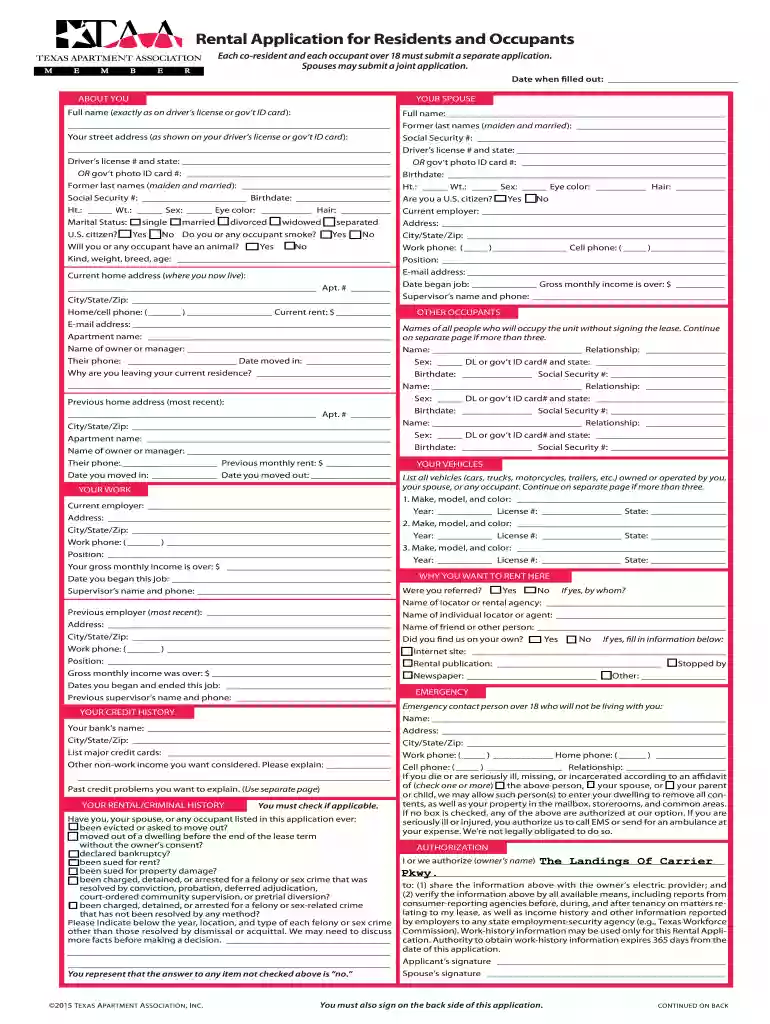
A rental application is a formal document utilized by property owners and management companies to gather detailed information from potential tenants. This form serves as a critical tool in assessing a candidate's suitability for tenancy, ensuring that the leasing process runs smoothly. It collects an array of personal details, such as the applicant’s contact information, employment status, and consent for credit and background checks.

The rental application acts as the initial step in the leasing process, establishing a foundation for landlord-tenant relationships while safeguarding both parties' interests. Critical to its role, the form provides landlords with a comprehensive view of a prospective tenant’s rental history, financial capability, and overall reliability. It serves not only as an assessment tool but also as a legal record, ensuring that the leasing decision is informed and documented.

How to Use the Rental Application

Filling out a rental application requires attention to detail and accuracy. Applicants must furnish honest and complete answers to all sections. Here's a step-by-step guide on how to use the rental application:

  1. Personal Information: Begin with providing your full name, contact details, and Social Security number.
  2. Residency History: List previous addresses, landlord contacts, and the duration of past residencies.
  3. Employment Information: Share current and previous job details, including employer contact information and salary.
  4. Financial Details: Disclose bank account details and any outstanding debts or monthly financial obligations.
  5. References: Offer personal and professional references who can vouch for your character and reliability.
  6. Consent for Screening: Sign any necessary consents for background and credit checks, acknowledging the landlord’s right to verify your information.

Ensuring these steps are completed accurately can enhance your chances of approval, as landlords often prioritize applications that reflect transparency and thoroughness.

Steps to Complete the Rental Application

Completing the rental application efficiently involves several critical stages:

  • Read Thoroughly: Before starting, read all instructions carefully to understand what information is required.
  • Gather Documentation: Collect necessary documents, such as ID, proof of income, and references, to attach to your application.
  • Fill Out the Form: Complete each section of the form meticulously, ensuring that all details match your documentation.
  • Review for Accuracy: Double-check for any errors or omissions that could delay the application process.
  • Submit on Time: Ensure your application is submitted by the specified deadline to avoid missing out on potential rentals.

Attention to these steps helps in presenting a reliable and organized application, increasing the likelihood of a positive outcome.

Key Elements of the Rental Application

Several key elements are essential in a rental application. These components ensure that landlords have all pertinent information for evaluating potential tenants:

  • Personal and Identification Information: Critical for establishing personal identity and facilitating background checks.
  • Employment and Income Details: Provide a snapshot of financial stability and the ability to afford rent payments.
  • Consent for Background Checks: Legal acknowledgment that authorizes landlords to conduct background screenings.
  • References and Previous Landlords: Serve as a testament to reliability and past rental behavior.
  • Vehicle Information: Important for parking management and verifying identity.

These elements form the backbone of the rental application, ensuring a comprehensive profile of each applicant.

Legal Use of the Rental Application

Rental applications carry significant legal weight, especially concerning data privacy and anti-discrimination laws. It is crucial that landlords follow federal and state regulations when using these forms:

  • Fair Housing Act Compliance: Landlords must ensure that all application processes are nondiscriminatory.
  • Data Protection Laws: Personal data collected must be securely stored and used in accordance with privacy regulations.
  • Disclosure Requirements: Applicants must be fully informed about how their data will be used and stored.

Understanding the legal context of the rental application helps protect both landlords and tenants from unlawful practices and ensures a fair leasing process.

State-Specific Rules for the Rental Application

Rental application requirements and processes can vary significantly across different states in the United States:

  • Different Fees: Some states cap application fees, whereas others have no specific limits.
  • Background Check Protocols: Varying regulations on how and when landlords can conduct criminal and credit checks.
  • Lease Renewal Applications: Some states may have unique provisions for renewing existing leases through rental applications.

Understanding these state-specific nuances is vital for both property owners and applicants to ensure compliance and avoid legal disputes.

Examples of Using the Rental Application

Rental applications are used in various scenarios to facilitate the leasing process:

  • Multi-Tenant Properties: Used to evaluate multiple applicants for an apartment in a high-demand property.
  • Short-Term Rentals: Employed even for temporary leases to ensure the tenant's reliability.
  • Family Leases: Separate applications for each adult family member applying to live in the same property to assess joint financial capability.

These examples highlight the practical application of rental applications across different living arrangements and leasing conditions.

Penalties for Non-Compliance

Failure to comply with rental application regulations can lead to severe consequences for both landlords and tenants:

  • Fines for Discrimination: Landlords found violating anti-discrimination laws may face significant fines and legal action.
  • Rejection of Application: Incomplete or falsified applications can result in immediate disqualification from the rental process.
  • Loss of Security Deposits: Misrepresentation or breach of lease terms post-application can lead to forfeit of security deposits.

Recognizing these penalties motivates both landlords and tenants to adhere strictly to regulations and complete applications truthfully.

Required Documents for a Rental Application

To ensure completeness and compliance, several documents accompany a rental application:

  • Proof of Income: Pay stubs, tax returns, or bank statements to verify financial stability.
  • Identification: Government-issued photo IDs for identity confirmation.
  • References: Letters from employers or previous landlords to attest to character and rental history.

Collecting these documents in advance streamlines the application process and increases the chances of quick approval.

be ready to get more

Complete this form in 5 minutes or less

Get form

Got questions?

We have answers to the most popular questions from our customers. If you can't find an answer to your question, please contact us.
Contact us
Rejection is almost always guaranteed for applicants with insufficient income-to-rent ratios. Most landlords require renters to have income that is double or triple the monthly rent. If they cannot meet this requirement, rejection should not come as a shock.
Renting an apartment isnt as easy as waltzing in and saying Ill take it!particularly in todays competitive rental market. With many prospective tenants to choose from, landlords can be picky, and they will prioritize applicants with a track record of paying off debts and respecting their neighbors and community.
Many landlords consider a credit score of 600 or higher as acceptable, but requirements can vary widely depending on the landlord, property type and location. Understanding where your credit score generally falls on a scale can help you anticipate whether your rental application may be approved.
In most cases, you can expect to hear back about your rental application within 24 to 72 hours. Several factors affect how quickly landlords or property managers can respond: The time it takes to complete background and credit checks.
Lets say youve got your eye on a cool place that costs $1,500 a month. You want to stick to the 30% rule, so lets do the math: $1,500 / 0.30 = $5,000. Thats your target monthly income. In a year, youd need to be raking in about $60,000 before taxes.

Security and compliance

At DocHub, your data security is our priority. We follow HIPAA, SOC2, GDPR, and other standards, so you can work on your documents with confidence.
Learn more
ccpa2
pci-dss
gdpr-compliance
hipaa
soc-compliance
be ready to get more

Complete this form in 5 minutes or less

Get form

People also ask

After your rental application is approved, youll receive and sign the lease, pay applicable fees (i.e., security deposit, pet deposit), set a move-in date with inspections, and turn on utilities.
The High-Demand Summer Months Summer months (June-August) are often considered the worst months to rent an apartment, primarily due to the high demand, increased competition, and higher final rental prices.

Related links