




01. Edit your form online
Type text, add images, blackout confidential details, add comments, highlights and more.

Type text, add images, blackout confidential details, add comments, highlights and more.

Draw your signature, type it, upload its image, or use your mobile device as a signature pad.

Send it via email, link, or fax. You can also download it, export it or print it out.
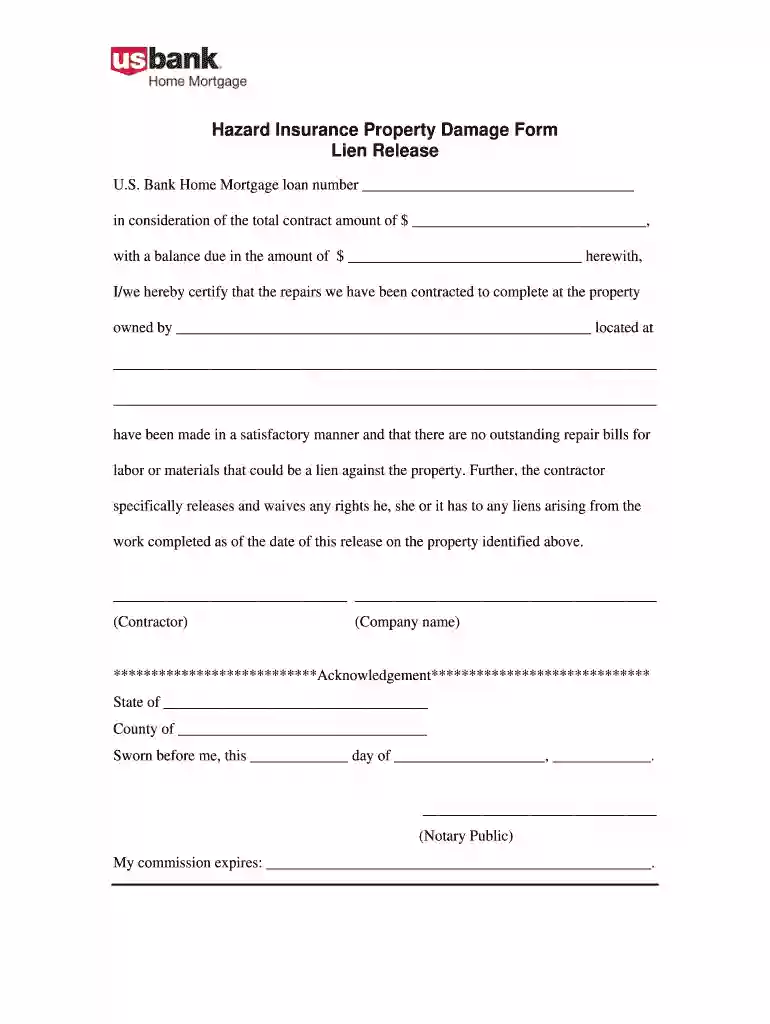
A Hazard Insurance Lien Release Form is a crucial document used in real estate transactions. It serves as an official declaration that any liens or claims arising from damages or repairs related to a property have been satisfied and released. This form is essential in assuring buyers, sellers, and insurance entities that no outstanding debts exist tied to property repairs. The term 'lien' refers to a legal claim against property as security for a debt, typically in the form of repairs or improvements. Thus, a lien release indicates the firm completion and payment of those obligations.
Understanding the components of this form is vital for accurate completion. Key elements typically include:
Each of these elements ensures that all parties acknowledge and agree to the release of legal claims against the property.
Properly filling out the form requires attention to detail. Follow these steps:
This form plays a crucial legal role in confirming that property improvements or repairs satisfy insurance claims and that no remaining liens exist. It is pivotal in real estate transactions, serving to protect buyers from unexpected liens. Legally, the document ensures all parties—property owner, contractor, and insurance providers—recognize that financial obligations are settled, reducing potential liability for the owner or buyer.
Several stakeholders typically use this form:
These users rely on the form to facilitate smooth property transactions while adhering to legal mandates.


Real estate regulations can vary significantly across states, influencing how the form is used:
Each state may have distinct requirements regarding the form's language, filing procedures, and validation processes. Always consult local rules to ensure compliance.
Familiarize yourself with the following terms:
Understanding these terms aids in effective form management and ensures clarity in all interactions related to the document.
Consider scenarios where the form is applied:
Each case underscores the form's utility in confirming the smooth transition of property ownership unhindered by prior financial claims.
Both digital and paper versions of the Hazard Insurance Lien Release Form exist. While the paper format is traditional, digital versions offer versatility and ease in filing. DocHub enables users to fill, sign, and store documents electronically, significantly reducing paperwork. Digital submissions often streamline processes, enabling quick sharing with relevant parties, which is beneficial in a fast-paced real estate market.
At DocHub, your data security is our priority. We follow HIPAA, SOC2, GDPR, and other standards, so you can work on your documents with confidence.




Dear [Borrowers Name]:. Our records show that your [hazard] [Insurance Type] insurance [is expiring] [expired] [provides insufficient coverage], and weRead more
Jun 24, 2024 Proof that the loan was paid in full, which can be in the form of a Lienholders promissory note stamped PAID, a signed HUD-1 settlementRead more
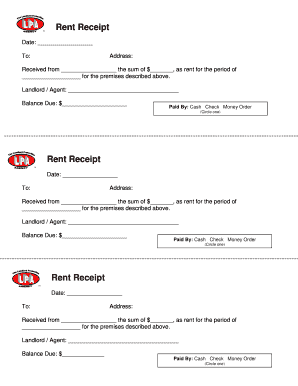
May 14, 1992 Proof of insurance may be provided by a binder, by a certificate of insurance acceptable in form to the department, or by a copy of the policy.Read more


