
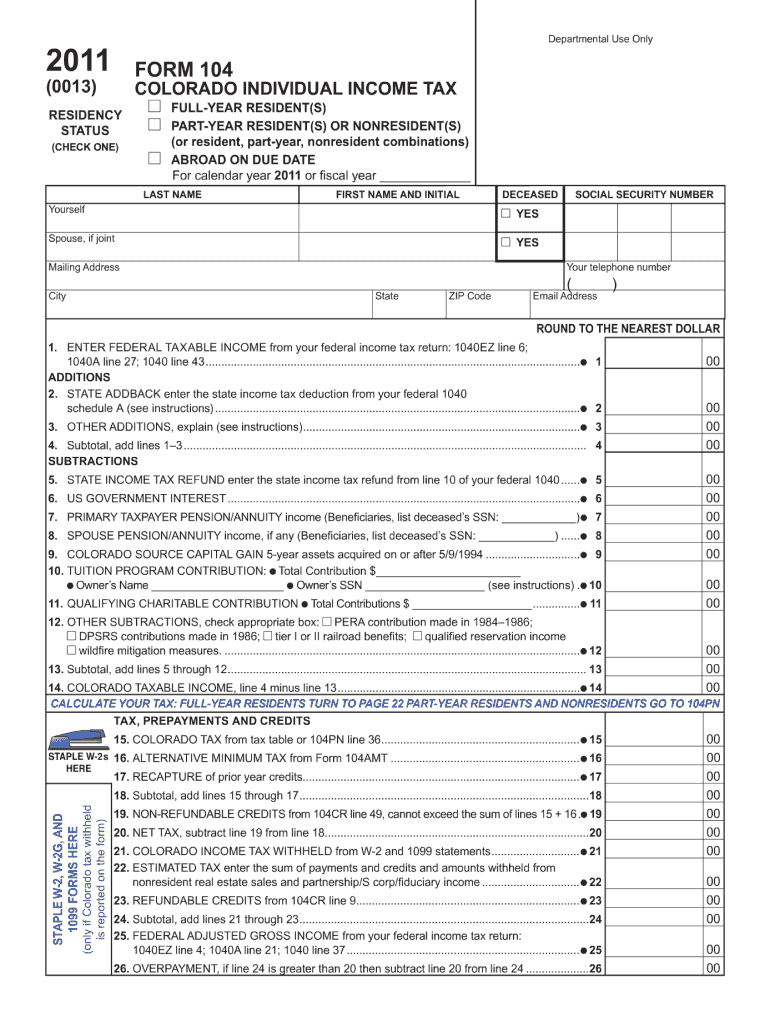







Definition & Meaning of 2011 Form 104
The 2011 Form 104 is a tax form used in the United States for specific financial reporting purposes. Although not as commonly recognized as forms like the W-2 or 1099, this form serves unique functions according to IRS regulations. It is designed to collect particular financial information from individuals or entities, which assists the IRS in ensuring compliance with tax laws. Understanding the purpose and details of Form 104 is crucial for meeting reporting requirements and avoiding potential liabilities.
Steps to Complete the 2011 Form 104
When completing the 2011 Form 104, accuracy and attention to detail are essential. Here are the key steps to ensure successful completion:
-
Gather Necessary Information: Before filling out the form, collect all essential financial documentation, such as pay stubs, receipts, and other relevant records that relate to your financial activities for the year 2011.
-
Fill Out Personal Details: Provide accurate personal information including your name, address, and Taxpayer Identification Number (TIN).
-
Input Financial Data: Carefully input the financial figures as requested in each section of the form. Ensure that all amounts are in U.S. dollars and rounded to the nearest cent.
-
Review and Cross-Check: After completing the form, double-check all entries against your supporting documentation for accuracy and ensure consistency with your other tax forms.
-
Sign and Date: If filing on behalf of an organization, ensure that an authorized representative signs and dates the form.
-
Submit the Form: File the completed form with the IRS by the specified deadline, which can vary based on the filing method.
How to Obtain the 2011 Form 104
Obtaining the 2011 Form 104 is straightforward. Here are the primary ways you can acquire this form:
-
IRS Website: Visit the official IRS website to download the form directly. Ensure that you access the form relevant to the 2011 tax year.
-
Local IRS Office: Forms can be picked up in person at your nearest IRS office. Contact ahead to confirm availability.
-
Professional Tax Advisors: Your tax advisor or accountant may provide you with the necessary forms as part of their services.
Important Terms Related to 2011 Form 104
Understanding key terminologies is vital for correctly completing the 2011 Form 104. Here are some terms you might encounter:
- Tax Year: The calendar year for which the form applies, in this case, 2011.
- Taxpayer Identification Number (TIN): A unique identifier used by the IRS for tax purposes.
- Filing Status: Category based on marital status and family situation, which affects tax rates and deductions.
- Itemized Deductions: Specific expenses eligible for tax deductions, affecting the total taxable income.
IRS Guidelines for 2011 Form 104
The IRS provides detailed guidelines for using Form 104:
- Accuracy: Ensure all information is truthful and correct to avoid penalties.
- Compliance: Follow all IRS instructions when filling out and submitting the form.
- Updates: Check for any updates or changes in IRS guidelines relevant to the 2011 form submission, such as extensions on filing deadlines.
Filing Deadlines and Important Dates
Meeting deadlines is crucial to avoid late fees and penalties:
- Standard Deadline: Typically, the filing deadline for tax forms is April 15th of the following year, unless affected by holidays or weekends.
- Extensions: You can apply for an extension if needed but must file the extension request by the standard deadline.
Form Submission Methods (Online / Mail / In-Person)
Submit Form 104 through several methods, depending on your preference:
- Online Submission: Use e-filing options supported by the IRS or through authorized third-party platforms for quicker processing.
- Mail: Mail the form to the address specified in the IRS instructions for the form. Make sure to use tracked mail for security.
- In-Person: Drop off your form at an IRS office, where applicable.
Penalties for Non-Compliance
Filing the 2011 Form 104 accurately and on time is essential to avoid penalties:
- Late Filing Penalty: Usually a percentage of the taxes owed, accruing each month the return is late.
- Failure to Pay: Additional penalties if taxes owed are not paid by the due date.
- Underpayment: Penalties may apply if submitted figures are incorrect or incomplete.
Understanding these key areas ensures compliance with IRS standards and helps mitigate risks associated with filing taxes.




