




01. Edit your form online
Type text, add images, blackout confidential details, add comments, highlights and more.

Type text, add images, blackout confidential details, add comments, highlights and more.

Draw your signature, type it, upload its image, or use your mobile device as a signature pad.

Send it via email, link, or fax. You can also download it, export it or print it out.
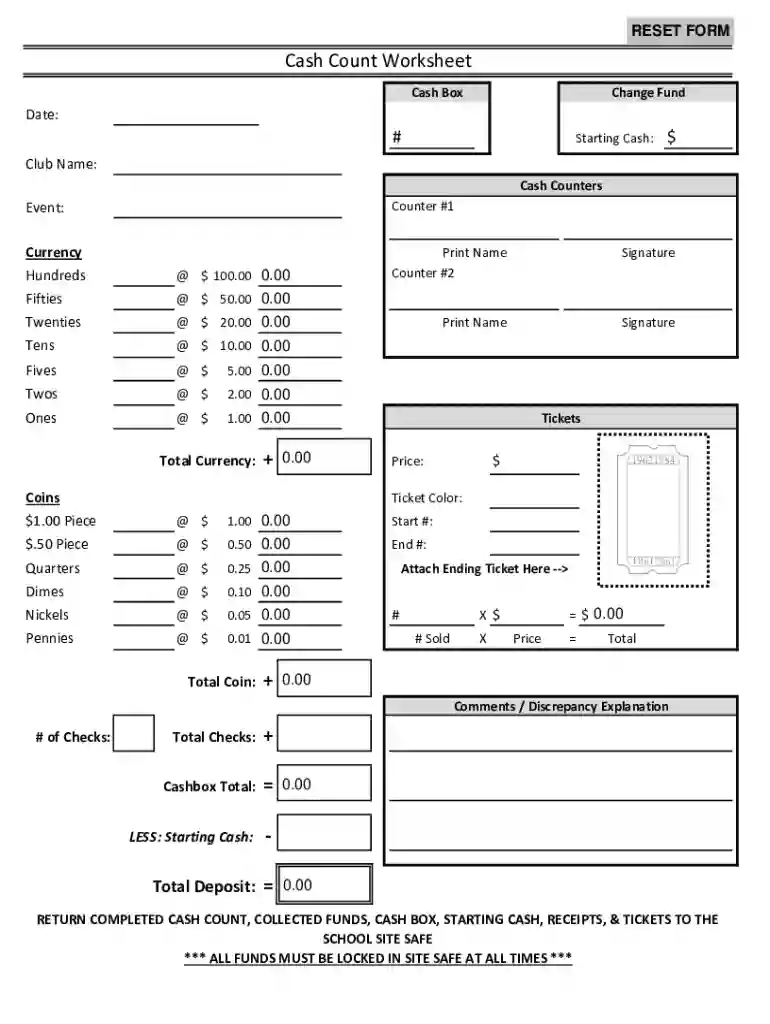
The term "Starting Cash" refers to the initial amount of cash allocated for operational or transactional activities, often documented at the onset of an event or business day. This cash reserve serves as a foundation for various financial transactions, such as making change or facilitating small purchases. In a broader context, starting cash ensures business continuity by providing the necessary liquidity to support day-to-day operations without interruption.
Record Initial Amount: Begin by documenting the exact amount of cash that is entering the system. This figure should reflect the total cash on hand before any transactions occur.
Categorize Denominations: Break down the starting cash into specific currency denominations—bills and coins. This granularity aids in tracking cash flow and simplifying the reconciliation process later.
Secure Cash Count: Count the cash in a secure environment to minimize the risk of discrepancies or errors. Use counting tools or machines if available to increase accuracy.
Verification Protocols: Implement a verification process where another person cross-checks the cash count. Dual verification ensures accuracy and accountability.
Documentation: Use a cash count worksheet to document every step. The worksheet becomes an official record that can be referenced in the future for any financial audits or inquiries.
Daily Operations: Within retail or event settings, starting cash is used to manage daily transactions. It acts as a float for making change and covering small expenses.
Financial Auditing: Documenting starting cash ensures financial transparency. It serves as a checkpoint to compare against end-of-day totals to identify discrepancies or patterns in cash handling.
Cash Flow Management: Tracking starting cash alongside inflows and outflows helps businesses manage liquidity and forecast future cash needs.
Accurate Figures: The importance of having a precise starting cash figure cannot be overstated. This number is the baseline for all subsequent financial reporting.
Currency Breakdown: Detailing notes and coins used in starting cash aids in preventing shortages of specific denominations during transactions.
Signatures for Accountability: Having cash counters and supervisors sign off on the initial cash count adds a layer of accountability and reduces the risk of mismanagement.
Secure Storage: Information about how and where the cash is stored is crucial for both security and operational efficiency.
Retail Staff and Managers: Retail environments commonly use starting cash for registering operations, allowing cashiers to provide change and handle purchases without delay.
Event Organizers: Cash is necessary to manage entry fees, booth sales, and concessions at events. Starting cash documentation ensures transparency and accountability.
Small Business Owners: For small businesses, maintaining a starting cash record helps in managing expenses and provides a snapshot of liquidity for the day's operations.
Starting cash is subject to financial and legal protocols that ensure ethical handling. Mismanagement can lead to financial discrepancies, fraud accusations, or legal actions. Businesses should establish clear policies and training programs focusing on proper cash handling procedures. Regular audits and adherence to financial regulations further safeguard against misuse.
Float: The initial amount provided to a cashier at the beginning of a shift, often synonymous with starting cash.
Reconciliation: The process of comparing starting cash with end-of-day totals to ensure accuracy in cash handling.
Cash Register: A machine used in retail that records transactions and assists in cash management.
Audit Trail: Documentation records that provide a history of financial transactions, essential for both transparency and compliance.
Retail Scenario: In a typical retail setting, a cashier begins the day with predetermined starting cash. Throughout the day, this amount changes as sales are made and customers receive change. At the end of the day, the cashier reconciles the register against sales receipts.
Event Scenario: An organizer might start each booth at a fair with a specific amount of starting cash. This setup allows vendors to provide change without needing to request it during the event.
Restaurant Environment: A manager might allocate separate starting cash amounts for different tills, ensuring each server station can handle customer transactions efficiently.
We've got more versions of the Starting Cash: form. Select the right Starting Cash: version from the list and start editing it straight away!
At DocHub, your data security is our priority. We follow HIPAA, SOC2, GDPR, and other standards, so you can work on your documents with confidence.


A starting cash bank is gambling money placed in a cash drawer prior to the beginning of the game and is used to make change and pay prizes awarded.
Game Instructions: This will give you 30 Estival Tokens that can be used to purchase seasonal items during the Exhibition. You will be able to purchase more


