







Definition & Meaning
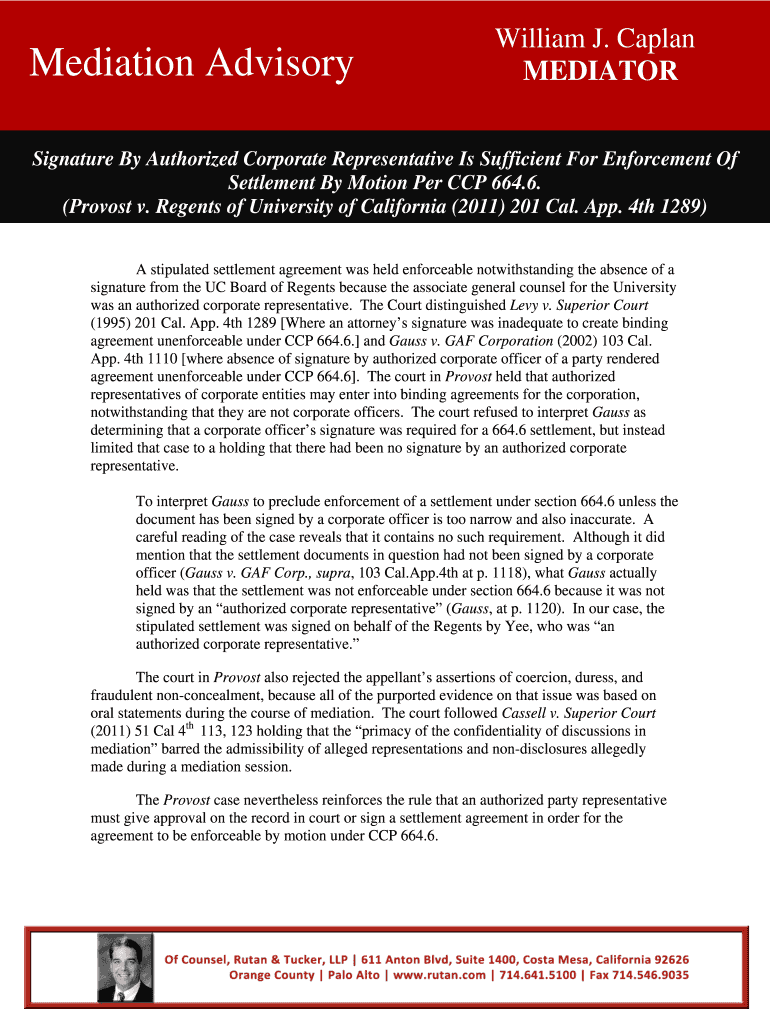
The concept of "Signature By Authorized Corporate Representative Is Sufficient For Enforcement Of" refers to the legal principle that allows a signature from an authorized corporate representative to be valid for enforcing agreements or contracts. This means that even if a corporate officer does not affix their personal signature, the signature of someone designated with appropriate authority within the organization is enough to render the document enforceable. This principle is significant in validating stipulated settlement agreements and ensuring their legal enforceability in various jurisdictional contexts.
How to Use the Signature By Authorized Corporate Representative Is Sufficient For Enforcement Of
Using this principle effectively requires a clear understanding of who within a corporation has the authority to sign on its behalf. Typically, this involves:
- Identifying the representative who holds the proper authorization
- Ensuring that the signature is affixed as part of a deliberate corporate decision
- Confirming the document specifies the representative's authority
For example, in a settlement agreement involving a corporate entity, a department head authorized by the company’s bylaws or delegated authority could sign the document to bind the corporation legally.
Steps to Complete the Signature By Authorized Corporate Representative Is Sufficient For Enforcement Of
-
Identify the Authorized Representative:
- Verify the corporate bylaws or governance documents to identify who is authorized.
-
Authority Documentation:
- Prepare documentation that confirms the authority of the signing representative.
-
Draft the Agreement:
- Ensure the document clearly states that the signer is an authorized representative.
-
Signature Execution:
- The authorized representative affixes their signature, including their title.
-
Witness & Notarization (if required):
- Some jurisdictions or situations may require a witness or notarization for the signature to ensure an additional layer of authenticity.
Why Should You Use an Authorized Corporate Representative's Signature for Enforcement?
Utilizing the signature of an authorized corporate representative can streamline the execution process of binding agreements by:
- Reducing delays associated with awaiting signatures from higher-level executives.
- Demonstrating corporate procedures for due diligence and delegated authority.
- Providing a clear and enforceable agreement that can withstand legal scrutiny.
- Maintaining confidentiality during sensitive negotiations, especially in mediation cases.
Real-world instances, such as the case of Provost v. Regents of the University of California, illustrate how similar approaches have been upheld in courts.
Legal Use of the Signature By Authorized Corporate Representative Is Sufficient For Enforcement Of
In the U.S., this practice is grounded in the legal principle that allows corporations to function efficiently by empowering certain individuals to act for the corporate entity. This is reinforced by regulations like the California Code of Civil Procedure (CCP) 664.6 in legal settlements, highlighting the circumstances under which such signatures are sufficient. The legality rests on:
- The representative having been duly authorized or having apparent authority.
- Clear documentation of the representative's capacity and authority in corporate records.
Important Terms Related to Signature By Authorized Corporate Representative Is Sufficient For Enforcement Of
Understanding the following terms is crucial:
- Authorized Signatory: An individual empowered to execute documents on behalf of the corporation.
- Corporate Resolution: A formal expression of decision-making within the corporation, often granting authority.
- Enforceable Agreement: A contract that is legally binding and recognized by courts.
- Apparent Authority: The appearance of authority bestowed upon an individual by the corporation, giving third parties reason to believe they have the power to act.
Key Elements of an Authorized Corporate Representative's Signature
For the signature to hold enforceable power, it should include:
- Full Signature and Printed Name: Accompanied by the representative’s title to denote their authority.
- Date of Signing: Establishes when the representative acted on behalf of the corporation.
- Corporate Seal (if applicable): Used by some corporations to signify an official action.
Business Types That Benefit Most from Signature By Authorized Corporate Representative Is Sufficient For Enforcement Of
Various business types benefit significantly from employing this principle, including:
- Corporations: Where execution by board members or executives can be logistically challenging.
- Limited Liability Companies (LLCs): When operating agreements empower managers.
- Partnerships: Where designated agents can act on behalf of the collective entity.
By leveraging the signatures of authorized corporate representatives, these businesses can efficiently execute binding agreements while ensuring compliance and reducing litigation risks.




