







Definition and Meaning
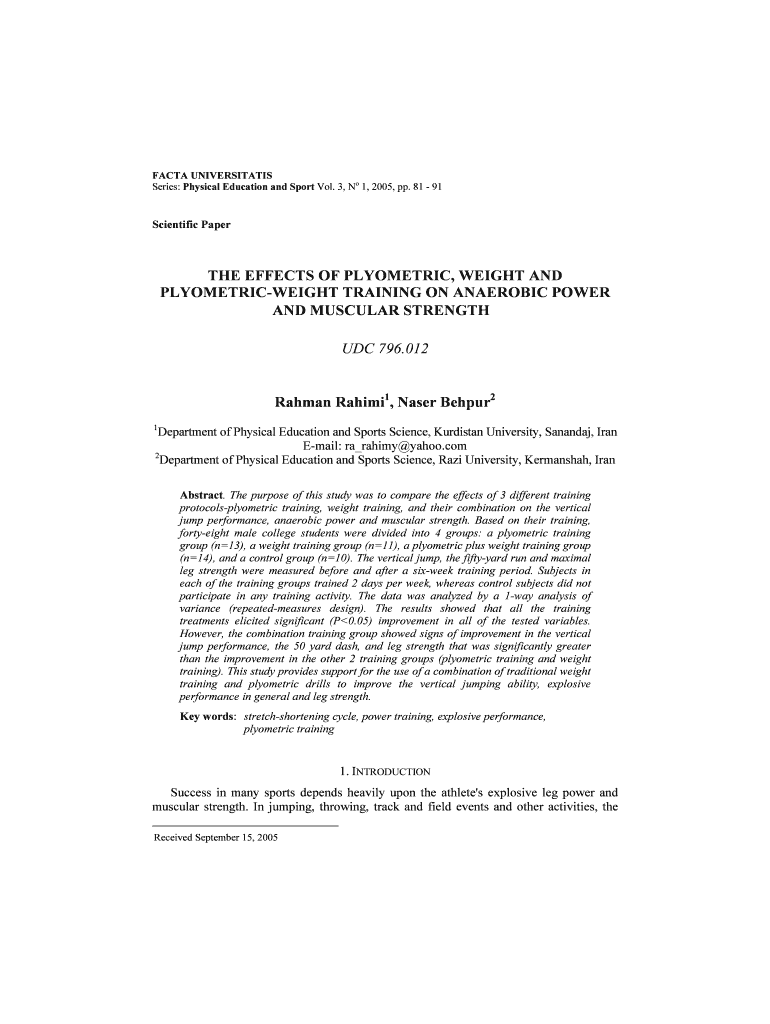
Plyometric and weight training are distinct yet complementary forms of exercise. Plyometric training, often called jump training, focuses on explosive movements to increase power and speed. On the other hand, weight training, or resistance training, aims at enhancing muscular strength and endurance through exercises like lifting weights. When combined, these forms of exercise can significantly influence athletic performance by improving vertical jump capabilities, anaerobic power, and overall muscular strength. Understanding how these training methods interact is essential for athletes and fitness enthusiasts looking to maximize their physical prowess.
Key Elements of Plyometric and Weight Training
When integrating plyometric and weight training, certain elements are crucial for achieving optimal results:
-
Exercise Variation: Incorporate a balanced mix of plyometric exercises (such as box jumps or depth jumps) with weight training exercises (such as squats and deadlifts).
-
Progressive Overload: Gradually increase the intensity, volume, or frequency of exercises to continuously challenge the muscles and stimulate growth.
-
Recovery and Rest: Allow adequate recovery time between sessions to prevent overtraining and reduce the risk of injury.
-
Technique Focus: Ensure proper form and execution of exercises to maximize effectiveness and safeguard against injuries.
-
Periodization: Plan training programs in cycles to systematically increase intensity and provide structured rest periods.
Why Integrate Plyometric and Weight Training?
The integration of plyometric and weight training offers numerous benefits:
-
Enhanced Explosive Power: Plyometric exercises develop the fast-twitch muscle fibers needed for rapid, powerful movements, while weight training builds the muscle strength necessary to support these explosive actions.
-
Improved Athletic Performance: Athletes can expect to see improvements in their speed, agility, and vertical jump height, which are critical for sports like basketball, soccer, and track and field.
-
Increased Muscular Endurance: Combined training enhances the ability to sustain prolonged physical activity, benefiting both competitive athletes and recreational gym-goers.
-
Injury Prevention: A well-rounded training program can strengthen muscles, tendons, and ligaments, reducing the risk of injury.
Who Typically Uses Plyometric and Weight Training?
These training methods are popular among a variety of individuals:
-
Athletes: Competitive athletes across sports such as basketball, volleyball, and track and field often use these exercises to enhance performance.
-
Fitness Enthusiasts: Individuals seeking to improve fitness levels or maintain physical health can benefit from incorporating these training elements into their routine.
-
Trainers and Coaches: Fitness professionals use these techniques to design comprehensive training programs for their clients or teams.
-
Rehabilitation Specialists: Physical therapists may use elements of plyometric and weight training to aid in the recovery and strengthening process post-injury.
Examples of Using Plyometric and Weight Training
Practical applications of these training methods include:
-
Athletic Drills: A basketball player might use squat jumps (a plyometric exercise) to improve jumping ability, followed by weighted lunges to build leg strength.
-
Fitness Programs: A gym-goer might alternate between sets of bench presses and box jumps to create a circuit-style workout that targets both strength and explosiveness.
-
Rehabilitation Techniques: A physical therapy program may incorporate light plyometric exercises after muscle strain to facilitate recovery without excessive strain.
Steps to Integrate Plyometric and Weight Training
-
Assess Current Fitness Level: Evaluate baseline physical condition to determine appropriate starting points and avoid injuries.
-
Design a Balanced Program: Combine complementary exercises, such as pairing jump squats with leg presses, to tackle multiple fitness elements.
-
Start with Low Volume and Intensity: Begin with lower loads and progressively increase as strength and conditioning improve.
-
Monitor and Adjust: Track progress and make necessary modifications to continue challenging the body and optimizing gains.
-
Include Rest Days: Implement adequate rest within the training schedule to allow for healing and prevent burnouts.
Important Terms Related to Training
-
Explosiveness: The ability to generate force quickly, crucial for rapid movements in sports.
-
Hypertrophy: An increase in muscle size, typically a goal of weight training.
-
Anaerobic Power: The capacity to exert high-intensity energy bursts, not reliant on oxygen, measured by exercises like sprinting.
-
Fast-Twitch Fibers: Muscle fibers that contract rapidly and with force but fatigue quickly, developed through explosive exercises.
-
Compound Exercises: Movements that target multiple muscle groups, such as deadlifts or burpees, often used in both training forms.
Software Compatibility
For those seeking to track and manage their training programs digitally, compatible software includes:
-
Training Apps: Platforms like MyFitnessPal or Strong can log exercises, track progress, and provide workout suggestions.
-
Wearable Technology: Devices like Fitbit or Garmin watches monitor performance metrics and recovery data.
-
Online Resources: Websites and online forums offer a wealth of information and community support for managing program details and modifications.
The integration of plyometric and weight training, supported by these digital tools, ensures a structured and informed approach to achieving fitness goals.




