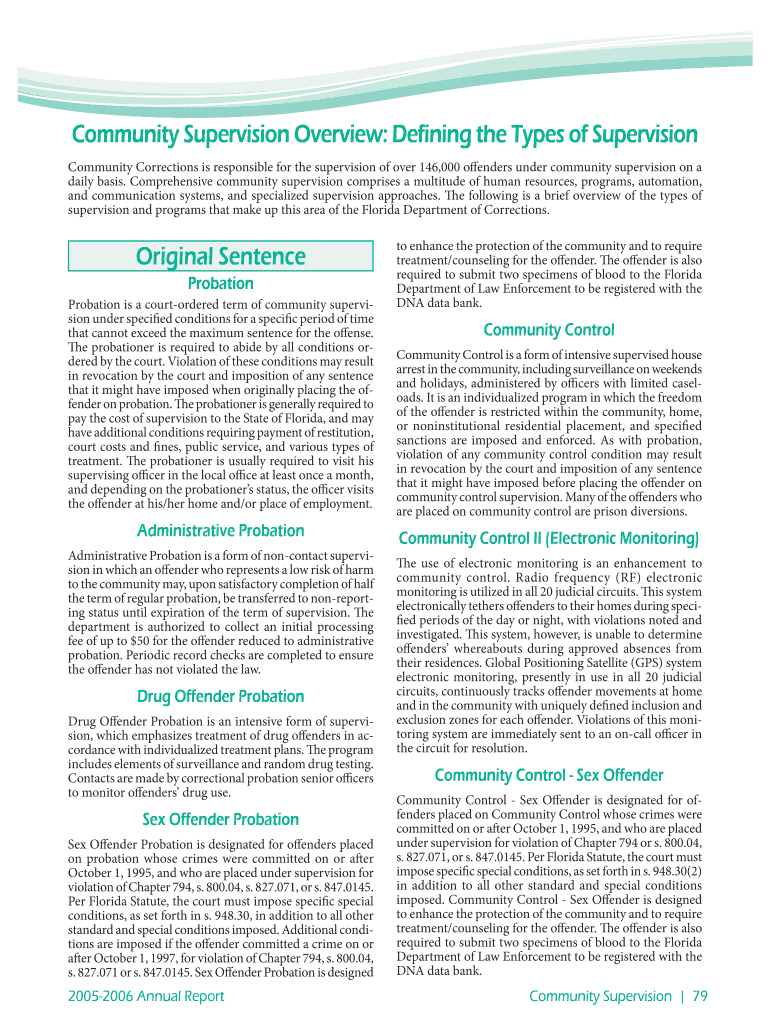







Definition & Meaning
Community supervision refers to a set of legal arrangements established to monitor and support offenders as they reintegrate into society while serving the terms of their sentence outside of traditional incarceration facilities. This system promotes rehabilitation by engaging offenders in constructive activities and maintaining their ties to the community, enhancing public safety and encouraging law-abiding behavior. Types commonly include probation, administrative probation, drug offender probation, sex offender probation, community control, and pretrial intervention.
Key Elements of Community Supervision
Understanding the components of community supervision is critical for grasping its purpose and implementation. Key elements include:
- Probation: A court-ordered period of correctional supervision in the community, generally used as an alternative to incarceration.
- Administrative Probation: A non-reporting form of probation where offenders do not need to check in, but must adhere to court-imposed conditions.
- Drug Offender Probation: Specially designed for individuals convicted of drug-related offenses, focusing on substance abuse treatment and monitoring.
- Sex Offender Probation: Imposes stringent restrictions tailored for offenders with sex-related crimes, including specialized counseling and monitoring.
- Community Control: A form of house arrest that restricts the offender’s movements but allows for some monitored activities outside the home.
- Pretrial Intervention: Available to first-time offenders, offering the chance to have charges dropped upon successful completion of the program.
Steps to Complete the Community Supervision Overview
- Understand the Type of Supervision: Begin by accurately identifying the type of community supervision applicable based on the offender’s conviction and judicial discretion.
- Gather Necessary Information: Collect all relevant legal documents, court orders, and personal data related to the supervised individual.
- Complete Required Documentation: Fill out any necessary forms detailing the specific conditions and obligations of the supervision type being applied.
- Engage in Required Programs: Enroll the offender in any mandated educational courses, treatment programs, or community service activities.
- Regular Reporting: Ensure consistent communication and check-ins with assigned probation or community control officers.
- Adhere to Compliance: Follow all specified conditions diligently to avoid violations, which can result in penalties or incarceration.
Who Typically Uses the Community Supervision Overview
This overview is critical for various stakeholders, including:
- Offenders: Individuals who have been convicted and are serving their sentence under community supervision.
- Probation Officers: Professionals responsible for monitoring and aiding offenders in complying with their supervision conditions.
- Judicial Officers: Judges and legal personnel who lay down the terms of the supervision orders and review compliance.
- Legal Representatives: Attorneys who guide offenders and their families in understanding and meeting legal conditions.
- Family Members: Loved ones and support networks that assist and provide support throughout the supervision period.


Legal Use of Community Supervision Overview
Legal applications of this overview involve the understanding and enforcement of the terms set by judicial rulings for offenders under community supervision. It ensures:
- Compliance with Court Orders: Adhering strictly to the conditions dictated by court orders.
- Documentation of Progress: Maintaining an accurate record of the offender’s activities, compliance status, and any deviations from the order.
- Accountability: Providing a structured framework for holding offenders accountable for their actions in the community.
- Rehabilitation Support: Offering mechanisms for support and rehabilitation by mandating education, employment, and therapy.
State-Specific Rules for Community Supervision
State-specific guidelines play a significant role in how community supervision is executed, as laws and regulations vary:
- Florida: Has comprehensive rules covering multiple forms of probation, emphasizing rehabilitation and reducing recidivism through structured programs.
- Texas: Employs a tiered supervision model focusing on high-risk offenders with stringent reporting requirements.
- California: Balances intensive supervision with rehabilitation programs aimed at reducing the burden of the incarceration system.
Each state creates frameworks catering to its unique judicial and societal needs, requiring stakeholders to remain informed about regional legal mandates.
Examples of Using the Community Supervision Overview
- Case Study - Probation Success: An individual convicted of a non-violent offense successfully completed probation by attending court-mandated anger management classes.
- Case Study - Drug Offender Rehabilitation: A drug offender utilized community supervision to transition to sobriety, participating in a state-supported treatment program.
- Case Study - Compliance Challenges: Highlighting challenges faced by offenders under community control who struggle to maintain employment due to restrictions, requiring customized intervention by probation officers.
Software Compatibility
For individuals handling documentation related to community supervision, software compatibility is critical:
- DocHub Integration: Supports a wide range of document types and integrates seamlessly with Google Workspace, vital for storing, editing, and sharing documents related to community supervision.
- Case Management Tools: Dedicated software helps probation officers monitor compliance, manage caseloads, and generate reports.
This connectivity simplifies data handling and ensures secure documentation management, aiding in the effective monitoring and support of supervised offenders.
Eligibility Criteria
The eligibility for community supervision is determined by numerous factors, including:
- Offense Type: Eligibility largely depends on whether the conviction involved a non-violent, first-time offense.
- Judicial Discretion: Judges assess the risk posed by the offender, often considering personal circumstances and rehabilitation potential.
- Compliance History: Previous behaviors and compliance with legal orders are evaluated to determine suitability for community supervision.