
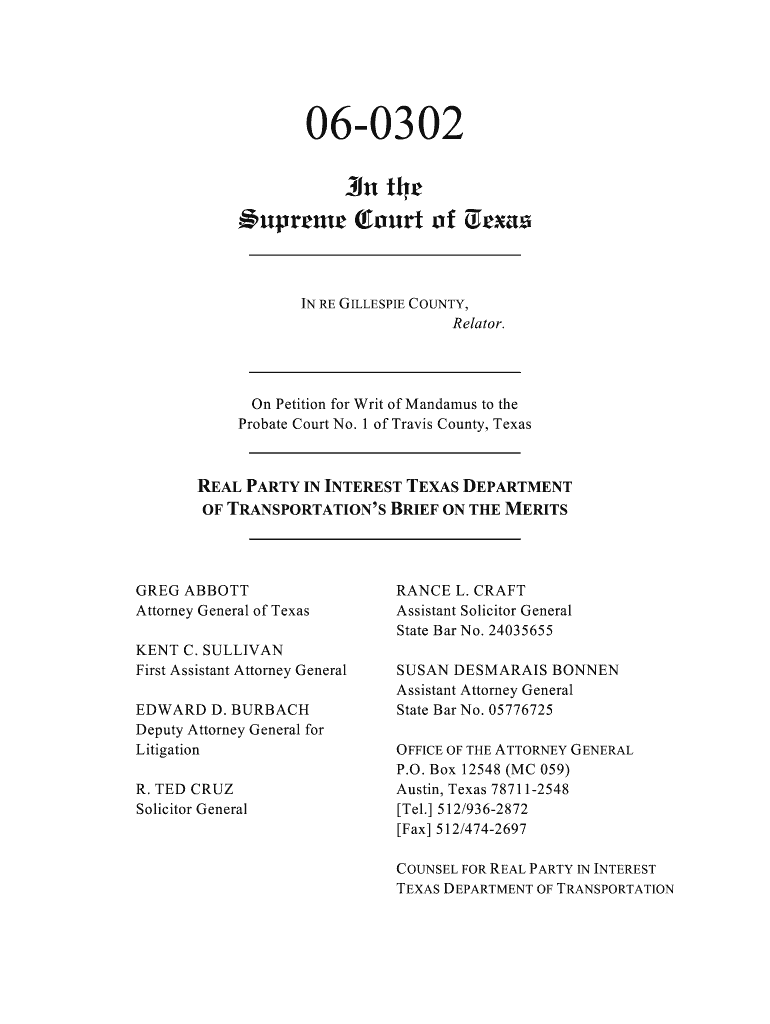







Definition & Meaning
The term "Real Party in Interest" in the context of the Texas Department and the Supreme Court of Texas refers to the entity that holds the actual interest in the litigation proceedings. In legal cases, especially involving the state supreme courts, it's crucial to identify the real party to ensure that the appropriate stakeholders are represented. This concept ensures that the right party, who will be affected by the case's outcome, is properly participating in the lawsuit. It is fundamental in procedural law to avoid unnecessary litigation and ensure the court's decision effectively resolves the issues at hand.
Key Elements of the Real Party in Interest
To effectively understand the "Real Party in Interest" concept, several key elements must be considered:
- Identification: The primary concern is to correctly identify the party who holds the substantive right in a legal action. This might be a private individual, a corporation, or a governmental body like the Texas Department of Transportation.
- Interest: The party should have a significant and real interest in the claims being made. This is not merely procedural but substantive in nature.
- Legal Standing: The real party must have the legal standing to initiate or defend the lawsuit. It must be proven they are directly affected by the case's outcome.
Steps to Complete the Real Party in Interest Process
Identifying and establishing a real party in interest involves several steps:
- Review the Case Details: Examine all documents and details pertaining to the case to identify potential parties involved.
- Verify the Legal Interest: Confirm the party's legal interest and standing in the context of the lawsuit.
- Document Inclusion: Ensure all necessary documents are amended to name the real party in interest if different from the initial filings.
- Petition the Court: If necessary, petition the court to officially recognize the named party as the real party in interest, often requiring a motion or amendment to existing documents.
- Notification: Notify all involved parties of any changes regarding the real party in interest.
Legal Use of the Real Party in Interest
Legal use of the real party in interest principle is prevalent in cases such as:
- Personal Injury Claims: Ensuring the injured party or their legal representative is the one bringing forth the lawsuit.
- Business Disputes: Verifying that the entity with the actual commercial stake is involved.
- Government-Related Cases: For example, when the Texas Department of Transportation is involved in litigation, they must be correctly identified as the real party in interest if they hold the applicable legal interest.
State-Specific Rules for the Real Party in Interest
In Texas, specific rules govern the identification of the real party in interest:
- Texas Rules of Civil Procedure: Refer to rule provisions that outline the requirements for designating a real party in interest.
- Mandatory-Venue Provisions: Texas law may dictate certain venues for cases, like the Texas Tort Claims Act, influencing real party considerations.
- Probate Courts: Special considerations apply when probate courts are involved, requiring careful adherence to state laws concerning venue and interest.
Examples of Using the Real Party in Interest
Understanding through examples helps clarify the concept:
- Governmental Litigation: In a case brought by the Texas Department of Transportation for infrastructure damage, the department itself would be the real party in interest since they are directly impacted.
- Corporate Dispute: A shareholder's derivative suit where the corporation is the real party in interest despite shareholders initiating the case.
- Insurance Claims: Where an insurance company becomes the real party in interest after compensating an insured party and seeking recourse against a third party.
Important Terms Related to the Real Party in Interest
Several important terms are integral to fully comprehending this concept:
- Standing: The ability of a party to demonstrate a connection to and harm from the law or action challenged.
- Subrogation: When one party steps into the shoes of another, taking on their legal rights, often seen in insurance contexts.
- Venue: Refers to the appropriate geographical location where a court case should be heard, often guided by real party considerations.
Who Typically Uses the Real Party in Interest
The concept is vital for a range of stakeholders including:
- Legal Professionals: Lawyers and legal advisors who need to ensure proper party designation in court filings.
- Government Agencies: Entities like the Texas Department of Transportation that frequently engage in legal actions.
- Businesses and Corporations: Companies involved in contractual disputes or litigation stemming from business operations.
- Insurance Companies: Frequently involved in litigation through subrogation efforts and need to maintain correct party status.


State-by-State Differences
Though Texas has specific provisions, it's valuable to note variations:
- Varying Procedural Requirements: Other states may have different procedural rules regarding who may be recognized as a real party in interest.
- Judicial Interpretation: The interpretation of the real party principle can differ significantly based on previous state court rulings and judicial precedents.
- Legislative Differences: State laws affecting real party designations, such as differing mandatory venue statutes or interest definitions.
By understanding these components and how they operate in practice within the judicial framework of the Supreme Court of Texas, individuals and entities can ensure they navigate the legal system effectively.




