
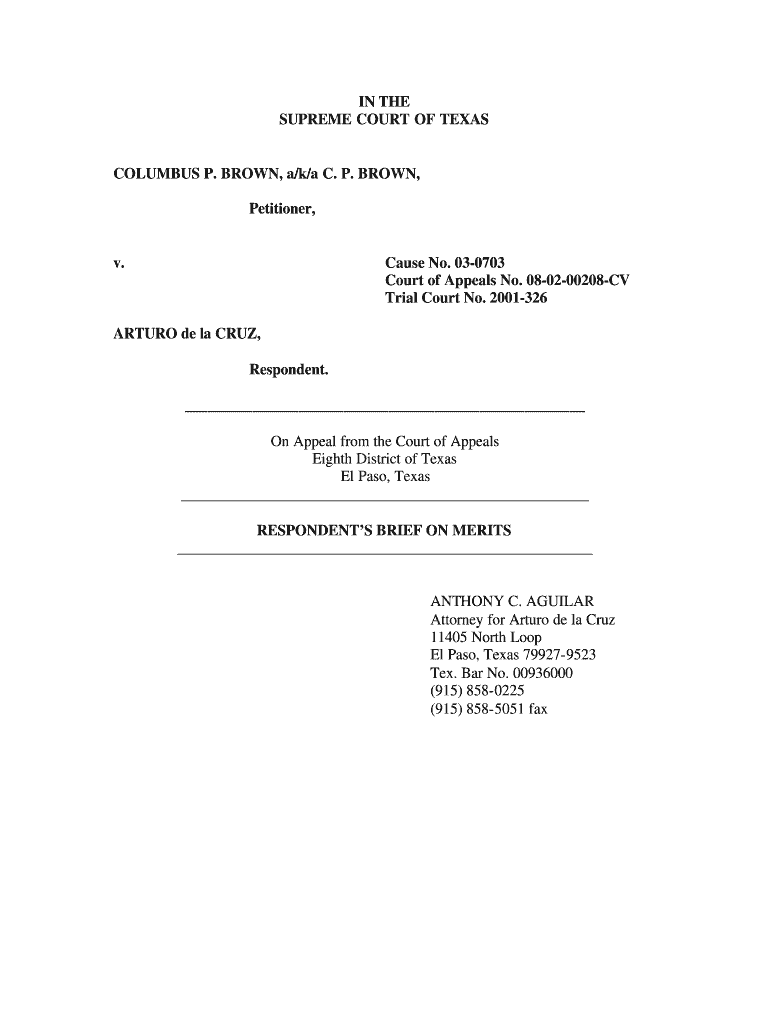







Understanding the "3-5-2004 Material for Disketter to Supreme Court"
The "3-5-2004 material for disketter to Supreme Court" pertains to a specific legal document or series of documents submitted to a state’s Supreme Court at a particular time. This could refer to a legal brief, evidence submission, or other materials essential for a Supreme Court case heard in Texas. Each submission has precise legal implications and requirements based on state law, making them pivotal in ensuring legal compliance and effective case presentation.
Key Elements and Structure
- Title and Case Details: Every material must start with a clear title reflecting the case's name, reference number, and participating parties.
- Legal Argumentation: Documents typically include a structured argument section where legal theories, statutes, and precedents are outlined.
- Exhibits and Evidence: Submissions often attach pertinent evidence or exhibits, ranging from written testimonies to digital records that support the case.
- Affirmation Statements: Verifications affirming the truthfulness of the documents are integral, often needing notarization or legal oath.
How to Use the Material in the Supreme Court of Texas
These materials are often used as references during court proceedings to back legal arguments, present evidence, or propose specific legal interpretations. They are a valued resource for attorneys representing their clients, providing robust support for their stance in court decisions.
- Argument Support: Lawyers use these documents to bolster their verbal arguments, making them foundational during oral arguments.
- Evidence Presentation: Exhibits included may directly influence the court's understanding and ruling based on factual presentation.
- Citation Source: They serve as credible documents for referencing past decisions or establishing legal precedents.
Obtaining the Material
Accessing these materials requires compliance with legal procedures and permissions typically reserved for involved legal parties and authorized personnel. They may be acquired either digitally or physically under the following channels:
- Court Archives: Original documents are often stored in court records, accessible through formal requests.
- Legal Representatives: Lawyers involved in the case provide a copy to clients or other legal officials.
- Public Record Repositories: Some documents become part of public records, particularly those involved in landmark cases.
Completing the "3-5-2004 Material" for Submission
To fill out material for court submission, precision and adherence to formatting and legal guidelines are essential. Here's a detailed pathway:
- Identify Required Sections: Ensure all sections per the court directives are covered, such as case introduction, argument, and conclusion.
- Gather Necessary Documents: Compile all relevant forms, evidence, and exhibits for attachment.
- Draft Legal Arguments: Craft a clear, cohesive argument based on Texas law and precedents.
- Finalize and Notarize: Include necessary affirmations or declarations and get them notarized as needed.
- Submission: Follow Texas's Supreme Court submission guidelines, choosing between digital portals or physical submissions.
Legal Use and Compliance
Submitting these materials aligns with Texas legal requirements to ensure fair trial proceedings and comprehensive legal representation. Lawyers and plaintiffs must understand specific legal standards and ethical guidelines:
- Adherence to State Laws: The materials must comply with Texas's legal statutes and court directives.
- Accuracy in Presentation: Misrepresenting facts or omitting critical elements could lead to legal repercussions.
- Confidentiality Protocols: Maintaining client or case confidentiality is essential unless filing in the public domain.
State-Specific Considerations and Variations
Each state has particular guidelines for submitting materials to its Supreme Court, with Texas having distinct procedural details:
- Document Formatting: Texas may require specific formatting styles for briefs and submissions.
- Filing Deadlines: Particular deadlines must be met, subject to Texas court schedules.
- Technical Requirements: Digital submissions may need specific file types or encryption standards.
Examples and Real-World Applications
Understanding through examples enriches insights into how similar materials have been applied in historical contexts or current applications:
- Landmark Cases: Materials involved in such cases reveal strategies and analytical reasoning employed.
- Legal Precedents: Use of similar materials to overturn a previous ruling showcases their influence and effectiveness.
- Strategic Importance: Recognizing how these materials influenced case outcomes offers valuable lessons for future cases.
Important Legal Terms and Definitions
Be versed with critical legal terminology associated with the materials to ensure compliance and understanding.
- Petition: An official request to the court to take action on a particular matter.
- Exhibit: A document or object presented as evidence in court.
- Brief: A written document explaining the position of one party in a legal dispute.




