







Definition & Meaning
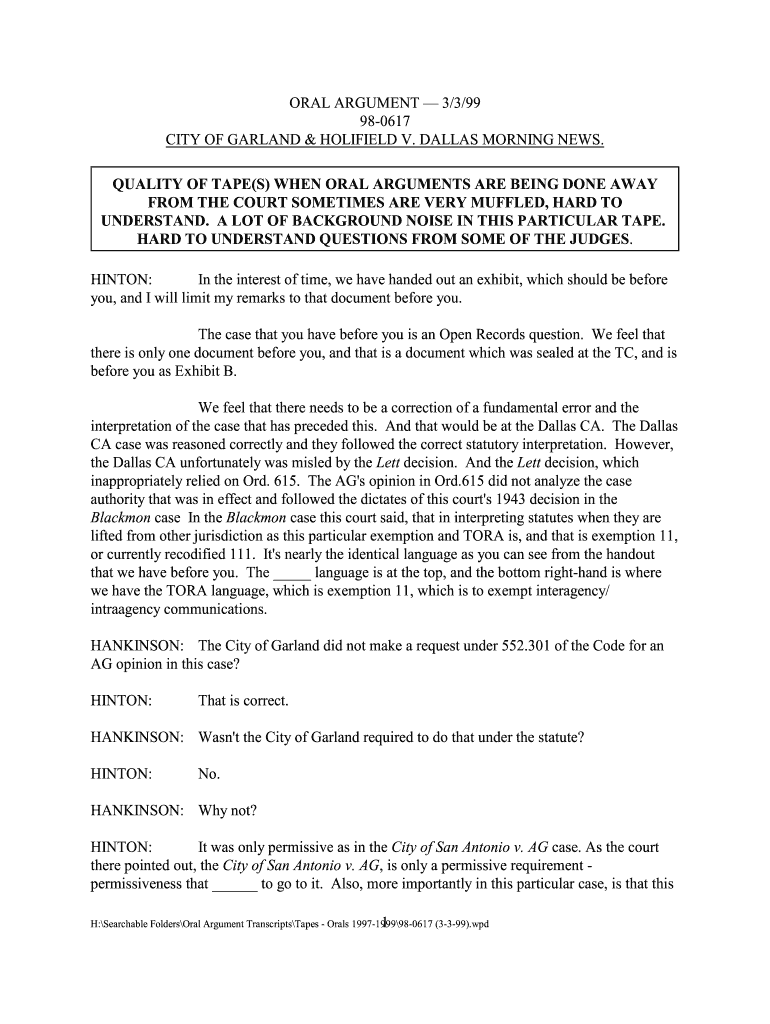
Oral Argument 3399 refers to a specific legal proceeding where attorneys present their cases to a higher authority, often a court. This form of argument is pivotal in legal contexts, allowing each side to articulate their interpretations, supported by facts and precedents. This procedure is crucial for presenting interpretations of statutory requirements and influencing rulings on legal matters. The number "3399" may indicate a docket or case number, which helps in tracking the progression and documentation of the proceedings.
How to Use the ORAL ARGUMENT 3399
To effectively use the Oral Argument 3399, legal practitioners prepare a structured presentation that outlines the key aspects of their case. This involves:
- Preparation: Review all documents, evidence, and precedents relevant to the case.
- Outline the Argument: Create a clear structure that includes an introduction, key points, counterarguments, and a conclusion.
- Practice Delivery: Rehearse the argument to ensure clarity, conciseness, and confidence during the proceeding.
- Engage with Questions: Be prepared to answer questions from judges or opposing counsel that challenge the argument's validity or interpretations.
Steps to Complete the ORAL ARGUMENT 3399
Completing the Oral Argument involves a series of methodical steps:
- Research & Collection: Gather all relevant case laws, statutes, and background information.
- Drafting: Write a draft argument incorporating legal citations and factual details.
- Feedback: Seek input from colleagues or mentors to refine the presentation.
- Final Review: Ensure all legal citations and facts are accurate and that the argument flows logically.
- Presentation: Deliver the argument as scheduled, ensuring to adhere to time constraints and procedural rules dictated by the court.
Key Elements of the ORAL ARGUMENT 3399
The Oral Argument includes several critical components that enhance its effectiveness:
- Clarity: Ensuring the argument is easy to understand.
- Consistency: Consistently supporting points with evidence and legal precedents.
- Persuasiveness: Crafting a compelling narrative to sway the decision in your favor.
- Responsiveness: Effectively addressing challenges or questions from opposing counsel or judges.
Important Terms Related to ORAL ARGUMENT 3399
Understanding specific legal terminology is vital for navigating Oral Argument 3399:
- Deliberative Process Privilege: Protects the decision-making process by keeping internal discussions confidential.
- Statutory Interpretation: The process of determining the meaning of a law and how it applies to specific situations.
- Draft Document: Preliminary versions of a document, often not finalized and subject to change.
Legal Use of the ORAL ARGUMENT 3399
In legal proceedings, Oral Argument 3399 is used primarily to:
- Clarify Issues: Provide clarity on any issues or misunderstandings in the written submissions.
- Highlight Precedents: Emphasize previous cases that bolster the argument, demonstrating how the present case aligns with established legal principles.
- Persuade Decision-Makers: Influence the judge's or panel's decision through effective communication, highlighting the strengths of your case and the weaknesses of the opposing argument.
Examples of Using the ORAL ARGUMENT 3399
In practice, steps taken during an Oral Argument can vary significantly depending on case specifics. For example:
- Attorneys may argue the availability of documents under the Texas Open Records Act, highlighting the distinction between drafts and final versions to influence disclosure decisions.
- Lawyers might focus on the deliberative process privilege to argue against the release of sensitive documents, thereby protecting internal government communications.
Who Typically Uses the ORAL ARGUMENT 3399
This form is primarily used by:
- Attorneys: Either from private practices or representing public entities during appellate cases.
- Judicial Officers: Such as judges who oversee the proceedings and probe the presented arguments.
- Legal Scholars and Students: Analyzing the form for educational and research purposes, often focusing on its role within legal systems.


Who Issues the Form
The Oral Argument 3399 is initiated as part of court procedures. It's often case-specific and is based on court orders or schedules issued by the relevant judicial authority in charge of the legal matter at hand. Each proceeding will typically adhere to unique codes or numbering systems that pertain to the jurisdiction or nature of the case.
By understanding and applying the details of these blocks, users of the Oral Argument 3399 can effectively navigate the procedural requirements and improve their practice within the legal landscape.




