Definition & Meaning
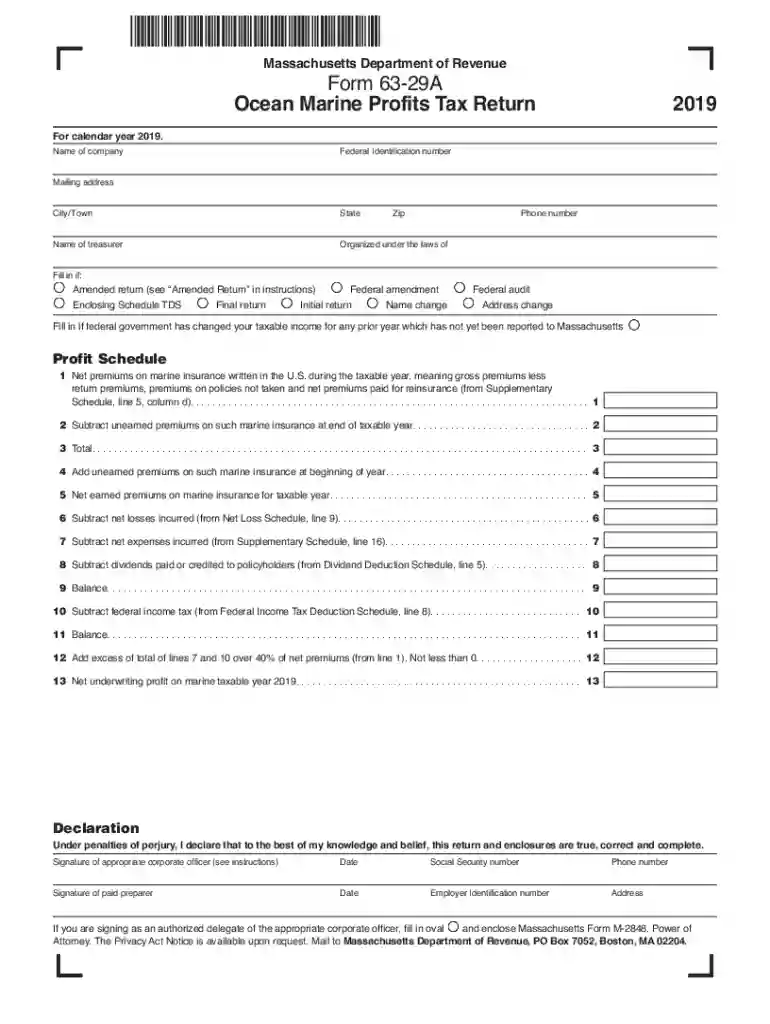
The Massachusetts Department of Revenue Form 63-29A is specifically designed for marine insurance companies operating within Massachusetts. Commonly referred to as the Ocean Marine Profits Tax Return, this form is used to report and calculate taxes based on the marine insurance profits earned. The form requires detailed disclosures on net premiums, losses, expenses, and other related financial metrics.
Core Components
- Net Premiums: Insurers report the total premiums earned from marine insurance policies.
- Loss Calculations: This includes claims paid out under the marine insurance policies.
- Expense Reporting: Operational costs directly related to the marine insurance offerings must be detailed.
Key Elements of the Massachusetts Department of Revenue Form 63-29A Ocean Marine
The form contains several critical sections to ensure comprehensive reporting and compliance.
Profit Schedules
- Purpose: Outline the detailed steps for calculating profit from ocean marine insurance operations.
- Utility: Helps insurers accurately capture their financial performance.
Dividend Deductions
- Criteria: Allows companies to list any dividends paid, which may be used to reduce taxable income.
- Impact: Accurate reporting here can significantly affect tax liabilities.
Federal Income Tax Deductions
- Details: Companies can indicate federal income taxes already paid, which might be credited against their state tax obligations.
- Importance: Prevents the double taxation of income.
Steps to Complete the Massachusetts Department of Revenue Form 63-29A Ocean Marine
Filing this form involves a methodical process to ensure accuracy and compliance.

Step-by-Step Completion
- Gather Necessary Financial Documents: Before starting, ensure you have all relevant statements, including profit & loss and balance sheets.
- Enter Net Premiums: Fill out sections regarding premiums earned as specified in the form.
- Document Losses & Expenses: Carefully outline all claims paid and direct operational costs.
- Calculate Taxable Income: Apply any eligible deductions to determine your taxable amount.
- Review & Submit: Double-check entries for accuracy before submission to avoid penalties.
Who Typically Uses the Massachusetts Department of Revenue Form 63-29A Ocean Marine
Primary Users
- Marine Insurance Companies: These firms primarily utilize this form to report taxes within Massachusetts.
- Large Financial Institutions: Businesses encompassing maritime facets within their operations may also be required to file.
Why Organizations Use the Massachusetts Department of Revenue Form 63-29A Ocean Marine
Utilizing this tax form is a legal obligation and brings several benefits.
Legal Compliance
- Requirement: Filing is mandatory for ocean marine insurers under Massachusetts law.
- Consequence: Non-compliance can lead to fines or other penalties.
Financial Reporting
- Accuracy: Ensures a consistent approach for reporting significant financial metrics.
- Clarity: Helps depict a clear financial picture to stakeholders and regulatory bodies.
Important Terms Related to Massachusetts Department of Revenue Form 63-29A Ocean Marine
Glossary of Key Terms
- Net Premiums: The gross income earned from policies minus any reinsurance costs.
- Apportionment: Division of income and expenses across multiple jurisdictions if applicable.
- Dividends: Profits distributed to shareholders, affecting deductions.
Legal Use of the Massachusetts Department of Revenue Form 63-29A Ocean Marine
Understanding the legal framework surrounding this form is critical for compliance.
State Tax Regulations
- Massachusetts Tax Code: Form 63-29A functions under specific state-level guidelines distinct from federal regulations.
- Statutory Obligations: Adhering to these laws is crucial for legal and financial integrity.
Filing Deadlines and Important Dates for Massachusetts Department of Revenue Form 63-29A Ocean Marine
Timing
- Annual Deadline: Typically aligned with the end of the fiscal year, ensuring timely tax payments and preventing interest on late filing.
- Extension Availability: While extensions may be available, they generally only apply to the filing requirements, not the payment dues.
Form Submission Methods: Online, Mail, and In-Person
Options for submission offer flexibility based on the business preferences and capabilities.
Submission Options
- Online Filing: Secure portals through the Massachusetts Department of Revenue enable digital form submission.
- Mail: Hard copies can still be forwarded via postal service.
- In-Person: Those requiring assistance may visit local offices for guidance and direct filing.