




01. Edit your form online
Type text, add images, blackout confidential details, add comments, highlights and more.

Type text, add images, blackout confidential details, add comments, highlights and more.

Draw your signature, type it, upload its image, or use your mobile device as a signature pad.

Send it via email, link, or fax. You can also download it, export it or print it out.
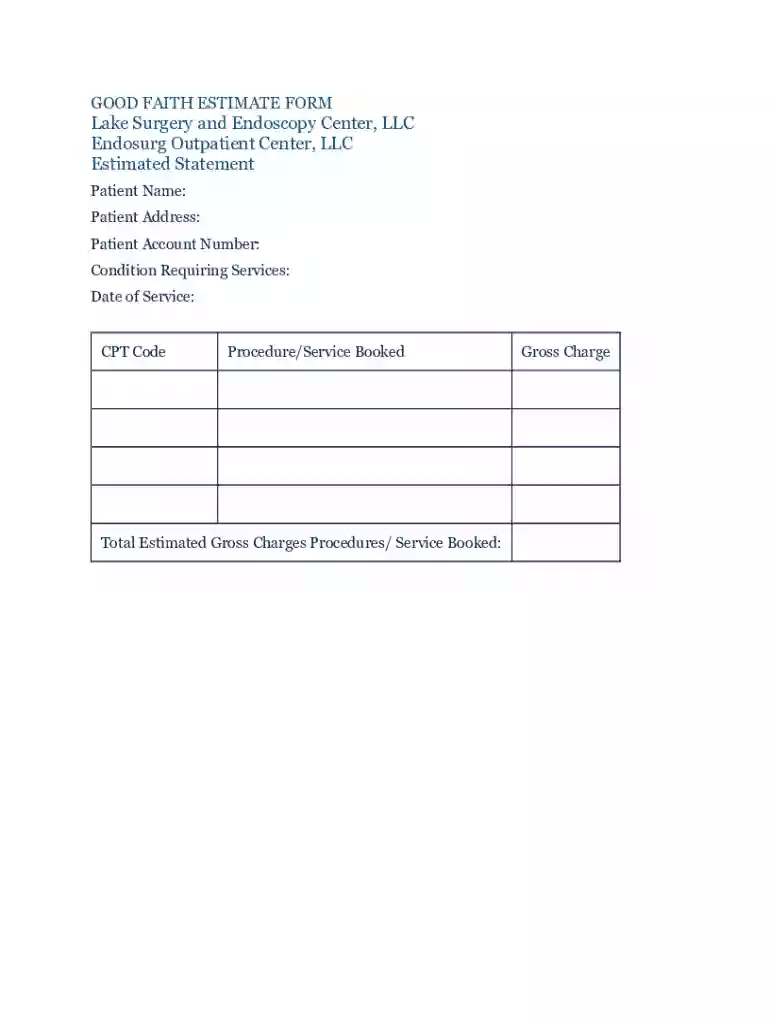
The term "Good Faith Estimate" refers to a document that healthcare providers and facilities must provide to uninsured or self-pay patients, outlining the expected costs of medical services. This estimate is intended to give patients a clear picture of the expenses they might incur, allowing them to make informed decisions regarding their health care. The concept of "Surprise Medical Bills" arises when patients receive unexpected charges that were not initially communicated, typically from out-of-network providers during otherwise in-network care.
In the United States, efforts to regulate surprise medical bills have led to legislation like the No Surprises Act, which aims to protect consumers from unexpected charges and ensure transparency in healthcare pricing. Providers must now provide a Good Faith Estimate before services are rendered, helping patients avoid financial surprises that can arise from complex billing scenarios.
Using a Good Faith Estimate involves several key steps. First, the healthcare provider or facility should issue the estimate to the patient before the service is provided. The estimate should include detailed information about the cost of services, including any potential additional charges. This document should be reviewed carefully by the patient to understand the scope of the services and the anticipated financial impact.
Patients can then compare the Good Faith Estimate with any bills received post-service to identify discrepancies. If there are significant deviations from the estimate, the patient may contact their provider to resolve these billing issues. The process promotes proactive communication between patients and healthcare providers, ideally reducing the likelihood of encountering surprise medical bills.
To obtain a Good Faith Estimate, patients should initially request one from their healthcare provider or facility when scheduling services. Providers are required by law to furnish this document, particularly when dealing with uninsured or self-pay patients. The estimate should include comprehensive details about anticipated procedures, the healthcare provider's charges, facility fees, and any additional costs like diagnostic tests or follow-up appointments.
Before finalizing arrangements, patients are encouraged to verify that the estimate covers all potential charges. Questions and clarifications should be directed to the provider to ensure all parties have a mutual understanding of the expected costs.
Completing a Good Faith Estimate form involves several essential steps:
Gather Patient Information: Input accurate and complete information about the patient, including contact details and relevant medical history.
Detail the Necessary Services: Identify the medical services required, using specific procedural terminology or codes where applicable.
Calculate Estimated Costs: Providers should include all expected charges, factoring in professional fees, facility fees, and any ancillary services.
Review with the Patient: Once the form is completed, review it with the patient to confirm that all listed services are anticipated and the costs are understood.
Sign and Distribute Copies: Have all relevant parties sign the estimate, and ensure the patient receives a copy for their records.
Good Faith Estimates are crucial in the healthcare financial landscape as they enhance transparency and trust between providers and patients. By providing a detailed breakdown of expected costs, these estimates empower patients to make more informed decisions about their healthcare options, potentially preventing financial distress caused by unforeseen expenses.
The practice of issuing Good Faith Estimates aligns with the broader goals of the healthcare system to prioritize patient-centered care and ethical billing practices, ultimately contributing to a more fair and predictable medical billing environment.
Good Faith Estimates are primarily used by uninsured or self-pay patients who need clarity on the costs associated with their medical care. Healthcare providers, including doctors, clinics, and hospitals, are obligated to offer these estimates. Patients utilizing high-deductible health plans or those opting for elective services may also commonly request an estimate to understand their potential financial commitment before undergoing treatment.
A comprehensive Good Faith Estimate includes the following critical components:
Legally, healthcare providers must adhere to regulations that require them to offer Good Faith Estimates to eligible patients. Non-compliance can result in legal repercussions under the No Surprises Act and related legislation. Providers must ensure their estimates are comprehensive and transparent to avoid issues related to billing discrepancies or financial disputes with patients.
Consider a patient scheduled for a routine surgical procedure. The provider issues a Good Faith Estimate detailing all expected costs associated with the surgery, anesthesia, and post-operative care. The patient reviews the estimate, asking questions about potential additional charges. Post-surgery, the patient cross-references the estimate with the received bill, finding only minor discrepancies easily addressed with the provider.
Another scenario involves a patient with a chronic condition requiring regular diagnostic tests. Regular Good Faith Estimates help the patient manage these ongoing costs and anticipate financial outlays, preventing surprise medical bills that could disrupt their budget.
By providing clarity and predictability, Good Faith Estimates become a critical tool that helps patients navigate the often complex landscape of medical billing.
We've got more versions of the Good Faith Estimates and Surprise Medical Bills form. Select the right Good Faith Estimates and Surprise Medical Bills version from the list and start editing it straight away!
At DocHub, your data security is our priority. We follow HIPAA, SOC2, GDPR, and other standards, so you can work on your documents with confidence.


