




01. Edit your form online
Type text, add images, blackout confidential details, add comments, highlights and more.

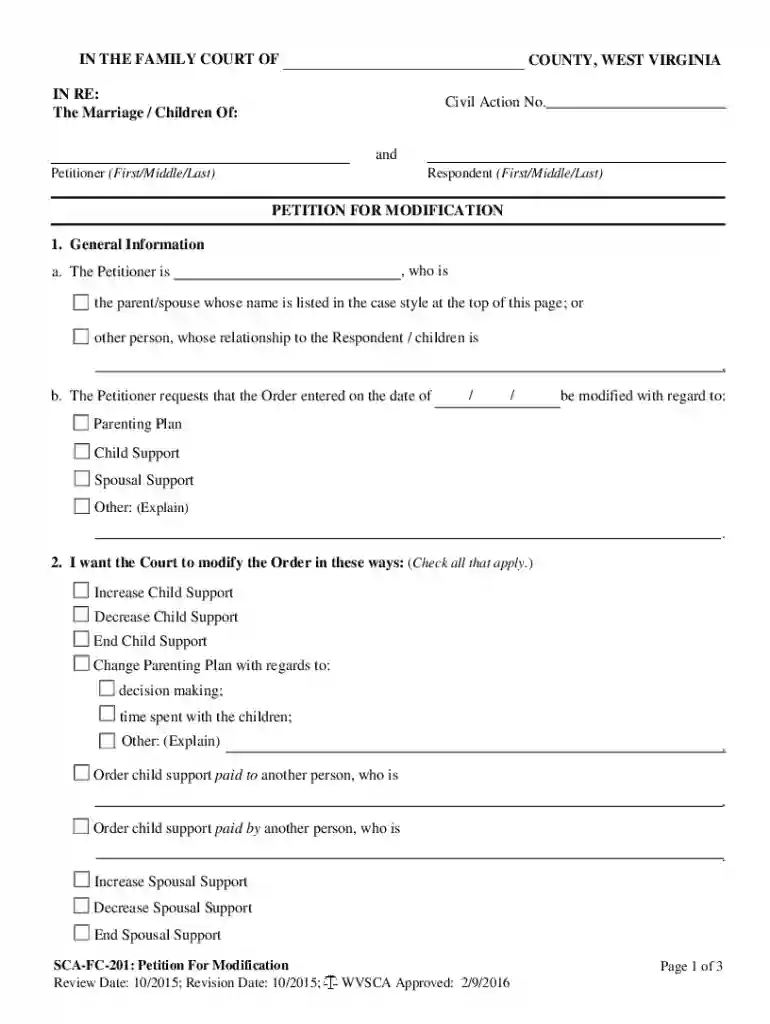
Type text, add images, blackout confidential details, add comments, highlights and more.

Draw your signature, type it, upload its image, or use your mobile device as a signature pad.

Send it via email, link, or fax. You can also download it, export it or print it out.
The "West Virginia Respondent's Divorce Answer Packet Instructions" serves as a crucial legal document outlining the steps a respondent must take when answering a divorce petition filed in the state of West Virginia. The instructions guide the respondent through the process of formally addressing the claims made by the petitioner, ensuring that all procedural requirements are met. This document is essential in protecting the legal rights of the respondent, allowing them to contest the petition or agree to certain terms.
Reviewing the Divorce Petition: Begin by carefully reading the divorce petition you received. This will help identify the claims made against you and the relief sought by the petitioner.
Understanding Terminologies: Familiarize yourself with the legal terminologies used within the document. This ensures that you fully comprehend each section and its implications.
Completion of Forms: The instructions will guide you through completing the necessary forms accurately. Pay attention to details such as personal information, assets, debts, and any counterclaims you wish to make.
Filing: Follow the steps listed to file your response with the appropriate court in West Virginia. This may involve submitting your completed forms to the family court where the initial petition was filed.
Serving the Petitioner: Ensure that the petitioner receives a copy of your completed response. The instructions will specify the acceptable methods of serving documents.
Gather Required Information: Collect all relevant documents, such as marriage certificates, financial records, and any prenuptial agreements.
Fill Out Forms: Using the instructions, carefully fill out each form in the packet. Ensure information is accurate and complete to avoid delays.
Notarization: Some forms may require notarization. The instructions will specify which sections need to be signed in the presence of a notary public.
File with Court: Submit your completed packet to the designated family court. The instructions will provide details on filing deadlines and any associated fees.
Serve Petitioner: Use an approved method to serve the petitioner with a copy of the response. Keep proof of service as it may be required by the court.
The instructions are legally binding and must be followed to ensure compliance with West Virginia's family law system. Failing to respond properly to a divorce petition can result in a default judgment against the respondent. The instructions help ensure that your response is both timely and accurate, preserving your legal rights throughout the divorce proceedings.
Contesting a Divorce: If you disagree with the grounds for divorce or the terms requested by your spouse, the instructions will guide you on how to formally contest these in your answer.
Negotiating Support: The instructions outline how to address claims about spousal or child support, which can lead to negotiations if you provide adequate reasoning for alternative arrangements.
The digital version of the packet offers the convenience of filling out and submitting the response online, which can streamline the process and reduce the time taken compared to traditional paper submissions. However, ensure you comply with court preferences regarding digital or paper submissions for legal proceedings.
We've got more versions of the West Virginia Respondent's Divorce Answer Packet Instructions form. Select the right West Virginia Respondent's Divorce Answer Packet Instructions version from the list and start editing it straight away!
At DocHub, your data security is our priority. We follow HIPAA, SOC2, GDPR, and other standards, so you can work on your documents with confidence.
We have often sneered at the superstition and cowardice of the mediaeval barons who thought that giving lands to the Church would wipe out the memory ofRead more
by S Averett Appendix 1: Sample Documents for Beginning a Divorce Case (Cover Sheet, 43. Department of Health Form, Complaint, Parenting Plan, Motion and Affidavit.Read more
DIVORCE FORMS ; West Virginia Respondents Divorce Answer Packet Instructions, Respondent, SCA-FC-100A ; Answer to Divorce Petition, Respondent, SCA-FC-108.Read more


