
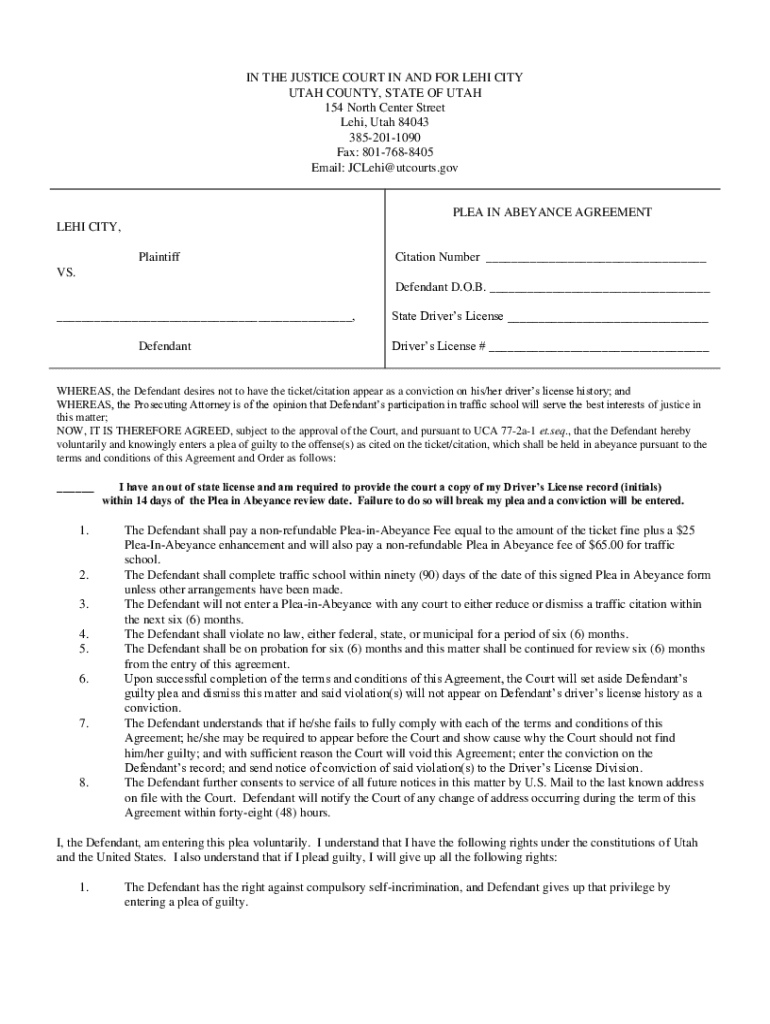







Definition & Meaning
A Plea in Abeyance Agreement is a legal instrument used predominantly in traffic courts within the United States, enabling defendants to plead guilty or no contest to a charge without an immediate conviction being entered on their record. It allows the defendant to adhere to specified conditions—such as attending traffic school or completing a probationary period—that, if fulfilled, may result in the eventual dismissal of the charge. This agreement is particularly significant as it provides an alternative resolution mechanism, helping individuals avoid points on their driving record and subsequent rises in insurance rates.
Key Elements
- Guilty Plea Requirement: Defendants must typically enter a plea of guilty or no contest.
- Conditional Compliance: Requirements like traffic school completion and fee payments.
- Probationary Period: A set time frame where the defendant must avoid further legal issues.
- Dismissal Possibility: Successful compliance may lead to dismissal of charges.
How to Use the Plea in Abeyance Agreement
Defendants should first consult with an attorney to understand the implications and eligibility for a plea in abeyance. Upon agreement with the terms set by the court, a formal plea is entered, and the individual must comply with outlined conditions. This involves regular monitoring to ensure all requirements, such as payment of fines and completion of educational courses, are met within the specified period to ensure charges are ultimately dismissed.
Practical Scenarios
- First-time Traffic Offenders: Utilizing this agreement to maintain a clean driving record.
- Minor Traffic Violations: Reducing the impact of minor infractions on insurance premiums.
- Legal Guidance: Consulting an attorney for clarity on terms and conditions.
Steps to Complete the Plea in Abeyance Agreement
- Review Eligibility: Determine if this option is available for your specific charge.
- Consult Legal Counsel: Seek advice to evaluate benefits and potential risks.
- Enter the Plea: Formally plead guilty or no contest in court.
- Meet Conditions: Adhere to court-mandated conditions.
- Monitor Progress: Keep track of all deadlines and requirements.
- Verify Completion: Confirm with the court that all terms have been satisfied.
Important Terms Related to Plea in Abeyance Agreement
- Probation: A test period during which a defendant must comply with specific conditions laid out by the court.
- Dismissal: The official cancellation of a court case or charge.
- Adjudication Withheld: A verdict where the court does not give a final judgment of conviction.
Legal Use of the Plea in Abeyance Agreement
Incorporating a plea in abeyance is legally binding within states where it is permitted, aligning with state laws regarding traffic violations. This option is predominantly used within traffic courts as an alternative legal remedy, aimed at benefiting both the court system—by reducing caseloads—and the defendant—by offering a second chance.
Considerations
- Legal Jurisdiction: Applies where state laws permit such agreements.
- Court Approval: Subject to the discretionary approval of the presiding judge.
- Legal Representation: Often advisable to ensure proper use and comprehension.
State-Specific Rules for the Plea in Abeyance Agreement
Regulations governing plea in abeyance agreements can vary significantly by state. For instance, Utah allows for the use of this agreement specifically in cases of minor traffic infractions, while other states may offer expanded or reduced criteria for eligibility. Understanding the local legal landscape is critical for defendants seeking to utilize this option.
Examples of Using the Plea in Abeyance Agreement
Many individuals use a plea in abeyance agreement following a minor traffic citation, such as speeding or failure to come to a complete stop at a stop sign. By successfully completing the terms, they avoid a formal conviction and keep their driving records clean. For instance, a new driver might plead in abeyance for a minor speeding ticket, attend a driving course, and the ticket is dismissed, helping maintain favorable insurance rates.
Who Typically Uses the Plea in Abeyance Agreement
This agreement is primarily utilized by individuals facing minor traffic-related offenses. It appeals to those without previous offenses, who are more likely to meet the conditions successfully. It's particularly beneficial for drivers under 25, who face significant increases in insurance premiums with any blemish on their driving record.


Typical Users
- Young Drivers: Protect driving records and insurance rates.
- First-time Offenders: Those seeking minimal impacts from minor infractions.
- Individuals Seeking Rehabilitation: Engagement in educational courses as part of agreement terms.
Penalties for Non-Compliance
Failure to comply with the terms of a plea in abeyance agreement results in the original charge being reactivated and a conviction recorded. This can result in immediate penalties such as fines, points on the driving record, and increased insurance premiums. Non-compliance indicates failure to meet probation terms, such as missing deadlines for fee payments or traffic school.
Required Documents
To initiate a plea in abeyance, defendants must typically provide identification, documentation of the offense, and any prior related documentation, such as previous traffic offenses. Complete and accurate document submission ensures a smooth agreement process and adheres to court expectations for transparency and accountability.
Form Submission Methods
Most plea in abeyance agreements are processed in person at the court. However, some jurisdictions may permit initial online submissions, followed by personal appearances. Communication with court personnel is vital to understanding acceptable procedures and ensuring compliance with local court rules.
Key Takeaways
- Plea in abeyance offers an innovative solution for addressing minor traffic offenses without immediate record consequences.
- It requires a balance of legal awareness, compliance with court conditions, and often, assistance from legal professionals.
- Understanding state-specific rules and maintaining diligent adherence to agreement terms are essential for leveraging this legal option successfully.




