




01. Edit your cpi blue card online
Type text, add images, blackout confidential details, add comments, highlights and more.

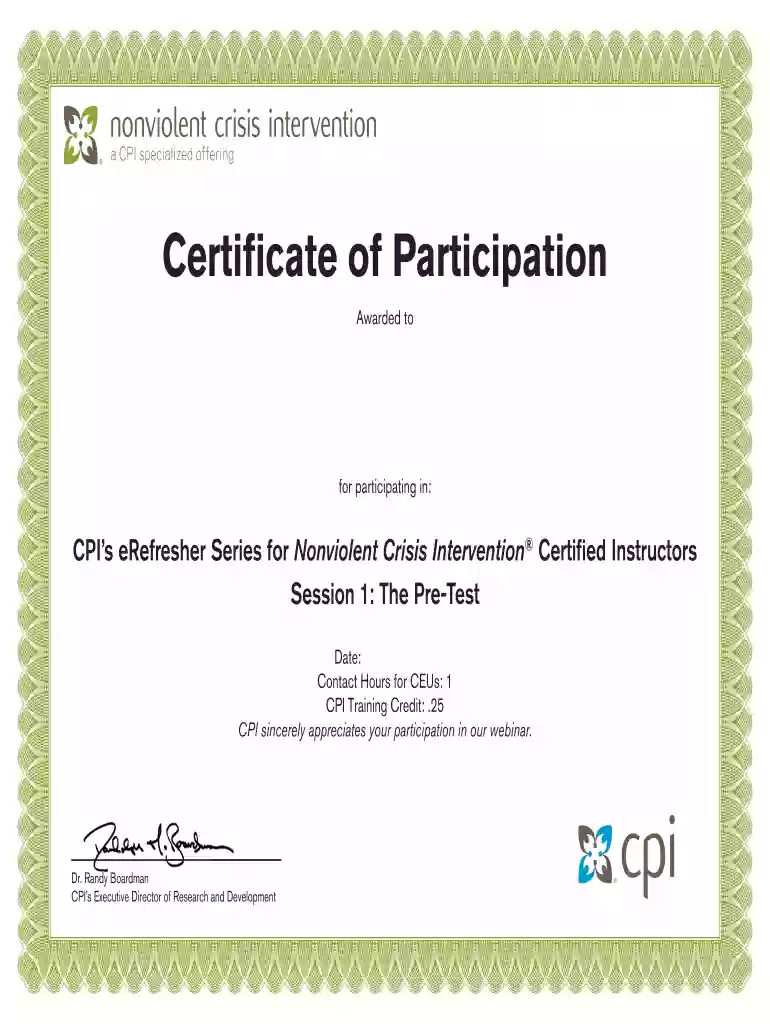
Type text, add images, blackout confidential details, add comments, highlights and more.

Draw your signature, type it, upload its image, or use your mobile device as a signature pad.

Send free cpi nonviolent crisis intervention training blue card via email, link, or fax. You can also download it, export it or print it out.
The CPI Blue Card is a certification designating that an individual has completed the Crisis Prevention Institute’s Nonviolent Crisis Intervention® training program. This program focuses on equipping caregivers and professionals with skills to manage difficult and potentially violent situations safely. The blue card serves as proof of completion, validating an individual’s competencies in crisis management and de-escalation techniques.
The CPI Blue Card is highly valued in various sectors, including education, healthcare, and social services, where staff may encounter challenging behaviors. Its significance lies not just in certification but also in the reassurance it provides to employers and clients that the holder is trained in essential crisis intervention strategies.
The CPI Blue Card is important for several reasons:
Acquiring the CPI Blue Card involves completing the relevant training program offered by the Crisis Prevention Institute. Here is a step-by-step process to obtain the card:
For those looking to obtain the CPI Blue Card online, many institutions provide virtual training sessions. These options often include interactive components and access to resources that facilitate learning at one’s own pace.
Completing the training to receive the CPI Blue Card is structured but can vary based on the format chosen. The outlined steps below provide a general framework:
Select a Training Provider:
Register and Prepare:
Engage in Training:
Complete Assessments:
Receive Certification:
The CPI Blue Card is utilized by a broad range of professionals, particularly those involved in direct care and crisis management. Typical users include:
Each of these roles requires specific competencies in de-escalation and crisis intervention strategies, highlighting the importance of the CPI Blue Card.


The CPI Blue Card serves not just as a certification but also has legal implications in professional practice. The training emphasizes the following legal uses:
This understanding is particularly crucial for professionals working in environments that involve vulnerable populations, where the risks associated with crisis situations can have significant legal ramifications.
The CPI Blue Card features several key elements that signify a certified individual’s qualifications in crisis intervention:
Awareness of these elements is vital for both certified individuals and employers seeking to validate training credentials.
At DocHub, your data security is our priority. We follow HIPAA, SOC2, GDPR, and other standards, so you can work on your documents with confidence.


CPI Blue Card Training is a program designed to teach professionals how to manage and de-escalate crisis situations involving individuals in behavioral healthRead more
Online: Blue LED indicates a PC is connecting to the port The signal cable may be loose or the video card configuration may not match the switch.Read more


