







Definition and Meaning
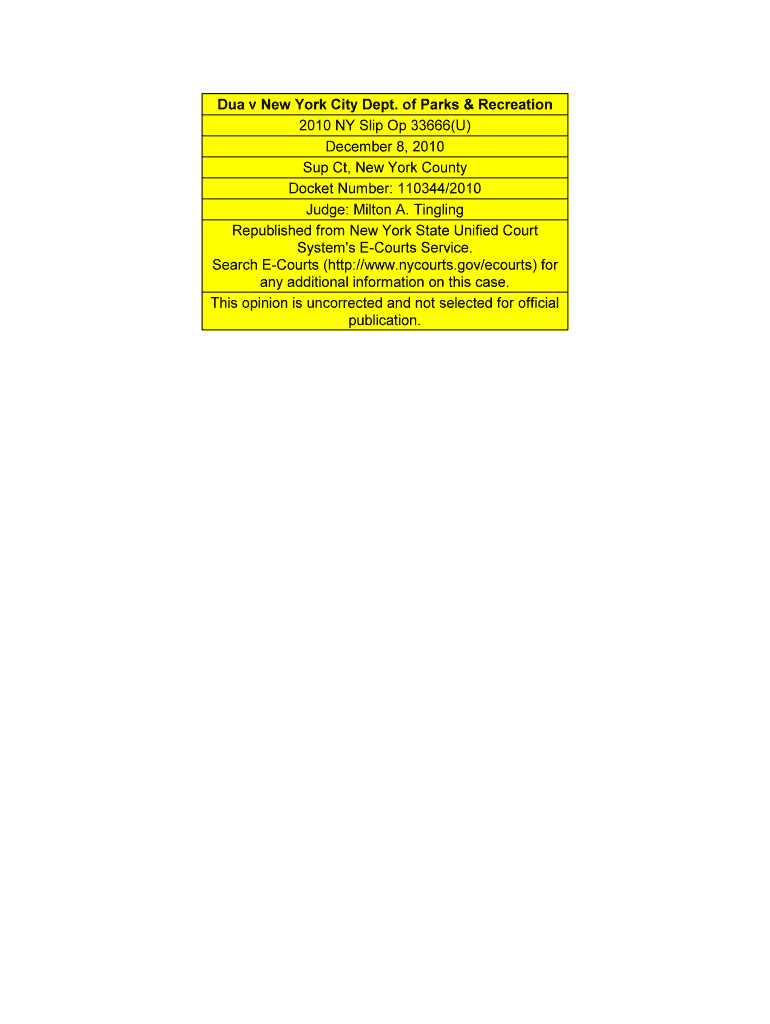
"Dua v New York City Dept of Parks and Recreation" refers to a legal case involving a dispute between Dua and the New York City Department of Parks and Recreation. The plaintiffs in this case challenged revised vending rules enforced by the Parks Department, seeking a temporary restraining order and preliminary injunction. The core of the case was whether these new regulations infringed upon the plaintiffs' rights under state law.
Legal Context and Implications
- Revised Vending Rules: The case revolved around changes in the rules governing vending activities in New York City parks, which altered how vendors could operate.
- Rights Assessment: The court evaluated the adherence of these rules to state law, primarily focusing on whether they violated any established rights of the vendors involved.
How to Use the Legal Decision
This court decision serves multiple purposes in legal and civic contexts, particularly for those directly affected by or interested in municipal regulations and legal precedents.
Applications in Legal Studies
- Case Analysis: Law students and legal professionals can examine this case to understand how courts view municipal authority and vendor rights.
- Precedent Evaluation: It's a reference for evaluating future cases involving similar disputes over municipal regulations.
Key Elements of the Court Decision
Understanding the critical components of the court's decision helps clarify the judgment.
Components
- Temporary Restraining Order: Initially granted but later vacated when the court found insufficient grounds to uphold it.
- Likelihood of Success: The court concluded that the plaintiffs lacked a strong likelihood of success, which is a standard requirement for such injunctions.
- Balance of Equities: Considered not in favor of the plaintiffs, leading to the denial of their request.
Important Terms Related to The Case
Familiarity with particular terms used in the legal discourse provides better insight into the case's dynamics.
Definitions
- Temporary Restraining Order: A short-term measure to prevent action until a case is more fully decided.
- Preliminary Injunction: An order to temporarily halt certain actions pending a final court decision.
- Vending Rules: Regulations governing the sale or distribution of goods in designated public spaces.
Steps to Navigate the Court Decision
Breaking down the decision-making process can aid individuals or entities facing similar legal situations.
Sequential Process
- Filing a Complaint: Initiating legal action by formally presenting grievances against specific rules.
- Requesting an Injunction: Applying for court orders to temporarily suspend the disputed rules.
- Court Evaluation: Analysis of presented evidence and legal frameworks to assess the injunction request.
- Final Ruling: The court's decision based on likelihood of success and equity balance.
Examples of Using the Court Decision
This decision can be referenced in various contexts, serving as a legal touchstone and practical guide.
Scenarios
- Municipal Compliance: Local governments might use this decision to design compliant regulatory frameworks.
- Vendor Advocacy: Vendor associations could cite this case in advocacy efforts for fair regulations.
Legal Use and Compliance
The legal implications of this decision extend beyond its immediate parties and context.
Compliance Strategies
- Regulatory Adjustments: Municipalities may need to reassess their rules to avoid similar legal challenges.
- Precedent Application: Legal practitioners might leverage this case in related future litigations concerning municipal regulations and civil rights.
State-Specific Rules for Vendors
Although this case is specific to New York City, it reflects broader themes with state-specific variations.
Factors to Consider
- Local vs State Jurisdiction: Understanding how state laws impact local regulations can guide vendors and legal practitioners.
- Potential Conflicts: This decision underscores the importance of ensuring local rules align with state laws to avoid legal disputes.
Who Typically Uses the Court Decision
Understanding who finds utility in this case can underscore its significance across different professional spheres.


Examples
- Legal Professionals: To explore municipal law precedents and develop case strategies.
- Policy Makers: To design compliant public policies that respect civil and economic liberties.
This comprehensive insight into the "Dua v New York City Dept of Parks and Recreation" case provides valuable information for understanding legal processes and implications within municipal regulatory frameworks.




