Understanding the Notice to Enter Premises BC Form
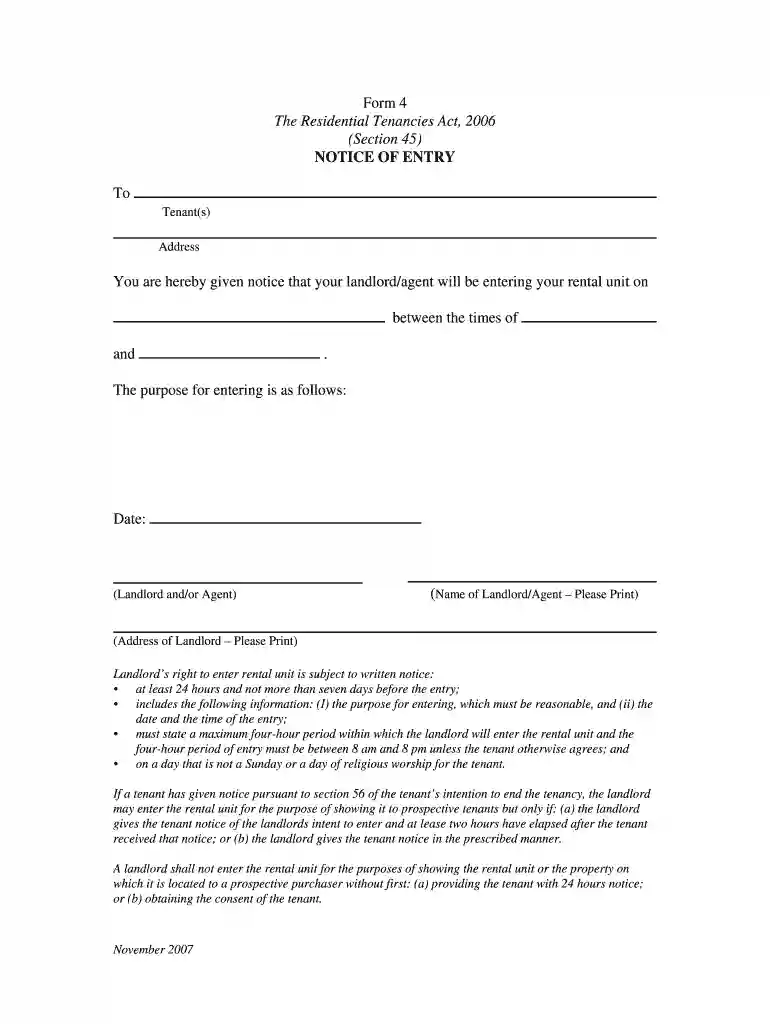
The notice to enter premises BC form, often referred to as the 24 hour notice to enter form, is a crucial document for landlords in British Columbia. It is used to formally inform tenants of a landlord's intent to enter a rental unit for specific purposes. This form plays a critical role in ensuring compliance with the Residential Tenancies Act by establishing protocols for the entry of landlords into rental properties.
What the Notice to Enter Premises BC Form Entails
- Purpose: The notice serves to notify tenants of impending visits by landlords for repairs, inspections, or showings. This is essential for maintaining transparency and trust between landlords and tenants.
- Legal Framework: The form follows regulations outlined in the Residential Tenancies Act, 2006, which protects tenants' rights while also allowing landlords to manage their properties effectively.
- Contents: A typical notice must include:
- The landlord's name and contact information.
- The tenant's name and address of the rental unit.
- The date of the intended entry.
- The specific purpose for entering the premises.
- The proposed time of entry, which should fall within a four-hour window that is reasonable, between 8 AM and 8 PM.
Key Compliance Requirements
The requirements for issuing this notice are clear and must be adhered to for legal compliance:
- Notice Period: Landlords must provide a minimum of 24 hours' written notice before entering a tenant's unit.
- Format: The notice should be in writing and can take the form of a printed document, email, or another written form of communication, ensuring the tenant receives it clearly.
- Exceptions: There are certain scenarios where immediate entry may be justified without prior notice, such as emergencies that pose a risk to health or safety.
Components of the Notice
Understanding the components of the notice is essential for both landlords and tenants to ensure all necessary information is included:
- Contact Information: Full details of the landlord to allow tenants to reach out for clarification or concerns.
- Purpose of Entry: Clearly stating why entry is necessary helps foster cooperation. Common reasons include:
- Routine inspections.
- Repairs or maintenance (e.g., plumbing fixes, appliance checks).
- Showings for prospective tenants or buyers.
- Time Frame: Providing a specific time frame helps tenants prepare for the entry and reduces potential conflict.
- Signature: The landlord's signature or digital confirmation adds legitimacy to the form and reinforces accountability.
Practical Example of a Completed Notice
For practical understanding, a sample notice might look like this:
- Landlord’s Name: John Doe
- Landlord’s Contact Information: Phone:, Email: johndoe@example.com
- Tenant’s Name: Jane Smith
- Rental Unit Address: 123 Maple Street, Suite 4, Victoria, BC
- Date of Entry: October 10, 2023
- Purpose of Entry: Routine property inspection.
- Time of Entry: Between 9 AM and 11 AM.
Consequences of Non-Compliance
Failure to deliver a proper notice can lead to disputes and potential legal issues. Here are some considerations:
- Tenant Rights: Tenants may refuse entry if proper notice is not provided, protecting their right to privacy and comfort at home.
- Legal Ramifications: If landlords repeatedly fail to comply with the notice requirements, they may be subject to penalties or disputes via the Residential Tenancy Branch.
Tenant's Response to the Notice
Upon receiving the notice, tenants have several options:
- Acknowledge Receipt: It's wise for tenants to acknowledge the received notice, either verbally or in writing, confirming their understanding of the scheduled visit.
- Express Concerns: If tenants have scheduling conflicts or concerns regarding the provided time, they should communicate with the landlord to negotiate a more suitable time.
Additional Considerations for Landlords and Tenants
- Documentation: Both landlords and tenants may benefit from keeping copies of all notices and communication regarding entries for their records.
- Understanding Tenant Rights: Tenants should familiarize themselves with their rights under the Residential Tenancies Act to ensure they are not taken advantage of or misinformed.
- Educational Resources: Landlords can access resources or training on proper notice practices and regulations to foster good landlord-tenant relationships.
This comprehensive overview emphasizes the importance of the notice to enter premises BC form in maintaining compliance and nurturing productive interactions between tenants and landlords in British Columbia.