
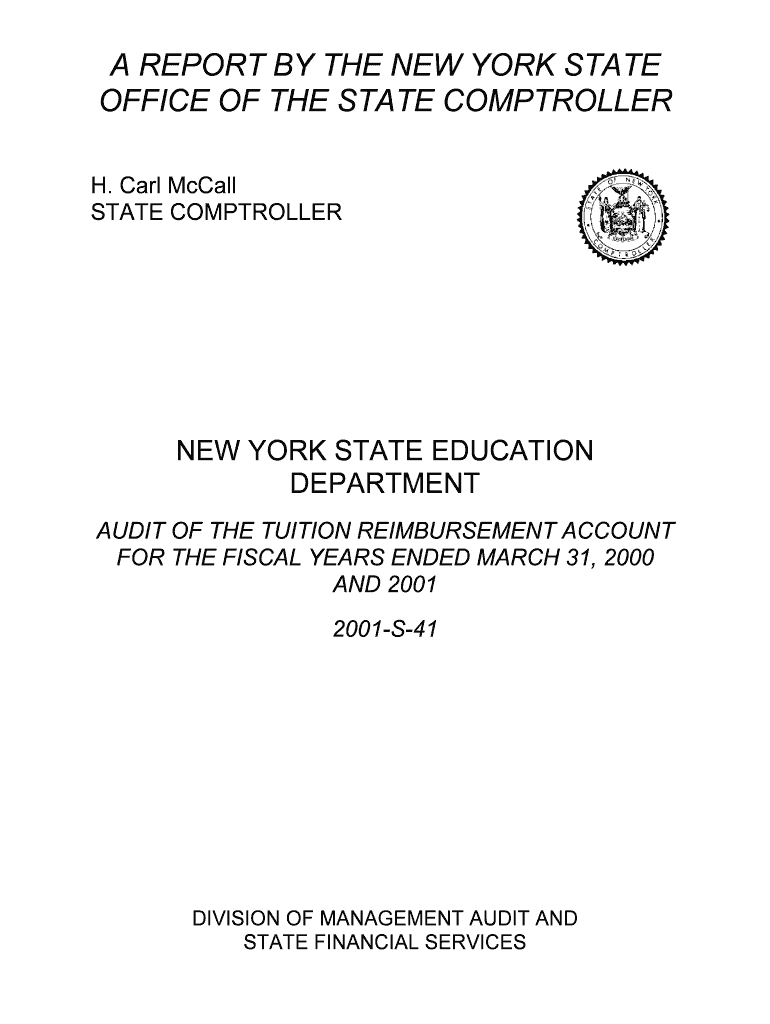







Definition and Purpose of the New York State Comptroller Report
A report by the New York State Office of the State Comptroller (OSC) serves as a crucial tool for financial transparency and accountability. This report primarily focuses on the Tuition Reimbursement Account (TRA), highlighting financial statements, compliance reports, and internal control assessments. These documents help assess how public funds are managed and ensure compliance with relevant state laws and policies.
- Audit Objectives: The audit examines the financial health of the TRA, ensuring financial statements are fairly presented according to modified accrual accounting principles.
- Compliance Checks: It evaluates adherence to statutory requirements, particularly concerning assessments and refunds.
- Importance: This report plays a vital role in identifying significant financial variances and discrepancies that may affect state education financing strategies.
How to Access the Report
Obtaining the New York State Comptroller report is straightforward, usually digitized for ease of access. Here’s how:
- Online Access: The OSC’s official website typically hosts a repository of such reports, where documents can be downloaded directly.
- Library Archives: State libraries or government repositories may have physical or digital copies available upon request.
- Request via Email or Mail: For specific inquiries or versions not available online, a formal request can be sent to the OSC’s office.
Completing and Using the Report Effectively
Understanding and utilizing the report requires careful attention to its sections and findings:
- Financial Analysis: Review the financial statements critically to understand the TRA's fiscal health.
- Compliance Review: Pay attention to noted compliance issues to identify areas requiring intervention.
- Internal Controls: Scrutinize the internal control assessments to evaluate risk management practices.
Steps to Review the Report
- Extract Key Information: Identify critical data points, such as variances in revenue and expenditure.
- Interpret Findings: Use the compliance and financial health insights to inform policy adjustments.
- Actionable Decisions: Apply report insights to make informed decisions regarding resource allocation and policy development.
Key Elements of the Report
Several elements are critical in understanding the report's findings and implications:
- Financial Statements: Detailed breakdowns of the TRA's financial activities.
- Compliance Reports: Assessments of adherence to laws affecting educational financing.
- Internal Controls: Evaluations of systems in place to prevent financial mismanagement.
Each element plays a role in offering a comprehensive view of the TRA's operations and areas needing improvement.
Important Terms and Legal Context
Understanding associated terminology is crucial for interpreting the report:
- Modified Accrual Accounting: A hybrid accounting method combining accrual and cash systems.
- Statutory Requirements: Legal obligations that the TRA must comply with.
- Assessment Collection Policies: Guidelines governing how educational assessments are collected and managed.
These terms often recur in government reports, serving as benchmarks for compliance and financial integrity.
Who Typically Uses the Report
The report is intended for various stakeholders within the state’s educational and financial systems:
- Government Officials: Utilize the report for policy-making and resource allocation.
- Educational Administrators: Implement findings to streamline operations and funding strategies.
- Auditors and Financial Analysts: Conduct comparative analyses to evaluate financial trends and forecast future challenges.
The insights from the report are pivotal in driving strategic decisions across different administrative levels.


Real-World Examples of Report Application
Analyzing past instances where the report’s findings prompted significant action:
- Policy Adjustments: After identifying non-compliance issues, the state revised its assessment policies.
- Resource Re-allocation: Notable revenue-expenditure variances led to the reallocation of funds to underfunded schools.
- Enhanced Oversight: Findings from internal controls assessments prompted improved oversight mechanisms.
These real-world applications underscore the report's utility in effecting significant organizational changes.
State-Specific Rules and Variations
Though the report is specific to New York, understanding state-specific regulations is essential for a broader comprehension:
- New York-Specific Guidelines: Rules governing TRA and other financial practices might differ from other states.
- Comparative Analysis: Evaluating how similar reports are handled in other states can offer additional insights into best practices.
Ensuring familiarity with these state-specific nuances is fundamental for stakeholders aiming to navigate the complex landscape of educational finance.




