







Definition & Meaning
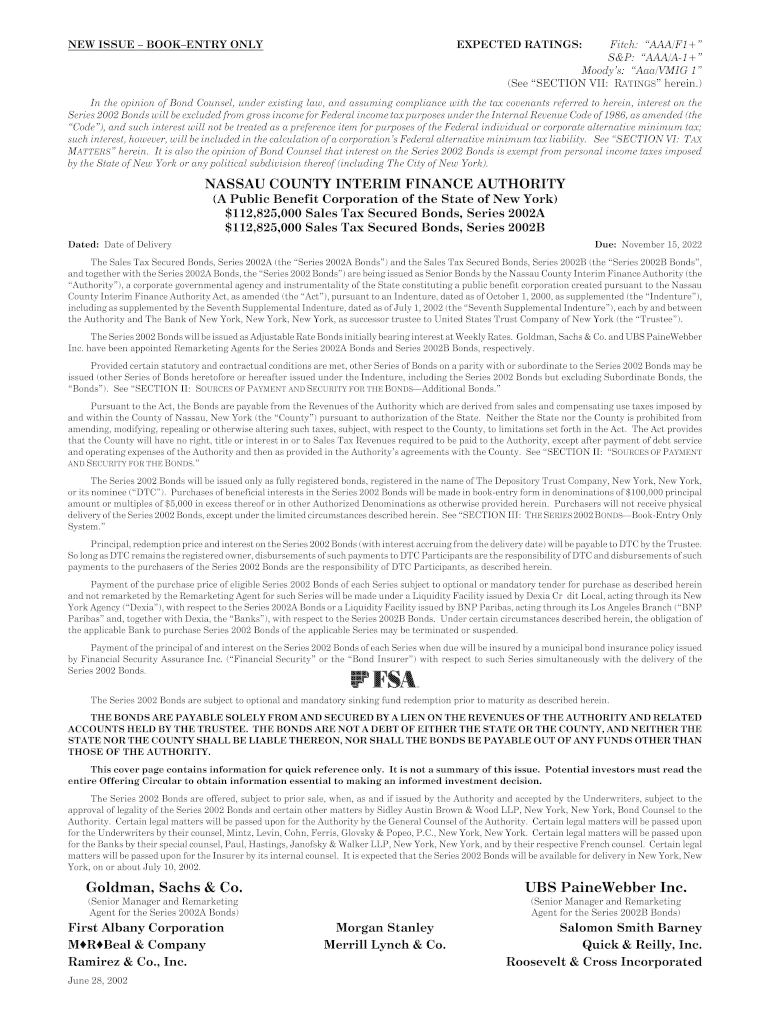
The Fitch: AAA F1+ - nifa state ny is a credit rating assigned by Fitch Ratings, representing the creditworthiness of bonds or other financial instruments issued by the Nassau County Interim Finance Authority (NIFA) in New York. The "AAA" rating signifies the highest possible credit quality, indicating that the entity has a very low risk of default. The "F1+" is a short-term rating showing that the securities have an exceptionally strong capacity for timely payment of financial commitments.
This credit rating system is used to evaluate the financial health and stability of municipal bonds, helping investors assess the risk associated with these securities. Achieving a "AAA" reflects NIFA's strong financial health, reliable revenue streams, and efficient management practices.
How to Use the Fitch: AAA F1+ - NIFA State NY
Investors and financial analysts often refer to the Fitch: AAA F1+ - NIFA State NY ratings when making decisions about purchasing bonds issued by NIFA. By understanding these ratings, stakeholders can:
- Evaluate the risk of default, which is low for "AAA" rated bonds.
- Compare NIFA issued bonds with those from other municipalities.
- Assess whether the risk level of these bonds aligns with their investment strategies.
This rating also assists financial institutions and advisors in creating investment plans that include municipal bonds, providing insight into the safety and reliability of the potential income streams.
Steps to Complete the Fitch: AAA F1+ - NIFA State NY Process
Obtaining a Fitch rating involves a detailed process by issuers like NIFA, which includes:
- Preliminary Assessment: Review of financial statements and operational data to assess initial eligibility.
- Submission of Required Information: Provide detailed financial reports, revenue streams, and expenditure plans.
- Engagement with Fitch Analysts: Discuss operational strategies, management capabilities, and future projections.
- Credit Analysis: Fitch conducts a rigorous evaluation of the financial data, focusing on debt obligations, fiscal management, and revenue forecasts.
- Rating Assignment: Based on the analysis, Fitch assigns the AAA F1+ rating to NIFA's financial instruments, reflecting their superior credit quality.
These steps ensure that the ratings provide a reliable measure of financial stability and default risk, supporting informed decision-making by investors.
Key Elements of the Fitch: AAA F1+ - NIFA State NY
Understanding the components of this rating involves considering several critical factors:
- Rating Symbols: "AAA" and "F1+" represent long-term and short-term ratings, respectively.
- Underlying Financial Health: Factors such as revenue stability, debt service coverage, and fiscal prudence.
- Management Practices: Evaluations of organizational effectiveness and fiscal responsibility.
These elements allow stakeholders to gain a comprehensive understanding of the financial security associated with NIFA's bonds, aiding in investment appraisals and financial planning.
State-Specific Rules for the Fitch: AAA F1+ - NIFA State NY
The state of New York imposes specific guidelines governing the issuance and management of bonds by entities like NIFA:
- Regulatory Compliance: Adherence to state fiscal management laws and bond issuance regulations.
- Transparency Requirements: Full disclosure of financial conditions and material risks.
- Investor Protections: Measures to ensure that investors have access to accurate and complete information.
These rules are designed to maintain the integrity of the municipal bond market, upholding investor confidence and financial market stability in the state.
Legal Use of the Fitch: AAA F1+ - NIFA State NY
Possessing a Fitch rating like AAA F1+ provides legal advantages by:
- Ensuring Compliance: It helps NIFA demonstrate compliance with state laws regarding bond issuance.
- Facilitating Informed Decision-Making: Equips investors with the necessary insights to make legally informed investment decisions.
- Supporting Disclosures: Ensures adherence to legal requirements for financial transparency.
These legal aspects ensure that both issuers and investors operate within a well-defined regulatory framework, supporting safe and lawful investment practices.
Examples of Using the Fitch: AAA F1+ - NIFA State NY
Consider a scenario where a financial advisor is advising a client on municipal bond investments:
-
Case Study: The advisor assesses the NIFA bonds with a Fitch AAA F1+ rating. Based on the strong credit score, they recommend the bonds as a low-risk investment suitable for a conservative portfolio focused on income stability.
-
Practical Application: An institutional investor uses the rating to diversify their municipal bond holdings, benefiting from the high credit quality and low default risk.
These examples illustrate the practical utility of Fitch ratings in real-world financial scenarios, guiding investment decisions that align with risk tolerance and financial goals.
Filing Deadlines / Important Dates
It is crucial for NIFA to be aware of the bond issuance timeline, ensuring compliance with important deadlines:
- Annual Reporting: Submission of yearly financial reports for ongoing credibility assessment.
- Periodic Reviews: Scheduled reviews by Fitch to ensure that the rating remains accurate and reflects any changes in financial conditions.
- Bond Issuance Dates: Specific timings when the bonds will be available for purchase on the market.
Meeting these deadlines reinforces NIFA's commitment to maintaining its high credit rating, thus supporting continuous investor confidence.




