Guidelines for Follow-up of Children with Elevated - New York State - health ny 2026

Get Form
Guidelines for Follow-up of Children with Elevated - New York State - health ny Preview on Page 1

Here's how it works

01. Edit your form online
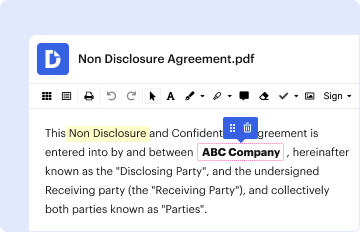
Type text, add images, blackout confidential details, add comments, highlights and more.
02. Sign it in a few clicks
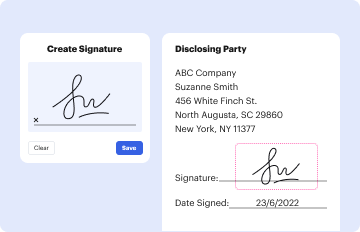
Draw your signature, type it, upload its image, or use your mobile device as a signature pad.
03. Share your form with others
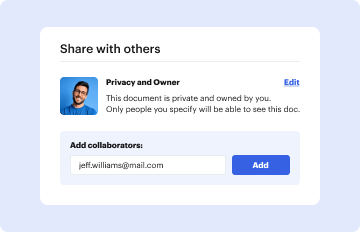
Send it via email, link, or fax. You can also download it, export it or print it out.

How to use or fill out Guidelines for Follow-up of Children with Elevated - New York State - health ny with our platform

Form edit decoration
9.5
Ease of Setup
DocHub User Ratings on G2
9.0
Ease of Use
DocHub User Ratings on G2
  1. Click ‘Get Form’ to open it in the editor.
  2. Begin by reviewing the 'Background' section, which outlines the importance of addressing elevated blood lead levels in children. This will help you understand the context of the guidelines.
  3. Move to 'Roles and Responsibilities of Local Health Departments.' Fill in any relevant information regarding your department's responsibilities as outlined in this section.
  4. In 'Coordination of Follow-up Services,' ensure you complete all fields related to confirming elevated capillary lead tests and follow-up actions based on confirmed blood levels.
  5. Utilize the attachments provided, such as the Health Care Provider Interview Tool, to gather necessary data from healthcare providers and caregivers.
  6. Review and document any discharge criteria from follow-up services as specified in Section 3-C, ensuring all required actions have been completed.

Engage with our platform today to streamline your document editing and form completion process for free!

be ready to get more

Complete this form in 5 minutes or less

Get form

Got questions?

We have answers to the most popular questions from our customers. If you can't find an answer to your question, please contact us.
Contact us
To qualify for Early Intervention Services in New York, children must be residents of the state. Income and citizenship status are not typically barriers to accessing these services. Therefore, the correct answer is that children are required to be residents of New York State.
The Childhood Lead Poisoning Prevention Act (2004) requires, in part, that building owners investigate units and common areas where lead-based paint may be present, specifically focusing on units with a child under six years old.
In New York City, Local Law 1 of 2004 requires landlords to identify and fix lead paint hazards in the apartments of young children.
Increases in FEP or ZPP are not detectable until BLLs docHub 25g/dL. An increase in FEP or ZPP usually lags behind an increase in BLL by two to six weeks. Elevated BLL and Normal FEP/ZPP = Recent exposure 2-6 weeks.
If a child under six comes to reside in a unit with presumed lead-based paint, after January 1, 2025, the property owner must abate the lead-based paint on door and window friction surfaces, and remediate lead paint hazards, including making all floors smooth and cleanable within three years of the date that the child

People also ask

NYC Local Law 31 of 2020 This law mandates that all residential buildings built before 1960, and those built between 1960 and 1978 with known lead-based paint, undergo certified lead-based paint inspections. These inspections must be conducted by EPA-certified inspectors using XRF analyzers.
Recommendations on confirmatory screening 5-14 mcg/dL Re-test venous blood lead level within 1-3 months to ensure the lead level is not rising. If it is stable or decreasing, retest the blood lead level in 3 months.
Children: New York State requires that health care providers test all 1- and 2-year-old children for lead. Children should also be assessed for lead exposure by their doctor every year until they are 6 years old. Pregnant people: Doctors should assess pregnant people for lead exposure during their first prenatal visit.

Related links