







Definition and Purpose of RGGI Form MV-1 1B
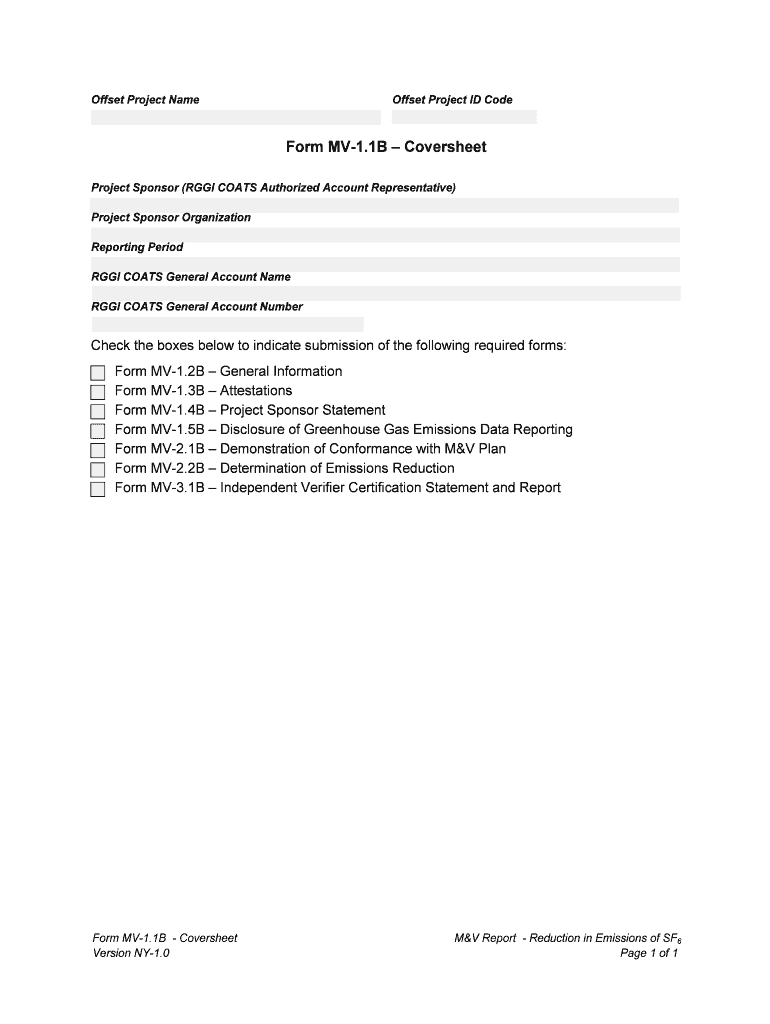
RGGI Form MV-1 1B - Coversheet Regional Greenhouse Gas Initiative Eligible Offset Form is a crucial document for those participating in the Regional Greenhouse Gas Initiative (RGGI). The form serves as a compliance tool that ensures regulated entities adhere to the program’s guidelines for offset projects aimed at reducing greenhouse gas emissions. It is specifically designed to collate and verify the required information that validates an offset project’s eligibility under RGGI standards.
Offset projects typically involve activities that reduce emissions or sequester carbon, effectively acting as counterbalances for pollution created elsewhere. These projects can include reforestation, methane capture, or technology innovations in energy efficiency. The core objective of the MV-1 1B form is to standardize this process, ensuring clarity and consistency in reporting and facilitating easier monitoring.
How to Use the RGGI Form MV-1 1B
The proper usage of the RGGI Form MV-1 1B involves several detailed steps that project sponsors need to follow. First, sponsors must accurately fill out the form by providing comprehensive information about their project, including descriptions, timelines, and expected outcomes. Each section of the form is designed to gather specific data points essential for holistic evaluation.
- Information Entry: Start by detailing the project’s basic information, including the sponsor’s name, contact details, and project location.
- Project Description: Offer a thorough description of the project, emphasizing its objectives and expected environmental benefits.
- Documentation: Attach necessary documents as required by the form, such as scientific studies or technical assessments supporting the project’s claims.
- Verification: Engage an independent verifier to confirm project details. This step is crucial for legitimacy and is often mandated by regulatory authorities.
- Submission: Finally, submit the form through the designated channel, ensuring compliance with RGGI submission procedures.
Steps to Complete the RGGI Form MV-1 1B
Completing the RGGI Form MV-1 1B is a structured process requiring attention to detail and adherence to specific guidelines. Here is a breakdown of the steps:
- Review the Guidelines: Familiarize yourself with the form’s instructions and any accompanying guidance documents. Understanding the purpose and requirements of each section prevents mistakes.
- Fill Out Basic Information: Input the required general information about the project and the project sponsor.
- Detailed Data Entry: Provide in-depth details about the offset project, including its scope, environmental significance, and methodological approach.
- Supporting Documentation: Compile and attach all required supporting documents. These may include evidence of project impacts and any calculations necessary for demonstrating greenhouse gas reductions.
- Verification Report: Ensure a qualified third party conducts a project verification. Your application is reinforced by this step, signifying credibility and adherence to stipulated standards.
- Submission: Follow the prescribed methods for submission, ensuring that all forms and documents are complete and meet the requested standards.
Key Elements of RGGI Form MV-1 1B
The RGGI Form MV-1 1B consists of several key elements that contributors need to understand fully. These elements ensure robust reporting and compliance:
- Project Sponsor Details: Clear and accurate information about the entity responsible for the project.
- Reporting Period: Specific dates indicating the timeframe of the project's reporting.
- Environmental Impacts: Clearly defined outcomes relating to the project’s contribution to emission reductions or offsets.
- Verification and Compliance: Details regarding third-party validation and adherence to RGGI guidelines.
- Checklist of Required Forms: A comprehensive checklist ensuring that all required supplemental forms and documents are included before submission.
State-Specific Rules for RGGI Form MV-1 1B
While RGGI operates through collaborative state efforts, individual states may have specific rules or considerations for using the MV-1 1B form. These nuances need to be understood by applicants to ensure compliance:
- State Authority Requirements: Certain states may require additional documentation or verification steps specific to local regulations.
- Submission Channels: Variations in submission portals or offices; some states may permit digital submissions, while others may require physical copies.
- Additional State Forms: Some states might have supplementary forms that pair with the RGGI Form MV-1 1B, catering to additional state-specific data needs or compliance checks.
Who Typically Uses the RGGI Form MV-1 1B
The form generally serves businesses and organizations engaged in activities that produce greenhouse gases and wish to participate in carbon offsetting through verified projects. This includes:
- Energy Companies: Those seeking to balance emissions via offset projects.
- Environmental Conservation Groups: Organizations dedicated to implementing projects that contribute to emissions reduction.
- Corporate Entities: Corporations with sustainability goals or obligations under environmental regulations.
- Government Agencies: Bodies involved in regulating and monitoring emission reduction activities.


Required Documents for RGGI Form MV-1 1B
A comprehensive completion of the RGGI Form MV-1 1B requires specific supporting documents, which are crucial for validation and submission:
- Project Documentation: Detailed proposals or descriptions of the offset project.
- Verification Reports: Independent verification statements and reports from qualified entities.
- Impact Assessments: Environmental or social impact assessments that contextualize the project’s benefits.
- Legal Compliance Documents: Proof of compliance with relevant local, state, or federal environmental laws.
Form Submission Methods for RGGI Form MV-1 1B
There are multiple accepted methods for the submission of the RGGI Form MV-1 1B, each designed to accommodate different preferences or constraints:
- Online Submission: Many regions allow for digital submission via an official web portal dedicated to RGGI forms.
- Mail Submission: Traditional postal submission with physical copies of the form and supporting documents.
- In-Person Submission: Some jurisdictions provide options for direct submissions to a regulatory office.
Understanding these methods ensures that participants can plan their filing process according to the most convenient and compliant method available.




