







Definition & Meaning
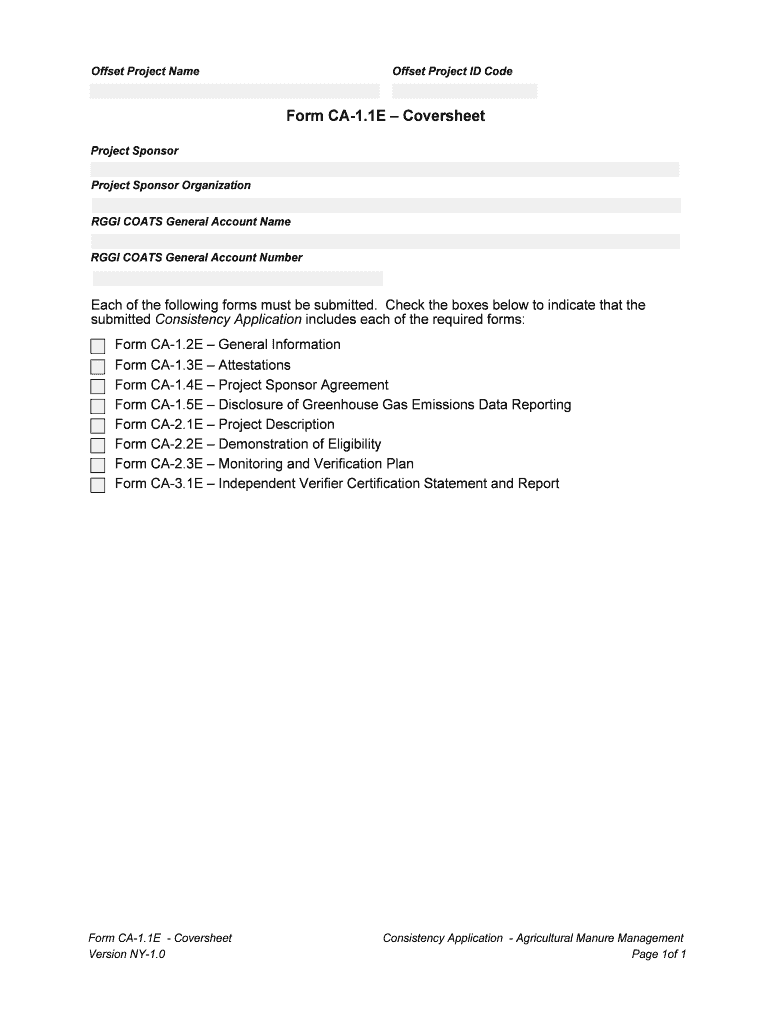
The Regional Greenhouse Gas Initiative (RGGI) Form CA-1 1E serves as the coversheet for the application related to offset projects within the RGGI framework. The primary purpose of this document is to ensure that eligible offset projects align with the requirements set by RGGI, facilitating the reduction of greenhouse gas emissions. This form specifically caters to projects that manage agricultural manure, enabling applicants to showcase their project's compliance with RGGI standards.
How to Use the RGGI Form CA-1 1E
Using the RGGI Form CA-1 1E involves several detailed steps to ensure the document is correctly completed and submitted. Start by collecting all relevant project data, including general information about the project, evidence of eligibility, and other required attestations. Once this information is ready, applicants should:
- Fill out the coversheet with project identifiers and details.
- Attach required supplementary forms, ensuring each section is complete.
- Review the form for any missing signatures or incomplete data.
- Submit the completed document through the designated method specified by the RGGI guidelines.
Steps to Complete the RGGI Form CA-1 1E
Completing the RGGI Form CA-1 1E correctly is crucial for the acceptance of your offset project. Follow these steps to ensure accuracy:
- Project Description: Provide a concise and thorough description of the offset project, including objectives and operational scope.
- Eligibility Demonstration: Fill in the sections demonstrating the project's compliance with RGGI criteria for offset credits.
- Monitoring and Verification Plan: Outline the procedures in place to monitor emission reductions and verify outcomes.
- Data Reporting: Include data on greenhouse gas emissions, following specific guidelines to ensure clarity and precision.
- Independent Verifier Certification: Obtain and attach the verifier's certification that confirms the project's adherence to standards.
Why Use the RGGI Form CA-1 1E
The RGGI Form CA-1 1E is essential for entities wishing to participate in cap-and-trade programs within the United States. By using this form, entities can:
- Validate their projects as contributors to carbon-offset initiatives.
- Gain potential economic benefits through participation in carbon markets.
- Ensure compliance with regional greenhouse gas reduction policies.
Legal Use of the RGGI Form CA-1 1E
The legal use of the RGGI Form CA-1 1E is governed by various regulations that focus on maintaining environmental integrity. This form must be completed honestly and accurately to avoid penalties and legal issues. Compliance is mandatory to support the collective effort in reducing carbon emissions regionally and nationally.
Key Elements of the RGGI Form CA-1 1E
Key elements of the RGGI Form CA-1 1E include:
- Project Identification: Name, location, and type of the offset project.
- Applicant Information: Details of the project sponsor, including contact information.
- Emissions Data: Detailed reporting of emissions before and after project implementation.
- Verification Statements: Independent confirmation of the project's effectiveness and compliance.
Required Documents for Form Submission
Several documents must be submitted alongside the RGGI Form CA-1 1E to ensure thorough scrutiny and approval:
- Project sponsor agreement detailing responsibilities and adherence.
- Attestation forms signed by relevant authorities.
- Comprehensive monitoring and verification plan.
- Independent verifier certification reports.
Form Submission Methods (Online / Mail / In-Person)
The RGGI Form CA-1 1E can be submitted through several methods, ensuring flexibility and convenience:
- Online: Submit digitally through designated portals, ensuring data privacy and security.
- Mail: Postal submission of hard copies to specified mailing addresses.
- In-Person: Hand-deliver the documents to official RGGI offices to guarantee receipt.
Each method has its own processing time, and applicants should choose the one that best suits their needs based on urgency and convenience.
State-Specific Rules for the RGGI Form CA-1 1E
Different states may have variations in how they handle the RGGI Form CA-1 1E, due to localized environmental policies and requirements. Entities must refer to state-specific guidelines to ensure that their application meets all regional compliance standards. This may involve additional documentation or varying offsets criteria, depending on the state of operation.




