




01. Edit your form online
Type text, add images, blackout confidential details, add comments, highlights and more.

Type text, add images, blackout confidential details, add comments, highlights and more.

Draw your signature, type it, upload its image, or use your mobile device as a signature pad.

Send it via email, link, or fax. You can also download it, export it or print it out.
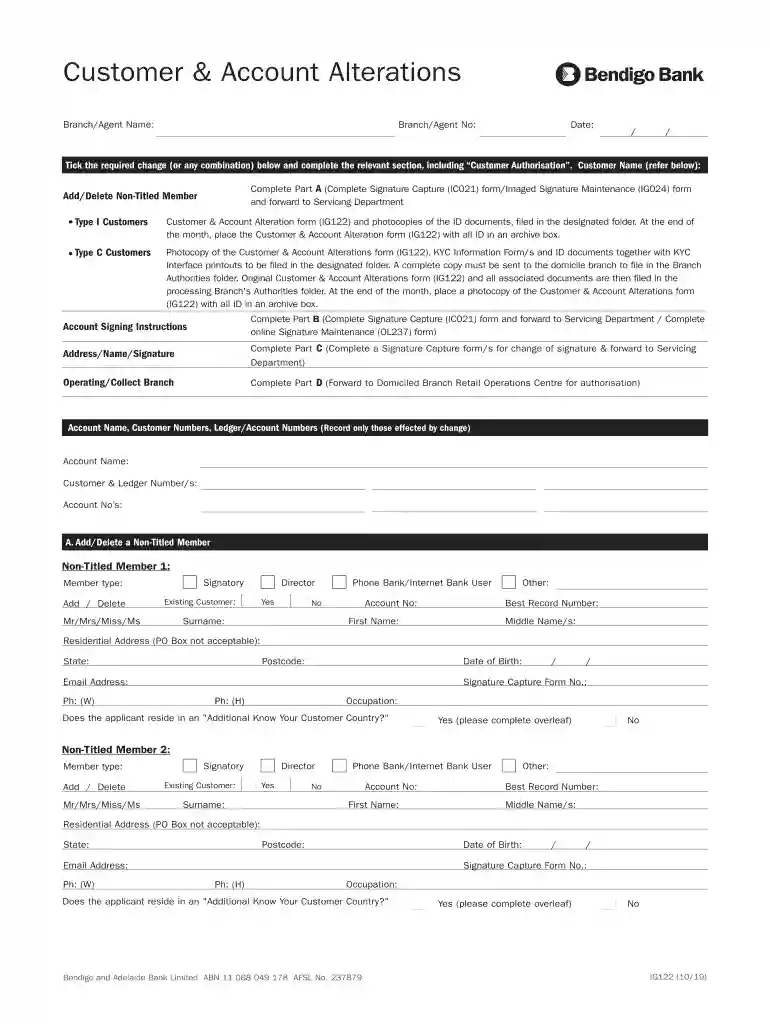
The "Customer and Account Alterations - Community Sector Banking" form is a crucial document for managing changes related to customer accounts within community banking. This form facilitates various alterations, such as adding or deleting account members, updating personal details, and modifying account signing instructions. It also ensures compliance with relevant regulations and helps in accurately maintaining the records of those holding accounts, especially in community sector banking environments.
To effectively complete the Customer and Account Alterations form, follow these structured steps:
Gather Required Information: Collect all necessary personal and account details that need updating. This includes identification documents, current account details, and the specifics of any changes required.
Fill Out Basic Information: Start by entering the basic customer information, such as name, account number, and contact details. Ensure all information is correct and up to date.
Specify Alterations: Clearly indicate the type of alteration being requested, whether it’s adding a new account holder, modifying signing authorities, or updating personal contact information.
Attach Required Documents: Include any necessary supporting documentation. This may involve proof of identity, legal documents for changes like power of attorney, or documentation proving address or name changes.
Review and Sign: Carefully review all entered information for accuracy. Once verified, sign the form to affirm the authenticity of the provided details and alterations.
Submit the Form: Submit the completed form through the preferred method stipulated by the bank, which may include online, via mail, or in-person submission.
Submitting the Customer and Account Alterations form requires several critical documents to verify the changes:
This form is predominantly used by individuals and entities involved in community banking sectors that require updates to their account settings.


The legal use of this form involves ensuring compliance with banking regulations and maintaining accurate and lawful records of customer details and account access:
Understanding the key components of the Customer and Account Alterations form aids in its accurate completion:
There are several methods for submitting the completed form, depending on the bank’s policies:
Failure to properly complete or submit the Customer and Account Alterations form can lead to several consequences:
We've got more versions of the Customer and Account Alterations - Community Sector Banking form. Select the right Customer and Account Alterations - Community Sector Banking version from the list and start editing it straight away!
At DocHub, your data security is our priority. We follow HIPAA, SOC2, GDPR, and other standards, so you can work on your documents with confidence.


