Definition & Purpose of the Equitable Financial Life Insurance Company: Overview
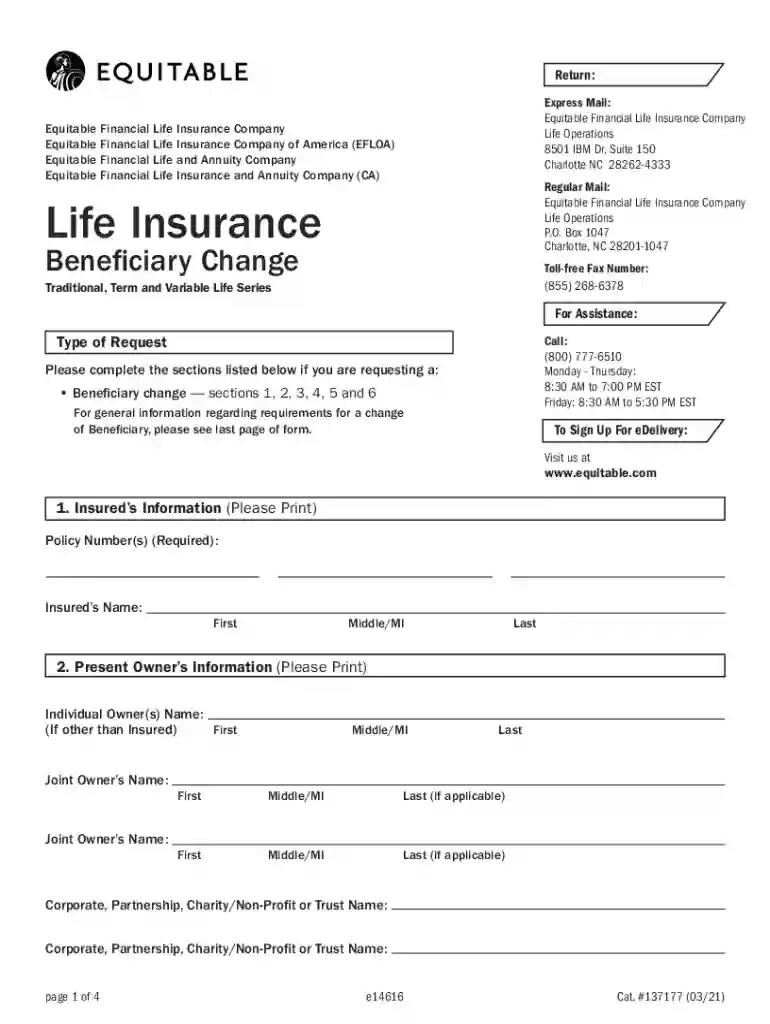
The "Equitable Financial Life Insurance Company: Overview" serves as an informative guide aimed at providing a comprehensive understanding of the Equitable Financial Life Insurance Company’s life insurance services. It is intended to clarify the company's role in offering life insurance policies, outline the benefits, and provide an overview of how their products fit into the broader landscape of financial planning. By offering detailed insights into different policy types and features, this overview ensures potential policyholders can make informed decisions tailored to their unique needs.
Key Elements of the Equitable Financial Life Insurance Company: Overview
Important elements of the Equitable Financial Life Insurance Company overview include:
- Policy Types: A detailed explanation of the different types of life insurance policies available, such as term life, whole life, and universal life insurance.
- Coverage Options: Information on the various coverage amounts, allowing policyholders to choose the right level of protection.
- Riders and Additional Benefits: Insight into optional riders that can be added to customize a policy to better meet individual needs, such as accidental death benefits or waiver of premium.
Steps to Complete a Beneficiary Change Request Form
- Start with Personal Information: Enter detailed personal information about the insured, including full name, date of birth, and policy number.
- List Current Beneficiaries: Clearly list current beneficiaries and their respective relationships to the insured.
- Specify New Beneficiaries: Provide information for the new beneficiaries, ensuring that names, addresses, and social security numbers are accurate.
- Sign and Date: Both the policyholder and any required witnesses must sign and date the form to validate it.
- Submit the Form: Once complete, the form can be submitted directly to the insurance company via mail or through an online platform, if available.
Important Terms Related to Equitable Financial Life Insurance
- Beneficiary: The person or entity entitled to receive the policy benefit upon the insured’s death.
- Premium: The regular payment made to keep the insurance policy active.
- Death Benefit: The amount paid to the beneficiary upon the insured's death.
- Underwriting: The process by which an insurance company evaluates the risk of insuring a potential policyholder.
Legal Use of the Equitable Financial Life Insurance Company: Overview
Legally, policyholders must adhere to several requirements:
- Accuracy in Form Submission: Ensure that all information provided in the documents, like the Beneficiary Change Request Form, is accurate to prevent disputes.
- Compliance with State Laws: Be aware of state-specific regulations that may affect policy terms or processes.
- Contractual Obligations: Understand the contractual obligations and rights detailed in the insurance policy, which may impact claims and benefits.
State-Specific Rules for Life Insurance Policies
Life insurance policy regulations and provisions can vary significantly from one state to another. Key differences may include:
- Policy Cooling Off Period: The time allowed for a new policyholder to cancel a policy without penalty differs across states.
- State-Specific Riders: Some states may offer unique rider options due to specific legal requirements.
- Claims Process: The time frame and requirements for processing death benefit claims can be subject to state regulations.
Form Submission Methods and Requirements
Policyholders have several ways to submit forms like the Beneficiary Change Request:
- Online Submission: Through the company's secure online portal, forms can be uploaded directly, offering convenience and swift processing.
- Mail Submission: Physical submission through postal services requires ensuring that all documents are correctly filled out and signed.
- In-Person Submission: This method allows direct interaction with Equitable Financial representatives who can offer immediate assistance.
Digital vs. Paper Version of Forms
There are benefits and considerations for both digital and paper versions of forms:
- Digital Version: Offers quick submission and reduced processing time, plus eco-friendliness and ease of access from any computer or mobile device.
- Paper Version: May be preferable for individuals uncomfortable with technology or those who prefer having a tangible copy for records.
Software Compatibility Considerations
While the Equitable Financial Life Insurance Company forms are comprehensive, users might need additional software tools for better management:
- Document Editing: Use platforms like DocHub for editing and filling out forms digitally.
- Management Software: In some instances, policyholders may utilize financial management software like QuickBooks for broader financial planning involving life insurance.
Required Documents for Policy Administration
When handling life insurance policies with Equitable Financial, having the right documents is crucial:
- Insurance Policy Document: Provides all terms and details of the policy.
- Identity Verification: Government-issued ID for verification purposes.
- Beneficiary Identification: Documentation that supports the identity of new or existing beneficiaries.
Penalties for Non-Compliance
Failure to comply with policy terms or filing accurate information can result in:
- Claim Denial: Incorrect or incomplete information can lead to denial of benefits.
- Policy Cancellation: Non-compliance with premium payment schedules or significant inaccurate data can result in policy termination.
- Legal Action: In some cases, fraudulent information may lead to legal repercussions.