







Definition and Meaning
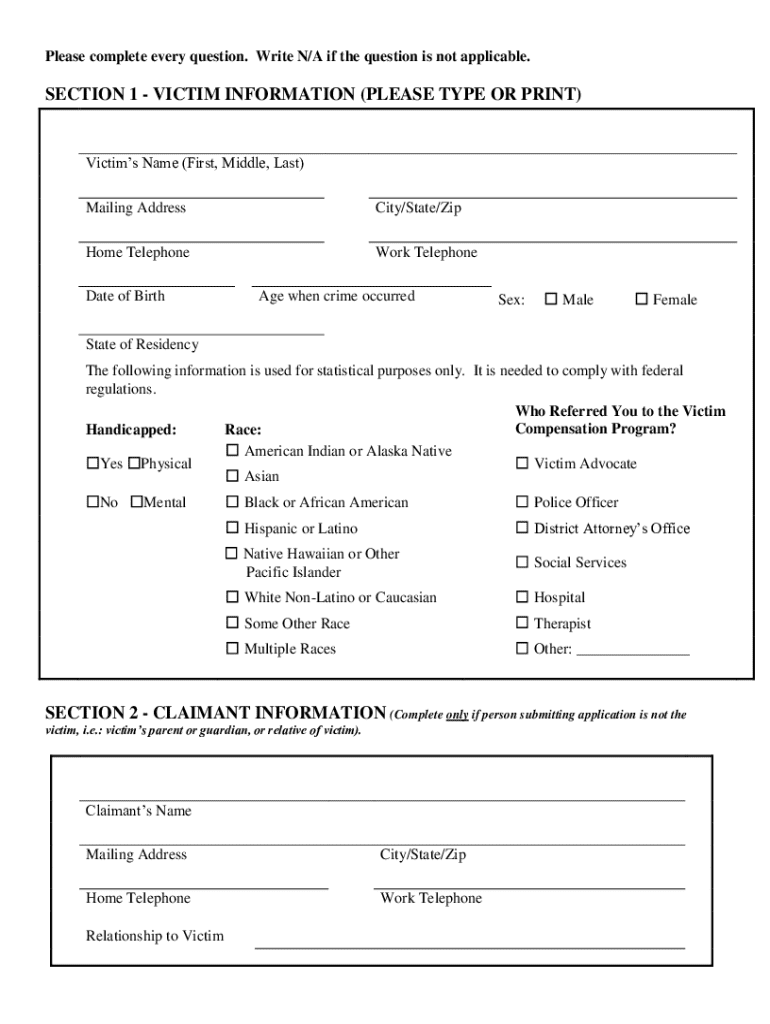
The Victim Compensation Application is a critical tool designed to aid victims of crime in seeking financial restitution for expenses incurred due to criminal acts. This application allows eligible victims to apply for compensation covering costs such as medical bills, counseling, property repairs, and other crime-related expenses. It plays a vital role in providing relief and support during challenging times, ensuring that individuals are not further burdened by unexpected financial strain.
Eligibility Criteria
To apply for victim compensation, applicants must meet specific eligibility criteria set by the state. Generally, the applicant must be a victim of a violent crime, such as assault or robbery, and must have reported the crime to law enforcement within a prescribed timeframe. Cooperation with authorities throughout the investigation is typically required. Other conditions may include the victim suffering physical or emotional harm, financial losses not being covered by insurance, and applying for compensation within the state’s deadline. Each state's program may have unique requirements, so it is crucial to check the specific stipulations applicable to your situation.


Steps to Complete the Victim Compensation Application
- Gather Required Documents: Collect essential paperwork, such as police reports, medical bills, and proof of expenses directly related to the crime.
- Fill Out the Application Form: Carefully complete all sections of the form, ensuring you provide accurate and comprehensive information.
- Submit the Application: Submit your completed application, along with all supporting documents, through the designated method specified by your state. Options often include online submission, postal mail, or in-person delivery.
- Follow Up: After submission, keep track of any communications from the compensation office and promptly respond to requests for additional information.
- Receive Compensation Decision: Once reviewed, you will be notified of the status of your application and any awarded compensation.
How to Obtain the Victim Compensation Application
Victims can typically obtain the compensation application form through several channels. Most state compensation program websites offer downloadable forms and detailed instructions. Alternatively, forms might be available at local police stations, victim assistance agencies, or courthouse offices. If needed, reaching out to victim support services can also provide guidance on acquiring and completing the application efficiently.
Key Elements of the Victim Compensation Application
- Personal Information: Details about the victim and, if applicable, the person applying on their behalf.
- Crime Details: Specifics regarding the incident, including the nature and date of the crime.
- Expense Documentation: Comprehensive list and proof of all related expenses, especially those not covered by other means.
- Law Enforcement Information: Evidence of the crime report and ongoing cooperation with authorities.
Application Process and Approval Time
Once submitted, the application undergoes a review process that may involve verifying the provided information and documentation. The approval time varies by state but generally takes several weeks to a few months. During this period, applicants may be contacted for additional details or clarification. It is important to be responsive to any inquiries to avoid delays. Upon approval, compensation is typically disbursed directly to the beneficiary or service provider (e.g., medical facilities).
State-Specific Rules for the Victim Compensation Application
Each state administers its victim compensation program, meaning the rules, eligibility, and compensation caps can differ significantly. It is essential for applicants to familiarize themselves with their state's specific regulations, available benefits, and maximum compensation amounts. Some states might offer additional support for specific categories like domestic violence or sexual assault, providing flexibility in the application of funds.
Required Documents
Successful application of victim compensation necessitates the submission of certain documents. Commonly required documents include:
- Police Reports: Evidence that the crime was reported in a timely manner.
- Medical Records and Bills: Documentation from hospitals, doctors, or therapists.
- Financial Proof: Receipts or statements showcasing other incurred costs, such as property repair bills.
- Insurance Claims: Information concerning any insurance reimbursements received.
Legal Use of the Victim Compensation Application
The utilization of the victim compensation application is governed by strict legal frameworks to ensure that only eligible individuals receive support within the boundaries of the law. Misrepresentation or fraudulent applications can lead to penalties, including denial of claims or further legal action. All applicants are encouraged to provide honest and complete information to uphold the integrity of the compensation program.




