




01. Edit your form online
Type text, add images, blackout confidential details, add comments, highlights and more.

Type text, add images, blackout confidential details, add comments, highlights and more.

Draw your signature, type it, upload its image, or use your mobile device as a signature pad.

Send it via email, link, or fax. You can also download it, export it or print it out.
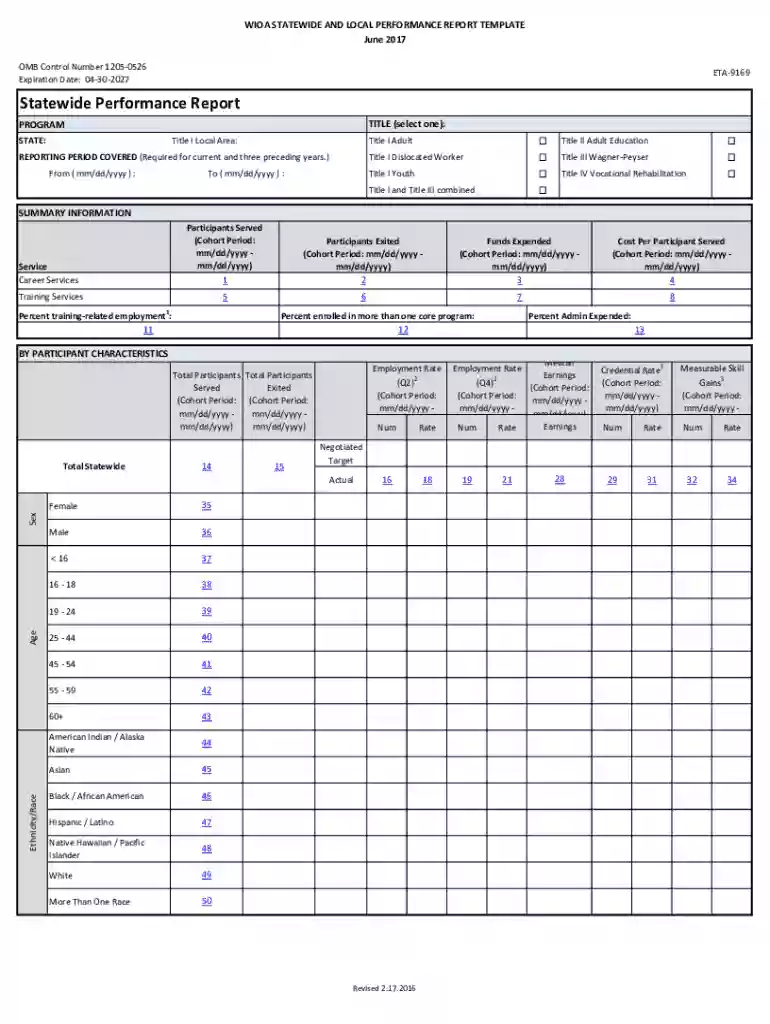
The " Supporting Statement" is a document associated with U.S. Department of Labor reporting requirements, particularly under the Workforce Innovation and Opportunity Act (WIOA). This form is crucial for collecting and reporting performance data related to workforce programs at state and local levels. It serves as a comprehensive guide for understanding how various workforce services impact employment outcomes, skill gains, and other performance metrics. By capturing detailed data, the supporting statement enables stakeholders to assess program efficiency and effectiveness.
The primary components of the supporting statement include participant demographics, service outcomes, funding expenditures, and performance metrics. Each section is designed to gather specific information critical for comprehensive reporting. For instance, participant demographics provide insights into the populations served, while performance metrics help evaluate the success rates of various initiatives.
Using the supporting statement requires a structured approach to gather, compile, and analyze relevant data effectively. It is essential to understand its layout fully and identify which sections apply to your reporting requirements. This understanding aids in accurately completing the form, ensuring that each piece of data contributes meaningfully to the overall assessment of workforce program performance.
Obtaining the supporting statement is a straightforward process. Typically, this form can be accessed through the U.S. Department of Labor's official website. It is important to ensure you have the latest version of the document to comply with current regulatory standards.
The supporting statement can be submitted via several methods, offering flexibility depending on your capabilities:
The primary users of the supporting statement are entities involved in workforce development and training initiatives, such as state and local workforce boards, educational institutions, and nonprofit organizations. These stakeholders utilize the data collected to evaluate the efficacy of their programs and to report on compliance with federal requirements.


The supporting statement is a key tool in workforce development, providing a data-driven foundation for evaluating program performance and making informed decisions. It plays a significant role in securing funding and demonstrating compliance with federal regulations.
Using this form helps in maintaining transparency and accountability within workforce programs. By thoroughly documenting service provision outcomes, stakeholders can identify areas for improvement and success, guiding strategic adjustments and fostering program enhancements.
Understanding specific terms associated with the supporting statement enhances your ability to accurately interpret and complete the document.
Regulatory guidelines may differ across states, each having particular requirements regarding report submissions, data interpretation, and compliance. Familiarize yourself with your state’s specific rules to avoid discrepancies.
We've got more versions of the 1205-0526 Supporting Statement form. Select the right 1205-0526 Supporting Statement version from the list and start editing it straight away!
At DocHub, your data security is our priority. We follow HIPAA, SOC2, GDPR, and other standards, so you can work on your documents with confidence.
The intent of this manual is to provide governance and guidance in the delivery of adult education services by clearly defining staff roles, programRead more
SUPPORTING STATEMENT Workforce Innovation and Opportunity Act. This request is for a common forms clearance process.


