







Definition and Meaning
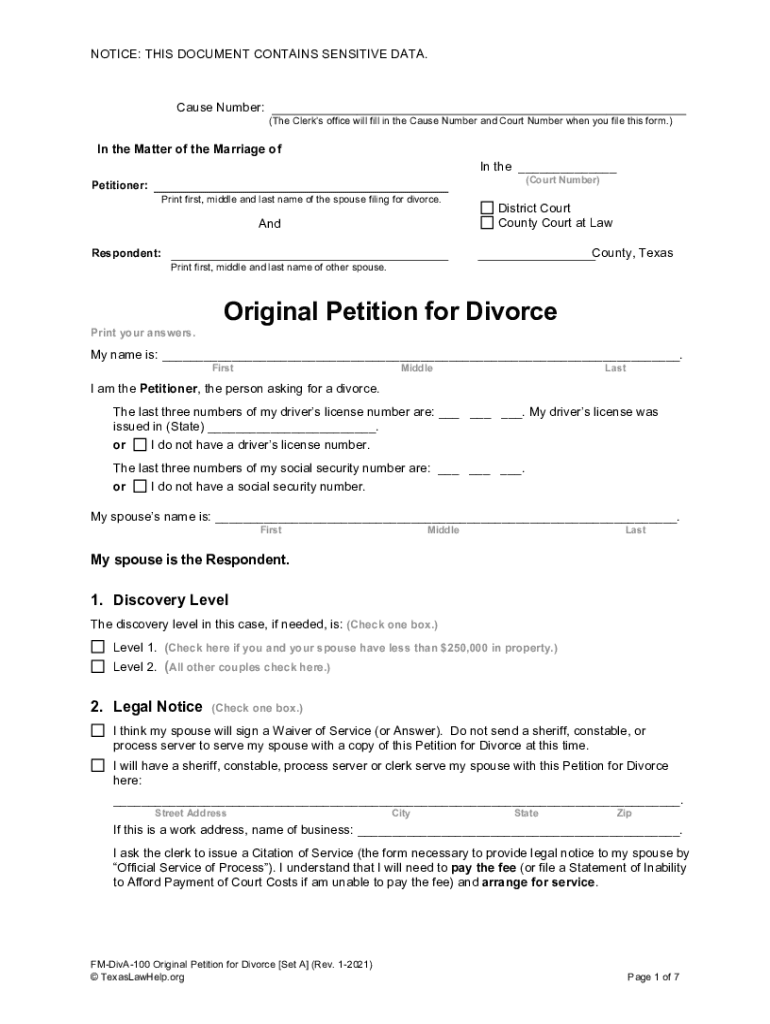
The "Texas Petition for Divorce" is a legal document used to initiate the process of dissolving a marriage in the state of Texas. This petition serves as the formal request to the court for a divorce and includes essential information regarding the marriage, such as details of the petitioner (the person filing the divorce) and the respondent (the other spouse). It outlines the grounds for divorce, which can vary from no-fault grounds, like insupportability, to fault-based reasons such as adultery or cruelty. The petition also covers matters related to children, such as custody and support, as well as the division of property and debts.
Key Elements
- Petitioner and Respondent Details: Includes personal information such as names and addresses.
- Grounds for Divorce: Specifies the legal reason for seeking the dissolution of marriage.
- Child Custody and Support: Addresses arrangements for any children from the marriage.
- Property and Debt Division: Details the division of marital assets and liabilities.
- Legal Notices: Alerts both parties about their rights and responsibilities.
- Jurisdictional Requirements: Confirms that Texas is the appropriate venue for the divorce.
Practical Scenarios
For example, if a couple resides in Texas and has decided to end their marriage, the spouse seeking the divorce would complete the Texas Petition for Divorce. This document would need to be filed with the court, and a copy would be served to the other spouse, initiating the legal proceedings.
How to Use the Fill, Edit, and Print Texas Petition for Divorce for People
Understanding the steps and intricacies involved in using this form is crucial for ensuring it's filled out accurately and effectively.
Step-by-Step Process
- Access the Form: Obtain the form from a legal resource website or a local courthouse.
- Personal Information: Enter all required personal details for both spouses.
- Select Grounds for Divorce: Choose the appropriate grounds for the petition.
- Children’s Details: If applicable, provide information regarding child custody and support.
- Property and Debts: Specify how property should be divided.
- Review and Edit: Use DocHub to fill in, edit, and ensure all sections are complete and accurate.
- Submit the Form: Print the form and file it with your local district court.
Common Mistakes to Avoid
- Incorrect Information: Double-check personal details to prevent delays.
- Missing Sections: Ensure that all relevant sections are appropriately addressed.
- Failure to Serve: Make sure the respondent is properly served with the document.
How to Obtain the Fill, Edit, and Print Texas Petition for Divorce for People
Obtaining this legal form involves several straightforward steps. Proper acquisition is essential to ensure the document complies with Texas legal requirements.
Sources for the Form
- Courthouse: Visit your local courthouse for hard copies.
- Online Legal Services: Access through platforms like DocHub.
- Legal Aid Offices: Obtain assistance and forms if you qualify for legal aid.
Considerations When Obtaining
- Ensure the form you download is the most current version.
- Double-check that it complies with Texas state laws.
Steps to Complete the Fill, Edit, and Print Texas Petition for Divorce for People
Completing this form requires careful attention to detail. Following these steps will help streamline this process:
- Read Instructions: Thoroughly read any instructions accompanying the form.
- Gather Information: Collect all necessary personal and financial information.
- Complete Sections: Fill in each section accurately, leveraging resources like DocHub for editing.
- Review: Go through the form to check for errors or omissions.
- Print and Sign: Once reviewed, print and sign the document.
- File with Court: Submit the paper at the appropriate district court in Texas.
- Serve the Respondent: Ensure the other party receives a copy.
Why Should You Fill, Edit, and Print the Texas Petition for Divorce for People?
Filing this petition is a critical step in legally ending a marriage in Texas. It presents an official record of the request for divorce and specifies the terms under which the dissolution should proceed.
Benefits of Using DocHub
- Simplifies Edits: Easily make necessary changes without manual amendments.
- Ensures Accuracy: The platform aids precise completion, reducing errors.
- Convenience: The ability to save, edit, and store legally compliant documents online.
Impact on Legal Proceedings
The completeness and accuracy of the form can significantly influence the ease and speed of the divorce proceedings. A correctly filled petition helps prevent unnecessary delays.
Who Typically Uses the Fill, Edit, and Print Texas Petition for Divorce for People?
This form is primarily used by individuals residing in Texas who wish to commence divorce proceedings.


Typical Users
- Spouses Seeking Divorce: Typically, the initiating party files this form.
- Legal Representatives: Attorneys who prepare the document on behalf of clients.
- Self-representing Individuals: Those who choose to manage their divorce without legal counsel.
Important Terms Related to Fill, Edit, and Print Texas Petition for Divorce for People
Understanding the terminology associated with this form is essential for its correct interpretation and usage.
Key Terms Defined
- Petitioner: The spouse initiating the divorce.
- Respondent: The other spouse who responds to the petition.
- Grounds for Divorce: Legal reasons for dissolution, such as insupportability or cruelty.
- Discovery Level: The extent of legal discovery required.
Example Contexts
For instance, a petitioner who cites "insupportability" as grounds is stating that the marriage has become unbearable due to conflict and discord, which aligns with Texas's no-fault divorce options.
State-Specific Rules for the Fill, Edit, and Print Texas Petition for Divorce for People
Each state has its nuances regarding the divorce process, and Texas is no exception. Understanding these specific rules is crucial for compliance.
Unique Texas Laws
- Residency Requirements: Either spouse must have lived in Texas for at least six months.
- Waiting Period: Texas law mandates a 60-day waiting period from the filing date before a divorce can be finalized.
- Community Property State: Texas requires equitable distribution of all marital property.
Compliance Examples
If a petitioner files without fulfilling the residency requirement, the case may be dismissed, illustrating the importance of understanding and adhering to these state-specific rules.




