
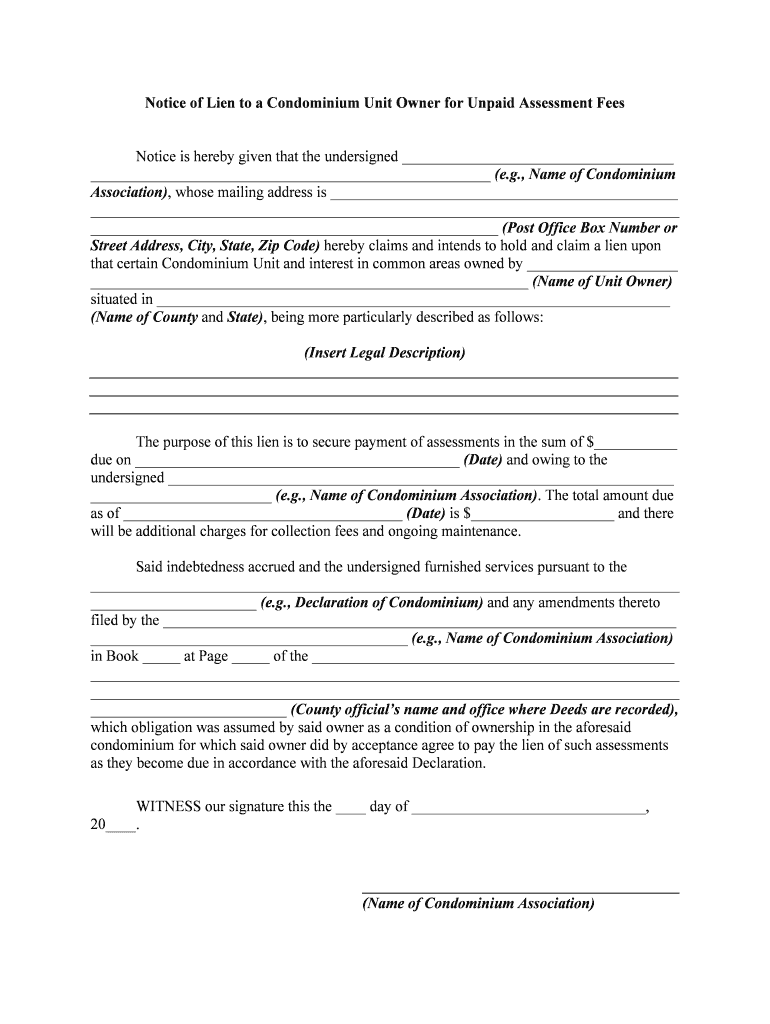







Definition & Meaning
A "lien condominium" refers to the legal claim or hold that a condominium association places on a property unit due to unpaid assessments or fees owed by the unit owner. This lien acts as a security interest to ensure that the association recovers the outstanding debts. The lien usually arises from the agreement signed by the condominium owner when they purchase the unit, acknowledging their obligation to pay common expenses, maintenance fees, and special assessments. The lien is enforceable under state laws governing condominium properties and can affect the owner's ability to sell or refinance the unit until the debt is satisfied.
Important Terms Related to Lien Condominium
Understanding the terminology associated with a lien condominium is essential for navigating legal documents and processes efficiently. Here are some key terms:
-
Assessment Fees: These are regular payments made by the unit owners to cover the costs of managing, maintaining, and repairing common areas of the condominium.
-
Condominium Association: The governing body responsible for the enforcement of rules, maintenance, and overall management of the condominium property.
-
Lien Holder: The entity that holds the lien. In the case of a condominium lien, this is typically the condominium association.
-
Foreclosure: A legal process by which the lienholder may sell the property to recover debts if the owner fails to settle the lien.
-
Priority Lien: Some states grant condominium liens a status that places them ahead of other claims in the event of a foreclosure.
How to Obtain the Lien Condominium
Obtaining a lien condominium typically involves the condominium association issuing a formal notice to the unit owner, which outlines the unpaid dues and the intention to place a lien. Here are the steps involved:
-
Notice of Delinquency: The association sends a formal notification to the owner detailing the overdue payments, including amounts and due dates.
-
Legal Notification: If payments are not made, a lien notice is drafted and served, indicating the association's intent to place a lien on the property.
-
Filing the Lien: The lien is then recorded with local county records, formally establishing the association's claim on the property.
-
Monitoring and Updates: Continual updates may be required if additional fees accrue or partial payments are made.
Steps to Complete the Lien Condominium
The process of dealing with a lien condominium involves several procedural steps:
-
Review the Lien Notice: Understand the details and verify the accuracy of the amounts claimed and ensure they conform to the association's bylaws.
-
Negotiate if Necessary: Contact the association to dispute any inaccuracies or negotiate a payment plan to settle the debt.
-
Payment: Settle the outstanding amount through payment methods accepted by the association.
-
Obtain Release Document: Upon payment, the association should provide a document that confirms the lien has been satisfied.
-
Record the Release: Submit the release to the county records where the initial lien was recorded to remove the lien officially.
Legal Use of the Lien Condominium
A condominium lien is primarily used to secure payment of unpaid fees from the unit owner. Legally, associations are empowered by state statutes and the condominium’s governing documents to claim a lien. The legal process typically includes:
-
Notice Requirement: Providing a detailed written notice before filing.
-
Right to Cure: Offering the unit owner a period within which to resolve the debt before enforcement.
-
Foreclosure Rights: Exercising the right to foreclose on the lien if debts remain unpaid, subject to statutory limits.
Examples of Using the Lien Condominium
Consider these scenarios where a condominium lien might be employed:
-
A unit owner fails to pay monthly association dues for six months. The association places a lien to recover delinquent funds and notifies the owner of foreclosure risks.
-
After multiple special assessments for emergency repairs, a unit owner falls behind on payments. The lien ensures the association's investment in upkeep is protected by securing dues from the property sale proceeds.
-
In a state with super lien statutes, the association's lien takes precedence over other creditors, safeguarding association interests during complicated foreclosure.
State-Specific Rules for the Lien Condominium
State laws can significantly affect how condominium liens function. Key variances might include:
-
Priority Levels: Certain states, like Florida and Illinois, offer "super lien" status, prioritizing association dues over many other claims.
-
Notice Requirements: Variance in required notice periods before a lien can be filed, with some states mandating longer durations for owner response.
-
Lien Duration: Limits on how long a lien remains effective after filing can vary, affecting enforcement and renewal strategies.
Understanding these specifics aids owners and associations in ensuring compliance with local regulations when dealing with liens.
Penalties for Non-Compliance
Failing to address a lien condominium can lead to critical consequences, including:
-
Accrued Interest and Late Fees: Persistent debt can accrue interest and additional fees, compounding total liability.
-
Foreclosure: Non-payment can result in legal proceedings that may culminate in the forced sale of the listed property.
-
Credit Impact: Liens are public records and can potentially affect the owner's credit score and future borrowing capabilities.
Timely action and robust legal understanding are vital in preventing these potential penalties and securing one's financial standing.




