
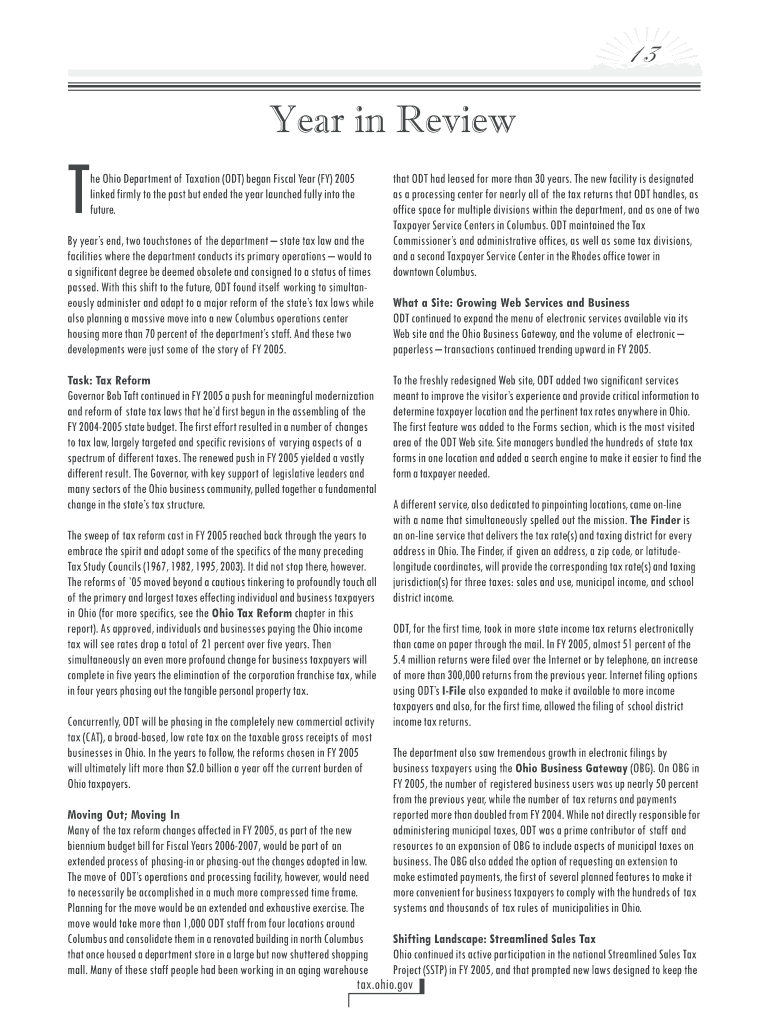







Definition and Purpose of the Year in Review
The "Year in Review" form for the Ohio Department of Taxation serves as an annual report detailing significant developments, changes, and statistical insights related to Ohio's tax regulations and revenues. It encapsulates the fiscal policies initiated, amended, or abolished over the year and provides a comprehensive overview of the state's economic adjustments. By understanding the past year's tax landscape, taxpayers and businesses can better prepare for future fiscal strategies and compliance requirements.
How to Obtain the Form
To access the Year in Review form, you can visit the Ohio Department of Taxation's website, where it is typically available for download in digital format. Alternatively, physical copies may be requested via mail by contacting the department directly. It is advisable to ensure that you are referencing the most current version of the form, as tax regulations and summaries are updated annually to reflect the latest legislative changes.
Key Elements Included in the Year in Review
The Year in Review report comprises several key sections:
- Tax Reforms: Outlines any new tax codes or modifications to existing ones that were enacted during the year.
- Revenue Reports: Provides detailed statistics on tax collection and distribution across various sectors.
- Policy Initiatives: Describes policy decisions and their expected impact on Ohio's economic landscape.
- Compliance and Enforcement: Details any changes in enforcement practices or compliance requirements for taxpayers.
Steps to Complete the Review
Completing and understanding the Year in Review involves a few straightforward steps:
- Download the Latest Version: Always use the most recent report to ensure up-to-date information.
- Analyze Key Sections: Focus on sections that impact your specific tax situation, such as changes in income or property taxes.
- Consult with a Tax Professional: If necessary, seek advice to fully understand complex reforms or how they apply to your circumstances.
- Prepare for Adjustments: Use the insights gained to adjust future financial planning and tax reporting strategies.
Legal Use and Compliance
The Year in Review document is not just informational but also guides compliance with Ohio's tax laws. While it does not replace individual tax forms, it helps ensure that taxpayers are aware of their legal obligations and any recent changes that might affect their filings. Utilizing this form can prevent inadvertent non-compliance and its associated penalties.
Important Terms Related to the Review
Understanding the terminology used in the Year in Review is crucial for accurate interpretation:
- Codified Ordinance: A systemized collection of laws and regulations applicable in Ohio.
- Fiscal Year (FY): A year as reckoned for taxing or accounting purposes, distinct from the calendar year.
- Tax Bracket Adjustments: Changes to the rates at which different levels of income are taxed.
Filing Deadlines and Important Dates
While the Year in Review itself is not a form that requires submission, it highlights important tax deadlines for various filings. These include annual income tax returns, estimated tax payments, and other relevant county or municipal tax submissions. Staying informed about these deadlines ensures timely filing and avoids late penalties.
Digital vs. Paper Versions
Both digital and paper formats of the Year in Review are available, each with benefits and drawbacks:
- Digital Version: Easily accessible, quickly updated, and eco-friendly. Ideal for taxpayers who prefer electronic documentation.
- Paper Version: Beneficial for those who require a physical copy for thorough review or archiving purposes.
Impact on Various Business Types
Different business entities may be affected in unique ways by the changes outlined in the Year in Review. For example:
- LLCs and Corporations might see variations in franchise or commercial activity taxes.
- Partnerships may need to adjust how they file estimated taxes due to policy shifts.
- Small businesses benefit from understanding deductions and credits introduced or altered.
These insights enable businesses to optimize their tax strategies and maintain compliance with Ohio's fiscal regulations.




