







Definition & Meaning
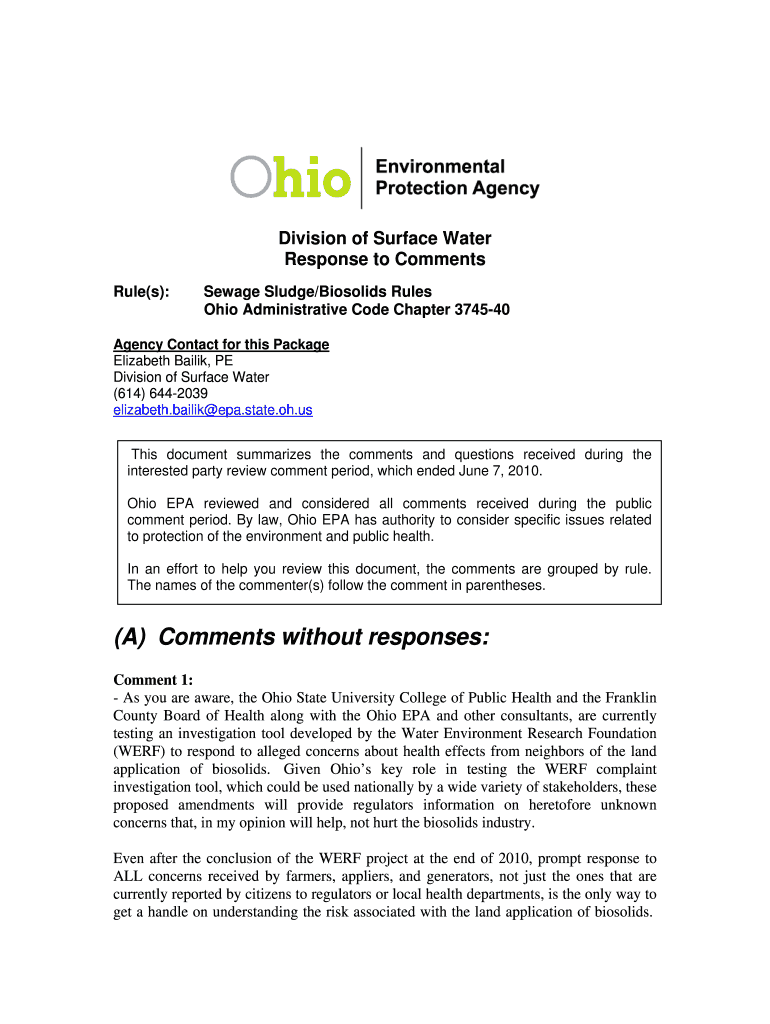
The "Response to Comments on the May 2010 Proposed - Ohio EPA" document serves as an official reply from the Ohio Environmental Protection Agency (EPA) regarding public and stakeholder feedback on proposed amendments to the Sewage Sludge/Biosolids Rules under Ohio Administrative Code Chapter 3745-40. This document outlines the agency's response to various concerns and suggestions, providing clarifications and detailing any changes made to the regulations as a result of the comments received.
How to Use the Response Document
Those involved in biosolids management, environmental regulation, or agricultural practices can use this document to understand how their feedback has influenced local environmental governance. It is particularly useful for identifying the rationale behind regulatory changes and ensuring compliance with updated guidelines. For stakeholders and interested parties, analyzing the responses helps to align practices with current legal standards and anticipate changes in operational procedures.
Steps to Complete the Response Document
While the document itself does not require completion by the public, reviewing it systematically is advisable for comprehensive understanding:
- Start with the Introduction: Begin by reading the introduction to understand the context and purpose.
- Review Stakeholder Comments: Focus on the comments section to see the variety of feedback provided.
- Understand the EPA's Responses: Pay close attention to the agency's replies to comprehend how regulations have been adjusted.
- Identify Key Changes: Highlight significant amendments to the regulations.
- Note Implementation Dates: Check for any stated timelines or deadlines for compliance with new rules.
Key Elements of the Response Document
The response document is structured to address specific areas of concern and outline modifications to the initial proposals. Key elements typically include:
- Summary of Comments: A compilation of the feedback received from various stakeholders highlighting common issues and concerns.
- Ohio EPA's Response: Detailed replies that may include clarifications, justifications for maintaining proposals, or descriptions of modifications made.
- Regulatory Changes: Explicit statements indicating any adjustments to the proposed rules.
- Impact Assessment: Analysis of how changes affect current practices, public health, and environmental protection.
Important Terms Related to the Document
Understanding this document involves familiarity with specific terminology:
- Biosolids: Treated sewage sludge that is used beneficially.
- Phosphorus Application Rates: Guidelines often based on agronomic need and environmental considerations.
- Ohio Administrative Code Chapter 3745-40: The regulatory framework governing biosolid management in Ohio.
Legal Use of the Document
The legal significance of the response document lies in its function as an authoritative interpretation of regulatory changes. It serves as an official record that details the Ohio EPA's standpoint on biosolids management and offers a transparent communication channel between the agency and the public. Legal entities and consultants can leverage this document to advise clients on compliance and regulatory strategy.
State-Specific Rules for Ohio
Ohio-specific regulations regarding biosolids management are defined by the Ohio Administrative Code Chapter 3745-40. The document elaborates on specific procedures and standards that are applicable within the state, ensuring environmental and agricultural practices align with local policies.
Who Typically Uses the Document
The document is especially relevant to the following groups:
- Biosolids Managers: Those overseeing the treatment and distribution of biosolids for agricultural or energy recovery purposes.
- Environmental Consultants: Professionals providing advisory services on compliance with environmental regulations.
- Agricultural Stakeholders: Farmers and agricultural bodies interested in biosolid application on land.


Examples of Using the Document
In practice, local governments, engineering consultants, and agricultural operators might refer to specific sections of the document when planning projects that involve biosolids. For example, they may need to adjust nutrient management plans based on revised phosphorus application guidelines or implement new monitoring requirements.
Penalties for Non-Compliance
Failure to adhere to the updated regulations outlined in this response document can result in penalties such as fines or operational restrictions. Legal action or enforcement measures may be taken by the Ohio EPA to ensure compliance, emphasizing the importance of understanding and following the updated rules.




