
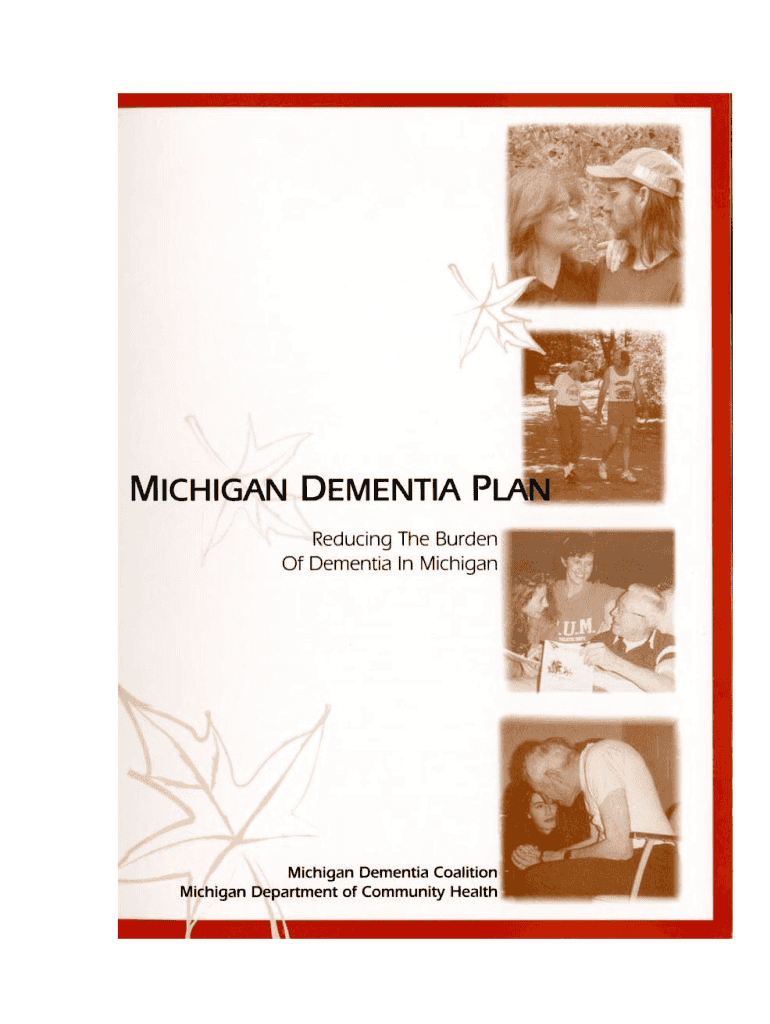







Definition & Meaning
The Michigan Dementia Plan is a strategic initiative developed by the Michigan Dementia Coalition. Its primary aim is to alleviate the impact of dementia on residents of Michigan through well-researched, evidence-based strategies. By focusing on enhancing the quality of life for individuals with dementia and providing support for their caregivers, the plan seeks to address one of the most challenging health issues facing the state today. Through a multi-faceted approach, the plan encompasses various components such as increasing caregiver support and promoting best practices in dementia care.
Comprehensive Strategies
The plan's strategies focus on several integral areas:
- Family Caregiver Support: Recognizing the crucial role of family caregivers in managing dementia, the plan emphasizes providing extensive resources and support systems.
- Primary Care Best Practices: The plan advocates for incorporating best practices in primary care settings to improve early diagnosis and management of dementia.
- Professional Competency: Enhancing dementia competency among healthcare professionals ensures that patients receive the most informed and effective care possible.
- Residential Choices: Improving residential care options for dementia sufferers caters to specific needs, ensuring that the living environment supports well-being.
- Public Awareness: Raising awareness about dementia and the importance of caregiving ensures that the wider community is informed and engaged.
Key Elements of the Michigan Dementia Plan
The Michigan Dementia Plan includes several critical components that form the backbone of its approach to tackling dementia-related challenges.
Stakeholder Collaboration
Successful implementation of the plan relies heavily on collaboration among various stakeholders, including government agencies, healthcare providers, community organizations, and families. This cooperative effort ensures that interventions are effectively rolled out and that resources are optimally allocated.
Cost-Saving Benefits
By implementing effective interventions, the plan aims to reduce the financial burden on the state. Strategic interventions can lead to substantial cost savings over time while ensuring that those affected by dementia receive necessary support.
Evidence-Based Approach
Adopting strategies that are based on scientific research and evidence ensures that the interventions are not only effective but also sustainable. This approach minimizes trial-and-error methods, ensuring a more streamlined execution of the plan.
How to Use the Michigan Dementia Plan
The plan serves as a resource for various stakeholders involved in dementia care in Michigan.
Implementation for Caregivers
Caregivers are encouraged to utilize the plan’s resources to access educational materials, support networks, and respite services. These resources are designed to alleviate some of the pressures faced by caregivers in their day-to-day roles.
Guidelines for Healthcare Professionals
Healthcare providers can integrate the plan's best practices into their care routines, improving outcomes for dementia patients. This includes using recommended diagnostic tools and treatment protocols outlined within the plan.
Steps to Obtain the Michigan Dementia Plan
To access the Michigan Dementia Plan, interested parties can contact relevant Michigan state health departments or visit official state websites. The plan is typically available in various formats, ensuring wide accessibility.
Access Points
- Online Resources: Official websites offer a downloadable version of the plan, allowing users to access it from anywhere.
- Community Health Centers: Physical copies or summaries of the plan may be available at local health centers across Michigan.
Format Variants
The Michigan Dementia Plan is available in both digital and paper formats. Interested individuals can choose the version most convenient for their needs. The availability of various formats ensures that technological limitations do not restrict access.
Important Terms Related to the Michigan Dementia Plan
Understanding the terminology within the Michigan Dementia Plan is crucial for its effective use.
Dementia Competency
This term refers to the knowledge and skills required by healthcare professionals to effectively manage and care for dementia patients. The plan includes strategies for enhancing this competency.
Caregiver Support
This involves providing necessary resources and support systems to those caring for individuals with dementia, aiming to ease the caregiving burden and improve the quality of care provided.
Legal Use of the Michigan Dementia Plan
The legal and ethical implications associated with the Michigan Dementia Plan ensure that it is implemented correctly and in alignment with state laws.
Compliance
Healthcare facilities and providers using the Michigan Dementia Plan must comply with state regulations. This includes maintaining patient confidentiality and adhering to standardized care practices outlined in the plan.
Ethical Considerations
The plan highlights ethical considerations in dementia care, emphasizing the dignity and rights of individuals with dementia. This ensures that care is administered compassionately and respectfully.
State-Specific Rules for the Michigan Dementia Plan
While the plan provides a comprehensive framework, certain nuances are specific to Michigan’s legislative and healthcare environment.
State Healthcare Regulations
Michigan specific healthcare regulations and policies shape how aspects of the dementia plan are implemented. Providers must ensure they are up-to-date with these state laws to comply with the plan effectively.
Integration with Statewide Initiatives
The Michigan Dementia Plan aligns itself with other statewide healthcare initiatives, enhancing the coherence and effectiveness of interventions across various health issues.
Examples of Using the Michigan Dementia Plan
Real-world application of the Michigan Dementia Plan showcases its practicality and effectiveness in different settings.
Case Study: Rural Implementation
A rural Michigan community successfully used the plan to improve access to dementia care by establishing telehealth services, reducing travel burdens for families and providing regular medical consultations for patients.
Urban Center Adoption
In a metropolitan area, a leading hospital integrated the plan’s best practices into its dementia care unit, resulting in improved patient satisfaction and care outcomes. This case highlights how adapting plan elements to specific settings can enhance healthcare delivery.
Who Typically Uses the Michigan Dementia Plan?
The plan is utilized by a diverse group of stakeholders who all play a role in managing and mitigating dementia impacts.


Healthcare Providers
Doctors, nurses, and other healthcare professionals leverage the plan to guide dementia care best practices and enhance patient outcomes.
Caregivers and Families
Family members and caregivers use the plan to access support resources, getting the assistance they need in managing daily caregiving responsibilities.
Community Organizations
Non-profits and advocacy groups implement the plan to develop community programs raising awareness and offering direct support to affected families.




