







Definition and Meaning
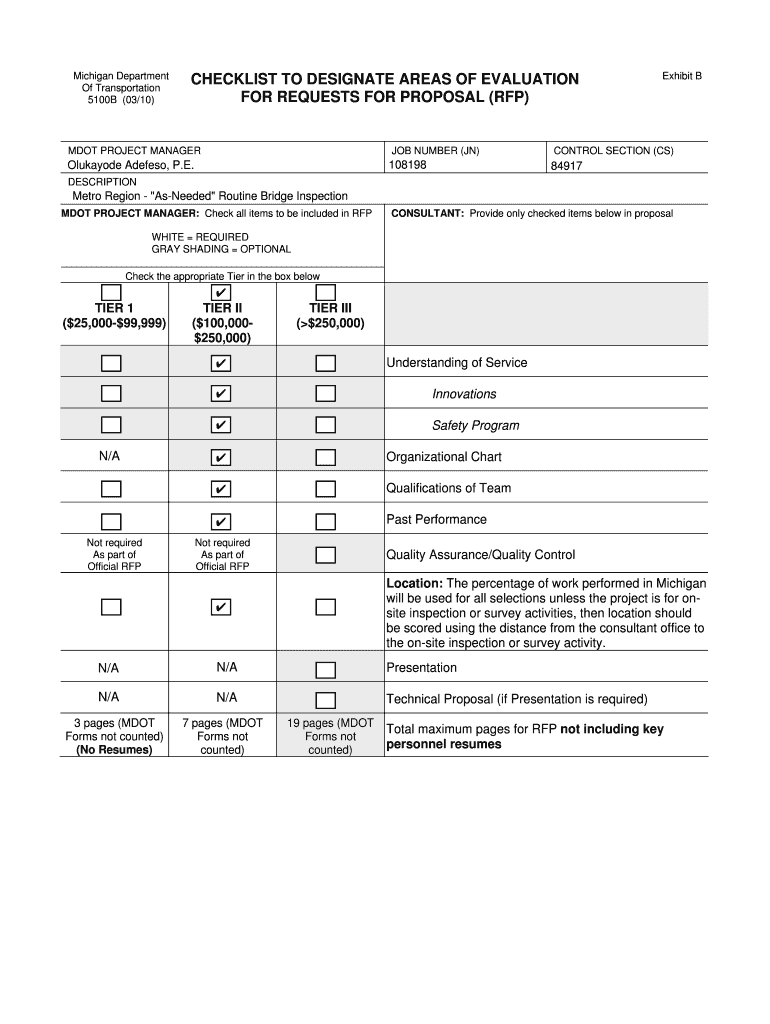
The phrase "RFP As Needed Routine Bridge Safety Inspection throughout the Metro Region - Michigan" refers to a formal Request for Proposal (RFP) issued by the Michigan Department of Transportation (MDOT). This RFP solicits bids from qualified consultants to perform routine safety inspections of bridges within the metro region of Michigan. These inspections are essential to ensure that bridges remain safe for public use in compliance with National Bridge Inspection Standards (NBIS).
Key Elements of the RFP Process
Understanding the critical components of this RFP is vital for potential bidders. Key elements include:
- Evaluation Criteria: Proposals will be assessed based on specific criteria such as experience, technical competence, and cost.
- Qualifications: Bidders must demonstrate qualifications, including certification and experience in bridge inspections.
- Submission Guidelines: Clearly outlined instructions on how and where to submit proposals are crucial.
How to Use the RFP
Utilizing the RFP effectively involves several steps:
- Review Requirements: Carefully examine all sections of the RFP to understand technical and legal requirements.
- Prepare Documentation: Gather necessary documents such as qualification records, past project examples, and a detailed proposal.
- Submit Proposal: Follow the submission instructions precisely to ensure your proposal is considered.
Who Typically Uses This RFP
Typically, engineering firms, consulting companies, and specialized service providers responding to this RFP are those with:
- Expertise in civil engineering and bridge safety.
- Experience working on public infrastructure projects.
- Necessary certifications in compliance with NBIS standards.
State-Specific Rules for Michigan
There are specific criteria set by the MDOT and local regulations that must be adhered to:
- Compliance with Local Standards: Understanding Michigan's specific bridge safety requirements and regulations.
- State Certification: Firms and inspectors must hold appropriate state-specific certifications.
Required Documents
Bidders must include several documents as part of their proposal:
- Company Profile: Includes business structure, mission, and relevant experience.
- Certification Proof: Evidence of compliance with state and national inspection standards.
- Technical Proposal: Detailed project plan and methodology.
Legal Use of the RFP
Ensuring that the RFP is utilized within legal boundaries involves:
- Following Guidelines: Adhering to the stipulated rules in the RFP. Any deviations can lead to disqualification.
- Contractual Obligations: Understanding that successful bids will lead to binding contracts requiring stringent adherence to project specifics and timelines.
Filing Deadlines and Important Dates
Awareness of critical timelines is crucial for compliance and successful submission:
- Proposal Submission Deadline: A specific date by which all proposals must be submitted to be considered.
- Pre-Bid Meetings: These may be scheduled to provide additional clarity on project specifications and expectations.
Examples of Using the RFP
Practical examples help elucidate the real-world application of this RFP:
- Case Study of a Successful Bid: Details of a previously successful proposal, including the project's scope and execution strategy.
- Scheduling and Logistics Efficiency: Examples of effective planning techniques that meet all scheduled requirements of bridge inspections.
Steps to Complete the RFP
A structured process helps ensure successful completion:
- Preliminary Assessment: Evaluate if your team has the capacity and expertise needed.
- Team Assembly: Organize a team equipped to fulfill all RFP requirements.
- Draft Proposal: Begin drafting your proposal, focusing on clarity and alignment with RFP criteria.
- Revise and Review: Allow time for thorough review and revision of your proposal to ensure it meets evaluative standards.


