
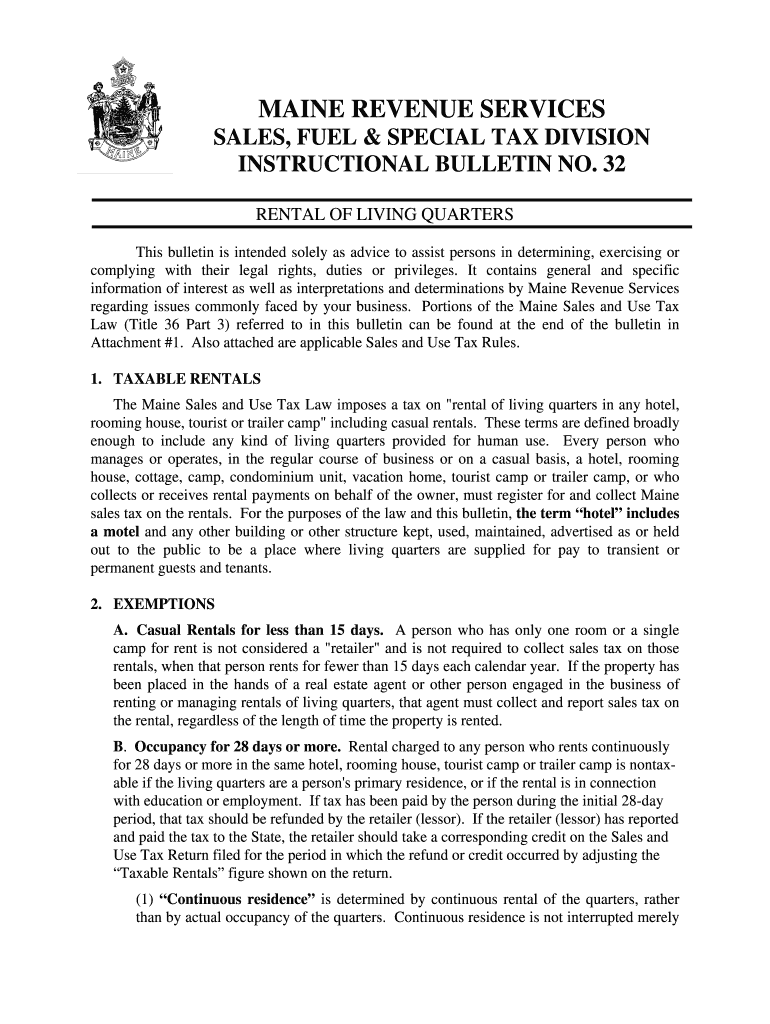







Definition & Meaning
Rental of living quarters refers to the service of providing temporary or permanent residential accommodations for individuals, families, or groups. Typically encompassing apartments, houses, hotels, and vacation rentals, this phrase captures the core nature of leasing or letting space for habitation. In a business context, this includes not only the physical space but also added services or conveniences, depending on the arrangement. For legal and tax purposes, differentiating between short-term and long-term rentals is crucial, as each type may involve different contractual obligations and tax implications.
Key Elements of the RENTAL OF LIVING QUARTERS
Several key elements define the rental of living quarters. These include:
- Lease Agreement: A formal contract that outlines the terms of the rental, including duration, cost, and any rules or restrictions.
- Rental Amount: The monetary compensation paid by the tenant to the landlord, typically monthly.
- Security Deposit: An upfront amount collected to cover potential damages or unpaid rent at the end of the tenancy.
- Utilities and Maintenance: Provisions regarding who is responsible for utility payments and property maintenance.
- Occupancy Limitations: Rules set by the landlord regarding the number of occupants allowed and any restrictions on subletting.
Steps to Complete the RENTAL OF LIVING QUARTERS
Completing a rental agreement involves several detailed steps:
- Initial Inquiry: Contact the landlord or property manager to express interest and confirm availability.
- Property Viewing: Schedule a tour to inspect the premises and ensure it meets your needs.
- Credit & Background Check: Submit personal and financial information for the landlord's review.
- Negotiation: Discuss and finalize the rental terms, including rent, length of stay, and deposit.
- Signing the Lease: Carefully read the lease agreement before signing it, acknowledging all terms and conditions.
- Move-In Inspection: Conduct a thorough check of the property with the landlord to document pre-existing issues.
Who Typically Uses the RENTAL OF LIVING QUARTERS
A diverse range of individuals and groups typically seek rental living quarters:
- Young Professionals: Often prefer renting due to flexibility and lower upfront costs compared to buying.
- Families: May opt for renting due to relocation needs or financial constraints.
- Students: Frequently rent apartments or dormitories near educational institutions.
- Travelers: Often leverage short-term rentals like vacation homes or Airbnb for temporary stays.
- Businesses: Sometimes rent accommodations for employees on temporary assignments.


Legal Use of the RENTAL OF LIVING QUARTERS
The legal use of rental living quarters is governed by a variety of laws and regulations:
- Landlord-Tenant Laws: These define rights and responsibilities for both parties, including eviction procedures and rent control.
- Zoning Laws: Regulations that determine what kind of rental properties can be offered in specific areas.
- Fair Housing Act: Prohibits discrimination in renting based on race, color, religion, sex, national origin, disability, or familial status.
- Occupancy Laws: Determine the legal limit for how many people can reside in a unit.
State-Specific Rules for the RENTAL OF LIVING QUARTERS
Rental regulations can vary significantly from state to state:
- Rent Control: Some states like California and New York have stringent rent control laws that limit how much rent can be increased annually.
- Security Deposits: States have different limits on how much can be collected and how it must be stored and returned.
- Notice Requirements: Varying rules about how much advance notice landlords must give for raising rent or terminating a lease.
- Eviction Procedures: States dictate specific legal procedures that must be followed for evicting a tenant, affecting the speed and conditions of eviction.
Important Terms Related to RENTAL OF LIVING QUARTERS
Understanding important terms can help navigate rental agreements effectively:
- Rent: The payment made by the tenant periodically, usually monthly, to use the living quarters.
- Lease: The contract outlining terms of rental, including duration, rent amount, and tenant-landlord obligations.
- Tenant: The individual or entity renting and occupying the living quarters.
- Landlord: The property owner or manager providing the living quarters for rent.
- Sublet: The leasing of all or part of the premises by the tenant to a third party.
Examples of Using the RENTAL OF LIVING QUARTERS
Real-world scenarios illustrate diverse applications of renting:
- Short-Term Vacations: Utilizing platforms like Airbnb, families rent vacation homes for short stays.
- Corporate Relocation: Companies providing rented apartments for employees relocated for temporary assignments.
- Student Housing: Colleges offering dormitories or apartments as rental properties for students.
- Urban Living: Young professionals opting to rent apartments in city centers for convenience and amenities.
Software Compatibility
Rental agreements and management can be streamlined using several software solutions:
- DocHub: Allows users to edit, sign, and manage rental documents securely online.
- TurboTax: Useful for preparing rental income tax documents.
- QuickBooks: Ideal for handling rental income and expense tracking.
- Yardi: Property management software assisting landlords and property managers in handling leases, payments, and tenant communications.
Penalties for Non-Compliance
Failure to comply with rental agreements and regulations can lead to various penalties:
- Fines: Imposed for zoning violations or discrimination practices.
- Eviction: Legal proceedings can result in tenants being forcibly removed from the rental property.
- Legal Action: Tenants or landlords can face lawsuits for breaching the lease terms or failing to meet legal obligations.
- Blacklisting: Tenants with a history of non-compliance may face difficulties securing future rental agreements.




