




01. Edit your counter petition format online
Type text, add images, blackout confidential details, add comments, highlights and more.

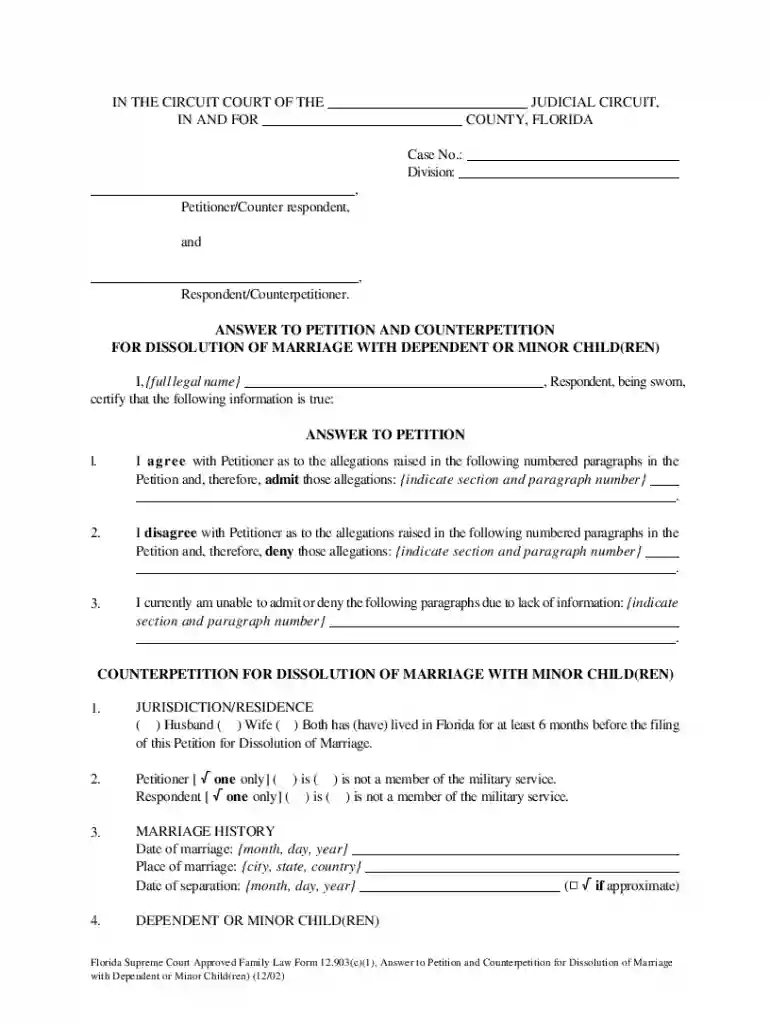
Type text, add images, blackout confidential details, add comments, highlights and more.

Draw your signature, type it, upload its image, or use your mobile device as a signature pad.

Send answer to petition sample via email, link, or fax. You can also download it, export it or print it out.
A counter petition sample is a legal document template that initiates a response to an existing petition in a court proceeding. When an individual is served with a petition, such as for divorce or other legal matters, they have the right to respond with a counterpetition. This document serves to highlight the respondent's position and any additional claims they wish to bring before the court, effectively turning them into a petitioner in their own right. The counter petition sample helps guide individuals on how to structure and present their arguments legally and logically.
Using a counter petition sample begins with carefully reviewing the original petition filed against you. The sample will typically contain sections like headings for each argument, introduction, contentions, counterclaims, and closure. You will need to customize these sections, ensuring your responses directly address each point raised in the original petition. Additionally, the sample guides you on how to draft your counterclaims in a format acceptable by the court, ensuring clarity and conciseness in presenting your position.
Comprehend the Original Petition: Start by thoroughly understanding the allegations or requests made in the initial petition. Knowing every detail is crucial to formulating a comprehensive response.
Gather Supporting Documents: Collect any documentation or evidence that will support your counterclaims or refute assertions made in the petition.
Draft the Response: Use the counter petition sample to organize your thoughts cohesively. Ensure each section is filled correctly, from introductory remarks to specific counterclaims.
Review Legal Requirements: Verify that your counter petition meets all state-specific legal formatting and filing requirements, which can vary depending on the jurisdiction.
Consult a Legal Professional: Before submitting, have a qualified attorney review your document to avoid potential legal pitfalls or omissions.
File the Document: Submit your completed counter petition to the appropriate court, adhering to any required deadlines to ensure your response is considered.
A counter petition sample typically includes several key elements:
Understanding certain legal terms is vital when dealing with a counter petition sample:
Different states in the U.S. may have unique rules for filing a counter petition:
Counter petition samples are meant for individuals wishing to legally respond to a petition they have been served. They serve multiple purposes, including:
Real-world scenarios demonstrate the utility of a counter petition sample:
Deadlines are a crucial part of legal proceedings:
Filing a counter petition may necessitate accompanying documents:
How you submit your counter petition can vary:
Failing to adhere to the legal requirements for a counter petition can have serious consequences:
We've got more versions of the counter petition format form. Select the right counter petition format version from the list and start editing it straight away!
At DocHub, your data security is our priority. We follow HIPAA, SOC2, GDPR, and other standards, so you can work on your documents with confidence.
Mar 27, 2026 This Court Forms page is only somewhat searchable. However if you have located a form number from this guide, you can find both a PDF and a WordRead more
Counterpetition for Dissolution of Marriage with Dependent or Minor Child(ren) Form Number 12.903(c)(1) Form Type Answer Date 02/2018


