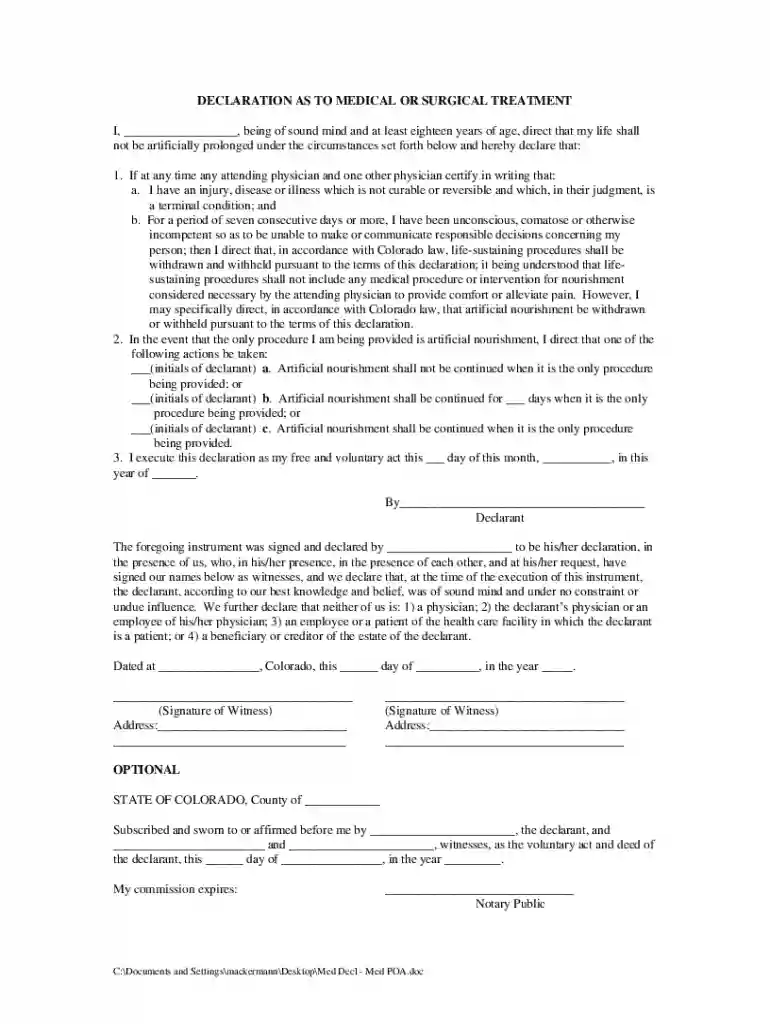
Definition and Meaning of Med Decl - Med POA doc
The "Med Decl - Med POA doc" serves as a crucial legal instrument that allows individuals to declare their medical treatment preferences under certain conditions, such as terminal illness or incapacity. This document is often a combination of a Medical Declaration (Med Decl) and a Medical Power of Attorney (Med POA), enabling a designated agent to make healthcare decisions on behalf of the declarant if they cannot do so themselves. It is essential in ensuring one's medical wishes are honored and provides clear directives for healthcare providers and family members.
Steps to Complete the Med Decl - Med POA doc
Completing the Med Decl - Med POA doc involves several critical steps to ensure it is legally valid and meets personal needs:
- Personal Information: Start by filling in your full name, address, and contact information.
- Appointment of Agent: Name an agent who will have the authority to make decisions on your behalf. Include the agent’s contact details and any alternates if the primary agent is unavailable.
- Specific Instructions: Clearly state any particular medical treatments you wish to accept or refuse. This might include resuscitation directives, preference for palliative care, or organ donation decisions.
- Witness Requirements: Sign the document in the presence of required witnesses. These individuals must not be your healthcare provider or related to you by blood, marriage, or adoption.
- Notarization: While not mandatory in all states, having the document notarized can add an extra layer of legal validity.
Who Typically Uses the Med Decl - Med POA doc
Individuals of any age who wish to have control over their medical treatment use this document. It is prevalent among:

- Older Adults: Seniors often use this document to ensure their medical preferences are respected in end-of-life care.
- Individuals with Chronic Illnesses: Those with long-term health conditions might use this document to manage future healthcare decisions.
- Individuals Undergoing Surgery: To cover scenarios where they might not be able to communicate their preferences post-operatively.
- Military Personnel: Preparing for potential scenarios where they cannot make decisions due to deployment.
Key Elements of the Med Decl - Med POA doc
The document includes several essential components:
- Principal's Information: Clear identification details of the individual creating the document.
- Agent's Authority: Specific powers granted to the appointed agent.
- Medical Preferences: Detailed preferences for treatment under various medical scenarios.
- Witness and Notary Section: Sections reserved for signatures to validate the document's existence and intent.
- Revocation Clause: Instructions on how to revoke or amend the document if preferences change.
Legal Use of the Med Decl - Med POA doc
The legal foundation of the Med Decl - Med POA doc lies in its ability to direct healthcare providers and protect patient autonomy:
- Advance Directives: Recognized as a legally binding document in all U.S. states, subject to state-specific variations.
- Agent Authority: Instructs medical personnel and others on the appointed agent’s decision-making authority.
- Legal Compliance: Ensures compliance with both state and federal regulations concerning patient rights and informed consent.
State-Specific Rules for the Med Decl - Med POA doc
Each U.S. state may have unique requirements or variations for the Med Decl - Med POA doc:
- Witness Requirements: Some states mandate two witnesses, while others may allow just one alongside a notary.
- Agent Restrictions: Certain states have limitations on who can be designated as an agent, often excluding healthcare providers involved in the declarant’s care.
- Form Variations: States might provide standardized forms that align with their legal statutes. It is vital to use the correct version to ensure enforceability.
Examples of Using the Med Decl - Med POA doc
Practical scenarios illustrate the document’s use:
- End-of-Life Decisions: A terminally ill patient uses the document to refuse resuscitation, aligning with their personal wishes for quality of life over quantity.
- Surgical Incapacity: During a severe complication in surgery, an agent uses the document to authorize treatment changes based on the principal's stated preferences.
- Chronic Disease Management: An individual with advanced ALS might outline specific interventions they wish to forego, such as ventilator support, providing guidance for caregivers.
Important Terms Related to Med Decl - Med POA doc
Understanding key terminology is crucial for using this document effectively:
- Declarant: The person who creates the declaration, stating their medical treatment preferences.
- Agent: The individual appointed to make healthcare decisions on behalf of the declarant.
- Advance Directive: A general term encompassing documents like living wills and medical power of attorney.
- Life-Sustaining Treatment: Any medical procedure or intervention that extends life, such as mechanical ventilation or feeding tubes.
These aspects provide comprehensive guidance to individuals considering the creation or use of a Med Decl - Med POA doc, ensuring their medical and ethical preferences are respected and upheld.