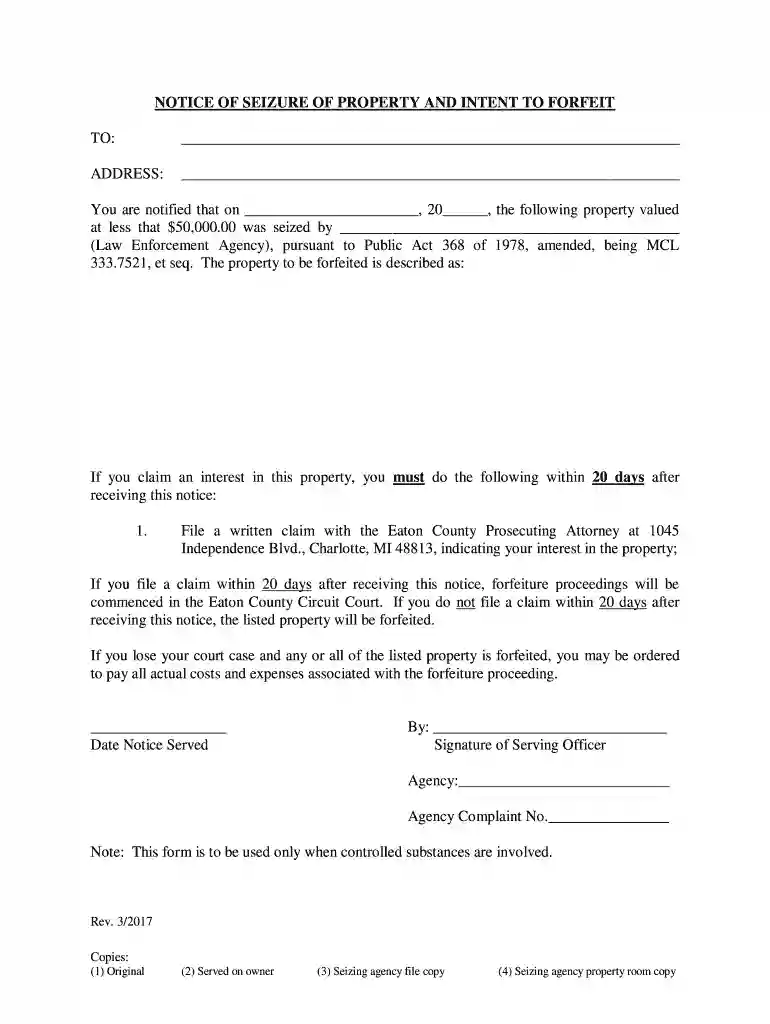
Definition & Meaning
The notice of forfeiture in real estate is a legal document informing a property owner or interested party that their real estate asset is at risk of being seized by authorities due to non-compliance with legal obligations, such as tax payments or mortgage agreements. This notice serves as a formal declaration of intent to forfeit the property unless specific conditions are met within a stipulated period.
Key Elements of the Notice of Forfeiture Real Estate
Key components of the notice include:
- Identification Details: Full address and parcel number of the real estate in question.
- Reason for Forfeiture: Explanation of the legal basis for the forfeiture, such as unpaid taxes or breach of contract.
- Deadline for Response: The timeframe within which the notified party must act to prevent forfeiture, typically 20 to 30 days.
- Instructions for Action: Steps the recipient must take to contest the forfeiture, such as filing a claim or paying overdue debts.
- Contact Information: Details of the issuing authority or legal body, providing an avenue for queries or submission of documentation.
How to Use the Notice of Forfeiture Real Estate
Usage involves adhering to the instructions within the document. Key steps include:
- Immediate Review: Carefully read the notice to understand the grounds for forfeiture.
- Determine Action Plan: Decide whether to rectify the issue, such as settling outstanding payments or disputing the notice.
- File Necessary Documents: If contesting, submit required legal documents to the appropriate authority within the specified deadline.
- Seek Legal Assistance: Engage with a real estate attorney for legal guidance and representation.
Steps to Complete the Notice of Forfeiture Real Estate
To address the notice, follow these steps:
- Verification: Confirm details on the notice against property records to ensure accuracy.
- Review Legal Obligations: Understand the financial or legal obligations unmet.
- Consult Professionals: Contact a real estate lawyer or financial advisor for tailored advice.
- Fulfillment of Obligations: Complete payments or required actions as instructed.
- Submit Response: File any disputes or acknowledgments as per the notice requirements.
Important Terms Related to Notice of Forfeiture Real Estate
Understanding common terms is crucial:
- Forfeiture: The legal process by which one's rights to an asset are surrendered due to default or breach.
- Lien: A legal claim against property as security for a debt, which must be paid off when the property is sold.
- Redemption Period: The timeframe in which a property owner can reclaim their property by fulfilling legal obligations.
Legal Use of the Notice of Forfeiture Real Estate
Legally, the use of this notice is bounded by state and federal laws, ensuring:
- Due Process: The property owner is given a fair chance to resolve the issue.
- Transparency: All grounds and procedures for forfeiture are clearly stated.
- Fair Action: Authorities follow uniform procedures, preventing arbitrary seizures.
State-Specific Rules for the Notice of Forfeiture Real Estate
Variations exist across states; notable examples include:
- California: Offers a redemption period where the owner can redeem the property even after it's auctioned, by reimbursing the buyer.
- Texas: Has stricter timelines for challenging and rectifying notices due to its unique real estate statutes.
Penalties for Non-Compliance
Failure to respond appropriately to the notice can result in:
- Permanent Loss: Forfeiture of property title.
- Financial Penalties: Accumulation of additional fees and penalties for non-payment.
- Legal Consequences: Potential lawsuits and other legal actions initiated by authorities.
Examples of Using the Notice of Forfeiture Real Estate
Practical cases illustrating the notice usage:
- Delinquent Tax Case: A homeowner receives notice due to non-payment of property taxes. They comply by settling dues within the grace period.
- Mortgage Default: A bank sends a notice to a borrower in default. The borrower responds by negotiating a loan modification.
Disclosure Requirements
The issuing authority must disclose:
- Full Rationale: Detailed explanation of the cause for forfeiture.
- Precise Obligations: Clear steps required for the recipient to avoid forfeiture.
- Implications: Potential outcomes and repercussions of non-compliance.
Steps to Complete the Notice of Forfeiture Real Estate
- Assessment: Analyze the notice's details thoroughly.
- Action Plan: Decide on corrective actions or legal challenges.
- Documentation: Compile necessary paperwork for contesting or compliance.
- Professional Consultation: Engage professionals to ensure proper handling.
- Submission: Complete and submit actions or responses before deadlines.