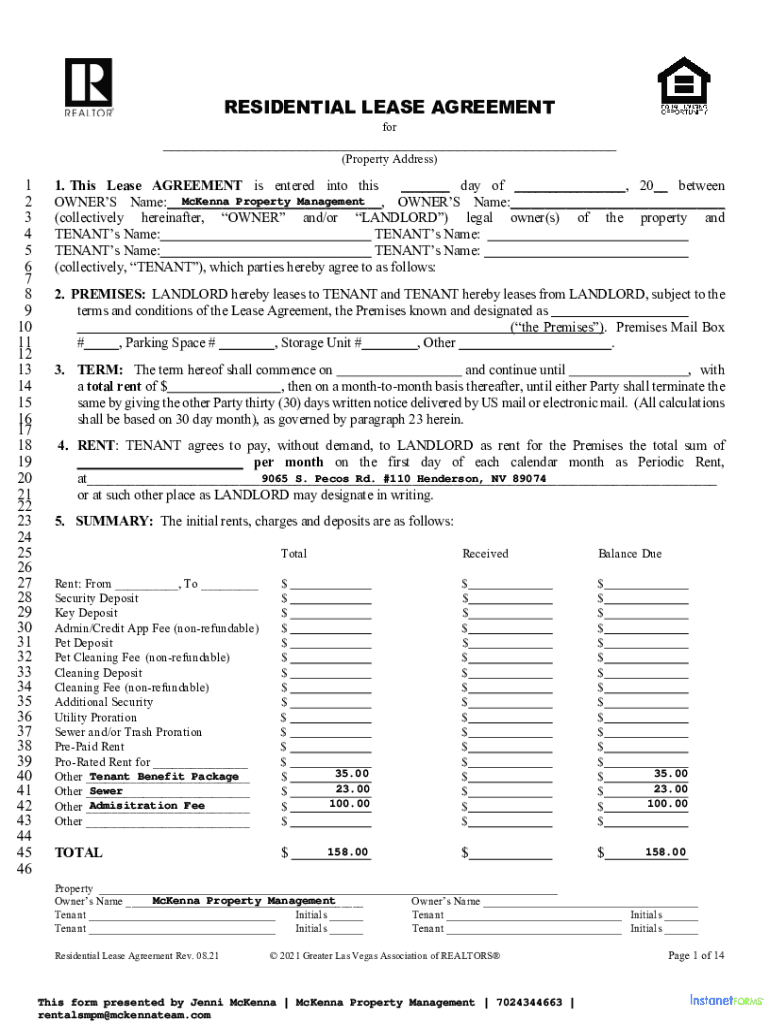







Definition and Meaning of the Residential Lease Agreement - 8 21
A Residential Lease Agreement, specifically the "8 21" version, is a legally binding contract between a landlord and tenant that outlines the terms and conditions for renting residential property. This document includes essential details such as rental amount, payment schedule, security deposit requirements, and duration of the lease. It also delineates responsibilities related to maintenance, utilities, and rules concerning property modifications and the presence of pets. Understanding the components of this agreement is crucial for both parties to ensure a smooth and legally compliant tenancy.
How to Use the Residential Lease Agreement - 8 21
Using the Residential Lease Agreement - 8 21 involves several steps to ensure that the document is filled out correctly and submitted in compliance with legal standards. Initially, both the landlord and tenant should thoroughly review the agreement to understand their rights and obligations. Specific sections require detailed information, such as the property's address, rental terms, and any unique stipulations like pet policies or maintenance responsibilities.
- Fill in tenant and landlord information accurately.
- Specify the lease term, including start and end dates.
- Clearly define payment details, like due dates and acceptable payment methods.
- Note any additional agreements, such as pet allowances or specific laws pertaining to the locality.
Once completed, both parties should review the document together to clarify any uncertainties before signing. It's advisable to keep a copy of the signed agreement for personal records.
Steps to Complete the Residential Lease Agreement - 8 21
Completing the Residential Lease Agreement requires careful attention to detail to ensure accuracy and compliance. Below are the steps to follow:
- Gather Required Information: Includes names, addresses, and contact details of both parties.
- Fill Out Property Details: Accurately note the address and specific characteristics of the rental unit.
- Define Lease Terms: Specify the lease duration, renewal conditions, and notice period for termination.
- Detail Financial Obligations: Outline rental payment amount, schedule, and method, along with security deposit details.
- Address Additional Terms: Include any specific conditions or exceptions, such as pet policies or maintenance obligations.
- Review and Sign: Both parties should review the complete document, addressing any ambiguities before signing.
Ensure all parties have copies of the signed agreement to prevent future disputes.
Key Elements of the Residential Lease Agreement - 8 21
A comprehensive Residential Lease Agreement includes several key components that protect the interests of both landlords and tenants:
- Identity of Parties: Clearly identifies all tenants and landlords involved.
- Rental Details: Specifies the rental amount, due date, and payment methods.
- Security Deposit Conditions: Outlines the amount, usage, and return conditions of a security deposit.
- Property Maintenance Responsibilities: Details which parties are responsible for maintenance and utilities.
- Pet Policies: Contains specific rules concerning pets on the premises.
- Lease Termination Conditions: Explains the process and requirements for ending the lease agreement.
Each element plays a significant role in avoiding misunderstandings and disputes during the tenancy.
State-Specific Rules for the Residential Lease Agreement - 8 21
The Residential Lease Agreement may have state-specific variations to comply with local laws. These differences can affect aspects such as the amount of notice required before evicting a tenant or the legal maximum for a security deposit.
- Notice Requirements: Varying state laws dictate how much notice is required for lease termination or rent increase.
- Maximum Security Deposit: Some states cap the security deposit at a specified amount or restrict its usage.
- Rent Control Rules: In certain states, rent control laws might limit how often and by how much rent can be increased.
Understanding these state-specific regulations ensures that the lease agreement complies with local legal standards.
Why Use the Residential Lease Agreement - 8 21
Utilizing the Residential Lease Agreement provides numerous benefits, ensuring a clear and mutually agreed-upon understanding of rights and responsibilities:
- Legal Protection: Both parties are legally protected by clearly defined terms.
- Conflict Resolution: Established guidelines simplify resolving disputes.
- Clarity and Transparency: Detailed sections prevent misunderstandings regarding rent, maintenance, or policy changes.
Signing a well-drafted agreement minimizes the risk of conflicts and supports a fair rental process for all parties involved.
Legal Use of the Residential Lease Agreement - 8 21
This agreement serves as a legal document, enforceable under landlord-tenant laws within the United States. It establishes binding commitments on both parties, protecting legal interests and providing mechanisms for legal recourse should one party fail to honor the terms.
- Enforceability: Legally obligates parties to adhere to terms.
- Recourse Options: Specifies consequences for breach of contract.
- Compliance: Ensures adherence to federal and state laws regarding rental properties.
Both parties benefit from understanding their contractual obligations and the legal implications of any breaches.
Who Typically Uses the Residential Lease Agreement - 8 21
The Residential Lease Agreement is predominantly used by individuals and businesses involved in renting residential properties. This includes:
- Property Owners and Managers: To formalize rental terms with tenants.
- Tenants: To understand their rights and obligations under the lease.
- Real Estate Agents: Facilitating transactions between landlords and tenants.
These users rely on the document to establish official rental terms and ensure smooth transactions.