




01. Edit your motion for change of venue form indiana online
Type text, add images, blackout confidential details, add comments, highlights and more.

Type text, add images, blackout confidential details, add comments, highlights and more.

Draw your signature, type it, upload its image, or use your mobile device as a signature pad.

Send change of venue form pdf via email, link, or fax. You can also download it, export it or print it out.
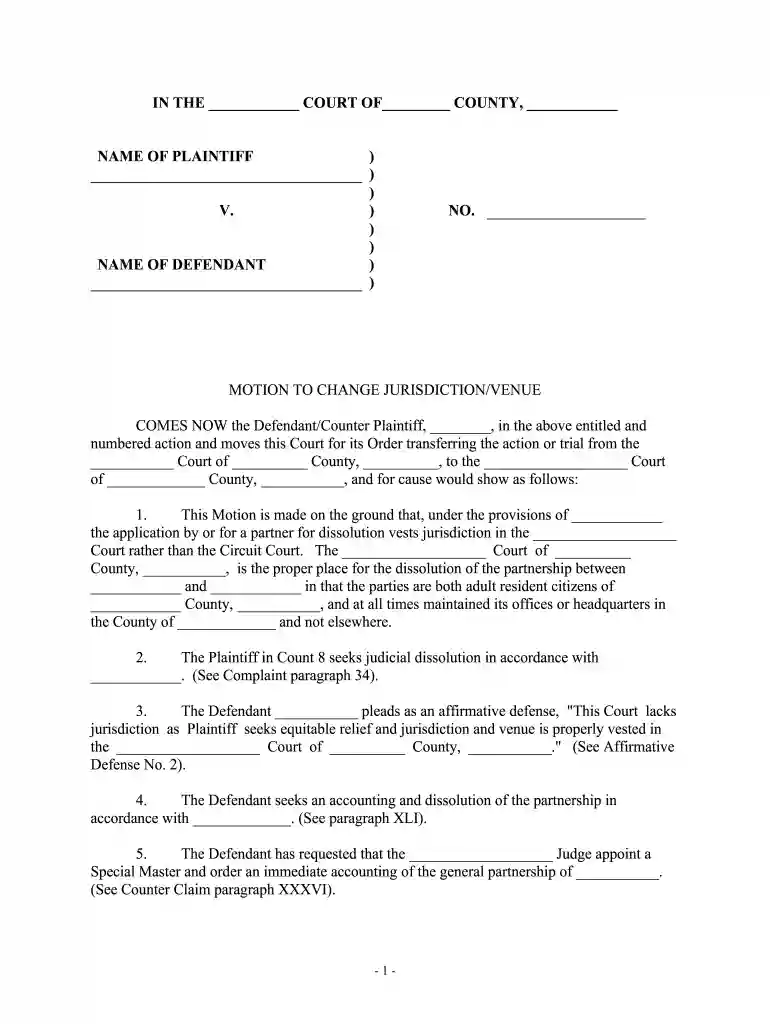
A motion for change of venue form is a legal document filed in court requesting the relocation of a case from one court to another. This request may arise in various contexts, such as civil litigation, criminal cases, or family law disputes, where the party believes that a fair trial cannot be conducted in the current venue due to bias, pre-existing opinions, or other factors that could affect impartiality.
The underlying principles governing a motion for change of venue include jurisdictional considerations, convenience of witnesses, and the interests of justice. Understanding the significance of this form is crucial, as it ensures that judicial proceedings are conducted fairly and within an appropriate legal framework.
There are several valid reasons to file a motion for change of venue, including:
The rationale behind these grounds should be clearly articulated in the motion to support the request for relocation.
The process of completing the motion for change of venue form involves specific procedural steps to ensure its validity and adherence to court requirements. Here’s a step-by-step outline of how to proceed:
When preparing a motion for change of venue, several key elements must be included to ensure the document is complete and compliant with legal standards:
Attachments may strengthen the motion, such as:
Different states may have unique rules and forms for motions to change venue. For instance:
Before filing, it's essential to consult local court rules to understand:
Filing a motion for change of venue can have significant legal and procedural implications. If not properly executed, the motion may be denied, potentially affecting the case's outcome. Understanding the procedural nuances, including jurisdictional requirements, local rules, and potential outcomes, is essential for those pursuing this legal avenue.
In summary, the motion for change of venue form is a critical aspect of ensuring fair legal proceedings, providing a structured approach for shifting a case to a jurisdiction more conducive to an equitable resolution.
At DocHub, your data security is our priority. We follow HIPAA, SOC2, GDPR, and other standards, so you can work on your documents with confidence.
Mar 31, 2020 The change in fair value of the Companys contingent liability is recorded in general and administrative expenses in the consolidatedRead more
Upon motion, consent or stipulation of all parties, any action, suit or proceeding of a civil nature or any motion or hearing thereof, may be transferredRead more
Download and complete Motion and Notice forms from the Illinois Office of the Courts.


