Definition & Meaning
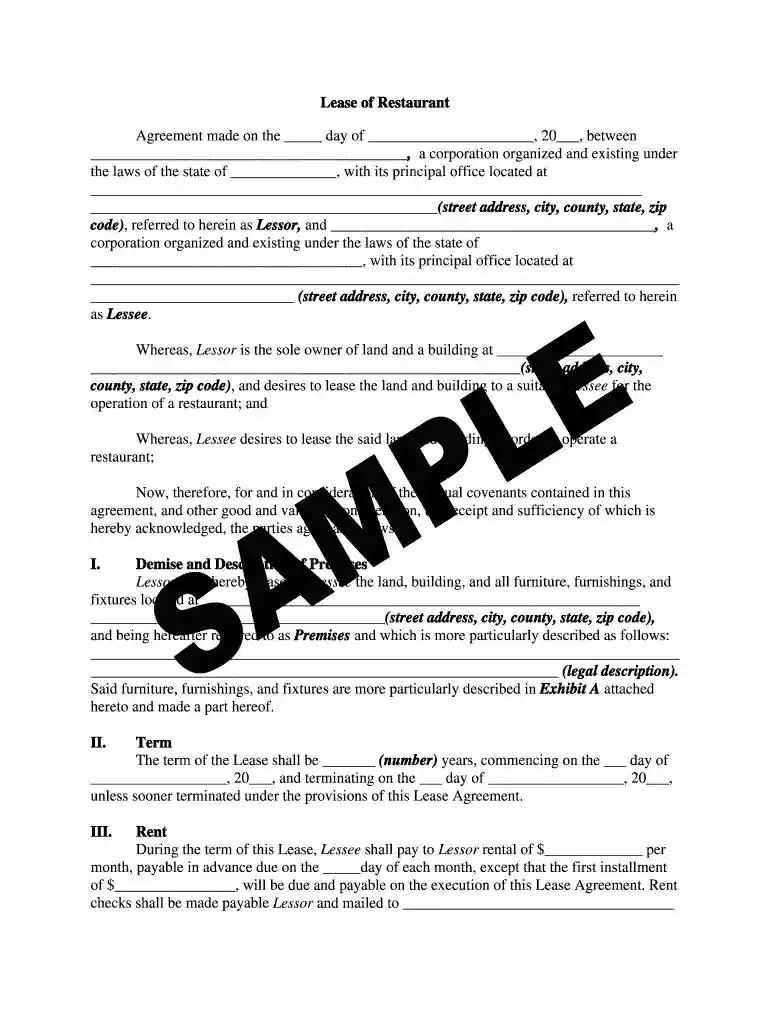
The "Lease of Restaurant Agreement made on the day of , 20" is a legal contract between a lessor and a lessee for renting a restaurant property. This agreement outlines the terms and conditions under which the leasing occurs. Key elements include a description of the premises, lease duration, and rent payment details. It also covers responsibilities for utilities, maintenance, and permitted use of the property. The agreement sets the foundation for legal and business relationships between the parties, ensuring clarity and mutual understanding.
Key Elements of the Lease of Restaurant Agreement
Understanding the important components of this lease is crucial for both parties. The document typically includes:
- Description of Premises: Clearly outlines the area of the restaurant being leased, including indoor and outdoor spaces.
- Lease Duration: Specifies the lease's start and end dates and options for renewal.
- Rent Payment Details: Details the amount, due date, and method of rent payment.
- Utilities and Maintenance: Allocates responsibilities for utility bills and property maintenance.
- Use of Premises: Defines permissible activities within the leased space, ensuring compliance with zoning laws.
- Insurance Requirements: Outlines necessary insurance coverage to protect both parties against potential risks.
- Termination Conditions: Specifies conditions under which the lease can be terminated prematurely.
- Breach of Contract Provisions: Details the consequences if either party fails to adhere to the agreement.
Steps to Complete the Lease of Restaurant Agreement
Composing a comprehensive lease agreement involves several critical steps:
- Negotiation: Both parties discuss and agree on the lease terms.
- Drafting: Create the agreement with all agreed-upon terms and legal requirements.
- Review: Both parties review the draft to ensure all clauses are clear and accurately reflect negotiations.
- Legal Review: Optionally, have a legal expert review the document to confirm compliance with applicable laws.
- Signing: Both parties sign the agreement, making it legally binding.
- Distribution: Each party receives a copy of the signed agreement for their records.
Who Typically Uses the Lease of Restaurant Agreement
This type of lease agreement is commonly utilized by:

- Restaurant Owners: Individuals or entities looking to lease space for their dining establishments.
- Property Owners: Individuals or companies offering restaurant spaces for lease.
- Real Estate Agents: Professionals facilitating the leasing process for both lessors and lessees.
- Legal Advisors: Attorneys who assist in drafting and reviewing lease agreements.
Legal Use of the Lease of Restaurant Agreement
This agreement serves as a legally binding contract and ensures both parties have mutual obligations and rights. It helps prevent disputes by clearly defining terms and expectations. In case of disagreements, the lease particulars can be referenced for conflict resolution. Additionally, these agreements are often required to meet specific state and local regulations, adding a layer of protection for both parties.
State-Specific Rules for the Lease of Restaurant Agreement
Lease agreements are influenced by state-specific laws, impacting the terms and conditions. Notable variations include:
- Rental Laws: Each state has unique laws regulating commercial lease agreements.
- Zoning Regulations: Ensure the property’s designated use complies with local zoning laws.
- Insurance Requirements: States may have different mandates regarding public liability insurance policies.
- Renewal Clauses: Specific state laws can dictate automatic renewal terms or notice periods.
Examples of Using the Lease of Restaurant Agreement
Real-world situations show the application of these agreements:
- A chain restaurant leasing a new location in a shopping mall uses this agreement to outline terms.
- A local restaurant owner negotiating a lease renewal with added terms for expanded outdoor seating.
- A property owner ensuring their lease protects against potential tenant negligence by including stringent maintenance clauses.
Business Types that Benefit Most from Lease of Restaurant Agreement
This lease agreement is beneficial for:
- Independent Restaurants: Those seeking a temporary or permanent location.
- Franchises: Establishing new branches under consistent lease terms.
- Pop-up Restaurants: Utilizing short-term leases for limited-time operations.
- Caterers: Leasing space for operations that require on-site cooking facilities.
These sections provide an in-depth understanding of the "Lease of Restaurant Agreement made on the day of , 20," ensuring comprehensive knowledge of its purpose, components, and application.