







Definition & Meaning of the 4) Variances - Public Hearings Zoning Board of
Variances are specific requests made by property owners or developers to deviate from the set zoning regulations in a given locality. The Public Hearings Zoning Board of reviews these requests based on several criteria, ensuring that granting such a variance would not adversely affect the community or contradict the overall planning goals. This process assists in balancing individual property rights with community growth and planning objectives. Typically, variances relate to zoning issues such as building height, setbacks, or land use.
How to Use the 4) Variances - Public Hearings Zoning Board of
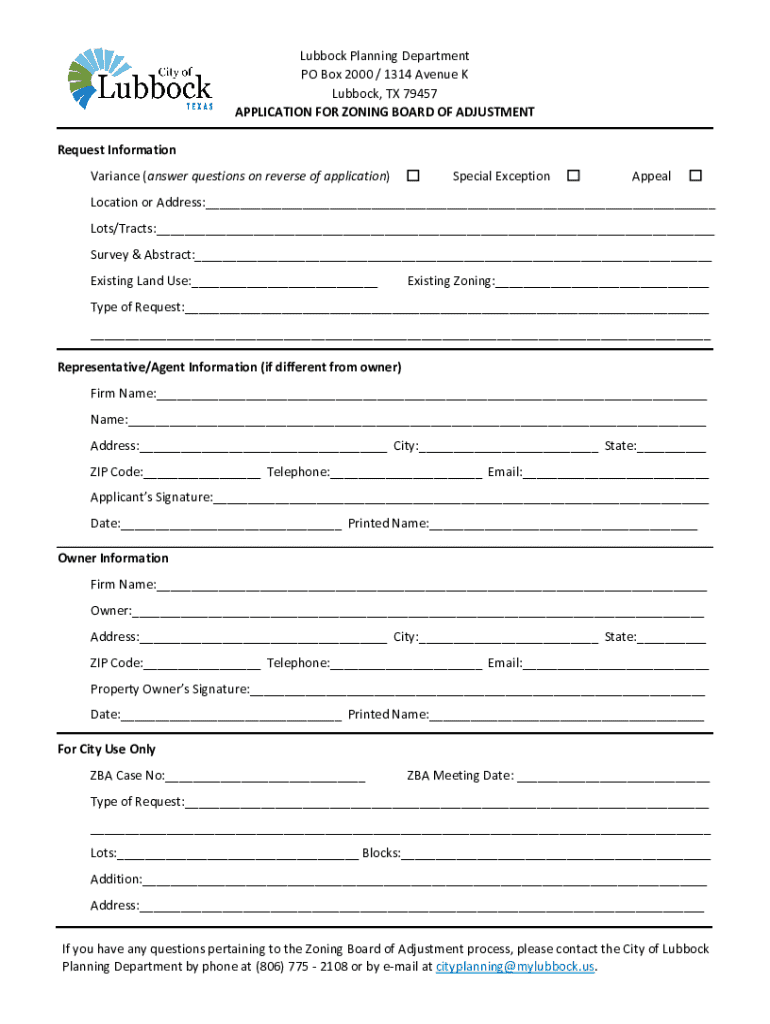
Utilizing this form involves detailing the nature of the variance request thoroughly. Individuals or organizations are required to describe why the variance is necessary and how it aligns with the community's development standards. Engaging with local planning officials beforehand can provide guidance on the likelihood of approval and any specific information required. Preparation of supporting documents, sketches, or plats showing the proposed variance can enhance the clarity of the request.
Steps to Complete the 4) Variances - Public Hearings Zoning Board of
- Review Zoning Ordinances: Understand the existing zoning regulations and identify where your project deviates.
- Draft Variance Request: Clearly outline the specifics of the variance needed and justify the necessity of this request.
- Gather Supporting Documentation: Collect site plans, environmental studies, pictures, or other evidence that supports your case.
- Complete Application Form: Fill out all sections of the form comprehensively, ensuring no fields are left empty.
- Submit the Application: Submit your completed form along with any fees to the zoning board, either online or in person.
Key Elements of the 4) Variances - Public Hearings Zoning Board of
- Applicant Information: Includes names, addresses, and communication details of all parties involved.
- Property Details: A detailed description of the property, including its current zoning classification and uses.
- Nature and Justification of Variance: Specifics on what variance is being requested and the reasons it should be granted.
- Impact Assessment: Analysis of potential impacts on neighboring properties and the community at large.
- Signatures: Required from both the applicant and property owners, verifying the accuracy and truthfulness of the information provided.
Legal Use of the 4) Variances - Public Hearings Zoning Board of
Zoning variances are legal tools allowing property owners to lawfully adapt their land use or structures. The legal framework typically requires adherence to local zoning laws and justifies the need for deviation in unique or exceptional cases. The zoning board acts as a mediating body that examines if a variance aligns with legal requirements and serves a public interest.
State-Specific Rules for the 4) Variances - Public Hearings Zoning Board of
While many elements of zoning variance requests are consistent across the United States, some nuances can vary significantly by state. States may impose unique requirements or provide additional guidance affecting the documentation needed, the hearing process, or criteria for decision-making. Consulting with a local zoning expert or attorney can provide insight into specific state regulations governing the variance process.
Required Documents for the 4) Variances - Public Hearings Zoning Board of
- Completed Application Form: The form must be fully completed with all required fields filled.
- Property Deeds: To confirm ownership of the property in question.
- Zoning Map & Site Plan: An accurate representation of the property, surrounding areas, and the proposed changes.
- Environmental Impact Reports: Necessary for projects that may have significant effects on local ecosystems.
- Public Notices: Proof of required notifications sent to neighbors or other impacted parties.
Application Process & Approval Time for the 4) Variances - Public Hearings Zoning Board of
The application process typically begins with the submission of the form and associated documents. The zoning board then reviews submissions, schedules a public hearing, and provides a platform for stakeholders to express support or opposition. Depending on the complexity of the request and local procedures, the approval time can range from several weeks to a few months. It's advisable to allow for sufficient time for deliberations and potential appeals within your project timeline.




