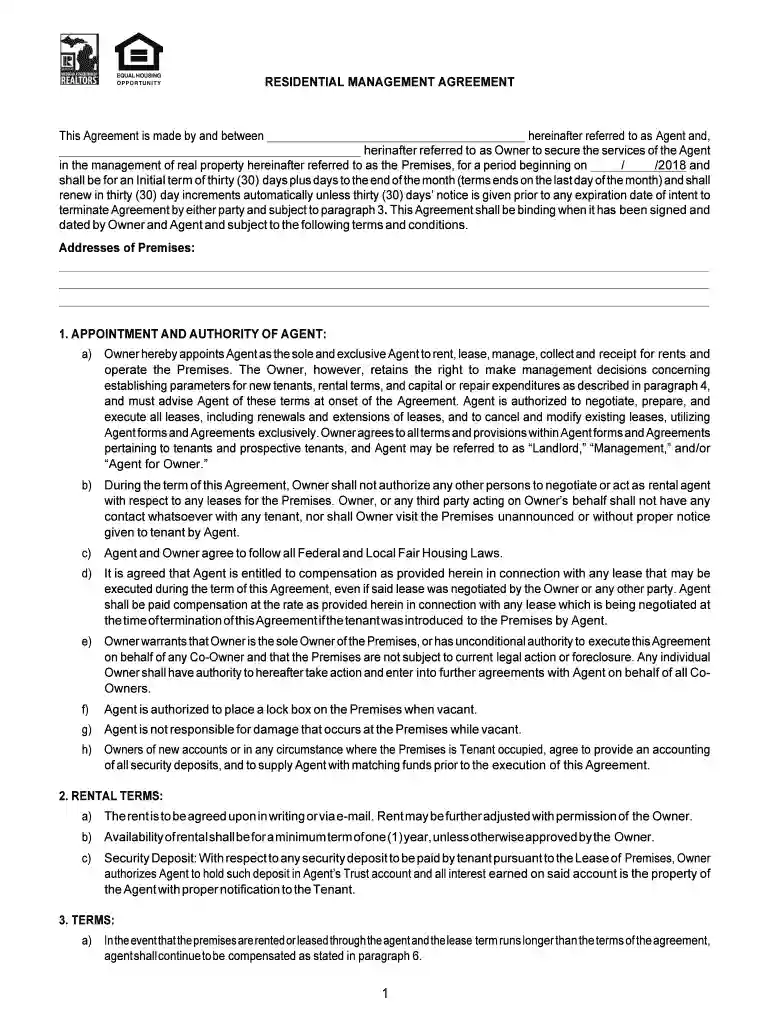
Definition & Meaning
A property management agreement is a legally binding contract between a property owner and a management company, referred to as the agent. This agreement outlines the responsibilities and duties assigned to the agent, including the management of the property, collection of rents, and oversight of repairs. It serves to clearly define the relationship between the owner and the manager, ensuring that both parties understand their obligations and the terms under which the property will be managed. By setting these expectations, a property management agreement helps to mitigate misunderstandings and ensures that the property is maintained and operated effectively.
Key Elements of the Property Management Agreement
The property management agreement is comprised of several key elements that provide a comprehensive framework for property management. These elements typically include:
- Appointment of the Agent: Specifies the selection of the management company or individual as the property manager.
- Authority and Responsibilities: Details the manager's power to lease the property, collect rental payments, and coordinate maintenance and repairs.
- Compensation: Outlines how the manager will be compensated for their services, often as a percentage of the rental income or through fixed fees.
- Term and Termination: Defines the duration of the agreement and the conditions under which either party can terminate the contract.
- Indemnification and Legal Provisions: Includes clauses on indemnification to protect the manager from liabilities arising from certain actions and specifies the jurisdiction for legal matters.
Steps to Complete the Property Management Agreement
Completing a property management agreement involves structured steps to ensure that all aspects are thoroughly addressed:
- Gather Required Information: Collect details about the property, including the address, rental terms, and owner contact information.
- Draft the Agreement: Use a template or legal guidance to draft the document, ensuring all key elements are included.
- Review Terms with the Agent: Discuss the terms and responsibilities outlined in the agreement to ensure mutual understanding.
- Consult Legal Advice: Engage a legal professional to review the agreement, particularly the indemnification and legal provisions.
- Sign the Agreement: Both parties need to sign the document to enact it, often in the presence of a notary for added legal authenticity.
Important Terms Related to Property Management Agreement
Understanding specific terms within a property management agreement is essential:
- Lease Terms: These define the rental period, rental amount, and payment schedule.
- Maintenance Protocols: Refers to the procedures for addressing repairs and property upkeep.
- Escrow Accounts: Used for holding rental deposits and managing funds for property expenses.
- Termination Clause: The process and conditions under which the contract can be ended.
Legal Use of the Property Management Agreement
The legal use of a property management agreement is critical in ensuring enforceability and compliance. This agreement establishes a formal relationship between the property owner and manager, detailing lawful rights and obligations. It also serves as a protective measure for both parties by legally binding them to the outlined terms. In the United States, it must comply with state-specific regulations which may affect clauses related to tenant law, eviction procedures, and security deposit handling.
State-Specific Rules for the Property Management Agreement
Property management agreements in the U.S. must adhere to state-specific regulations that impact various elements, such as:
- Security Deposits: State laws determine limits on deposit amounts and conditions for their return.
- Eviction Procedures: Varying state requirements dictate how and when a tenant can be legally evicted.
- Licensing Requirements: Property managers may need specific licenses or certifications to operate legally.
State-by-State Differences
While property management agreements are generally similar across the U.S., variations exist in terms of:
- Rental Regulations: Some states have specific tenant protection laws impacting lease agreements.
- Utility Billing: States differ on the rules regarding billing tenants for utilities.
- Insurance Requirements: Varying mandates on insurance coverage for managed properties.
Software Compatibility
Property management agreements can be processed using various software tools, offering flexibility for digital documentation:
- DocHub: Facilitates editing, signing, and sharing of agreements seamlessly.
- QuickBooks: Useful for managing financial aspects of property management contracts.
- TurboTax: Assists in integrating tax-related elements of the agreement.
Examples of Using the Property Management Agreement
Real-world scenarios where property management agreements play a pivotal role include:
- Vacation Rental Management: Owners use the agreement to outline terms for short-term rental management.
- Commercial Asset Management: Businesses employ agreements to define management terms for large commercial spaces.
- Residential Lease Management: Landlords create agreements to ensure consistent operations across multiple residential properties.
Penalties for Non-Compliance
Failing to adhere to the terms of a property management agreement can result in several consequences:
- Legal Action: Breach of contract may lead to lawsuits and financial damages.
- Loss of License: For licensed property managers, non-compliance can result in the revocation of professional licenses.
- Financial Penalties: Includes potential loss of income or penalties from regulatory bodies.
Who Issues the Form
The property management agreement is typically structured by:
- Property Owners: Drafted with a management company or professional.
- Property Management Firms: Developed as part of their standard service offering.
- Legal Professionals: Provided by attorneys for customized agreements ensuring compliance.
Versions or Alternatives to the Property Management Agreement
While the property management agreement is standard, alternative options may exist, such as:
- Custom Agreements: Tailored specifically to meet unique property situations or needs.
- Standard Lease Addendums: Supplement existing leases to address property management roles.
- Digital Tools: Use of platforms like DocHub for creating interactive and digitally signed agreements.