







Definition and Purpose of the Weekly Marine Mammal Report
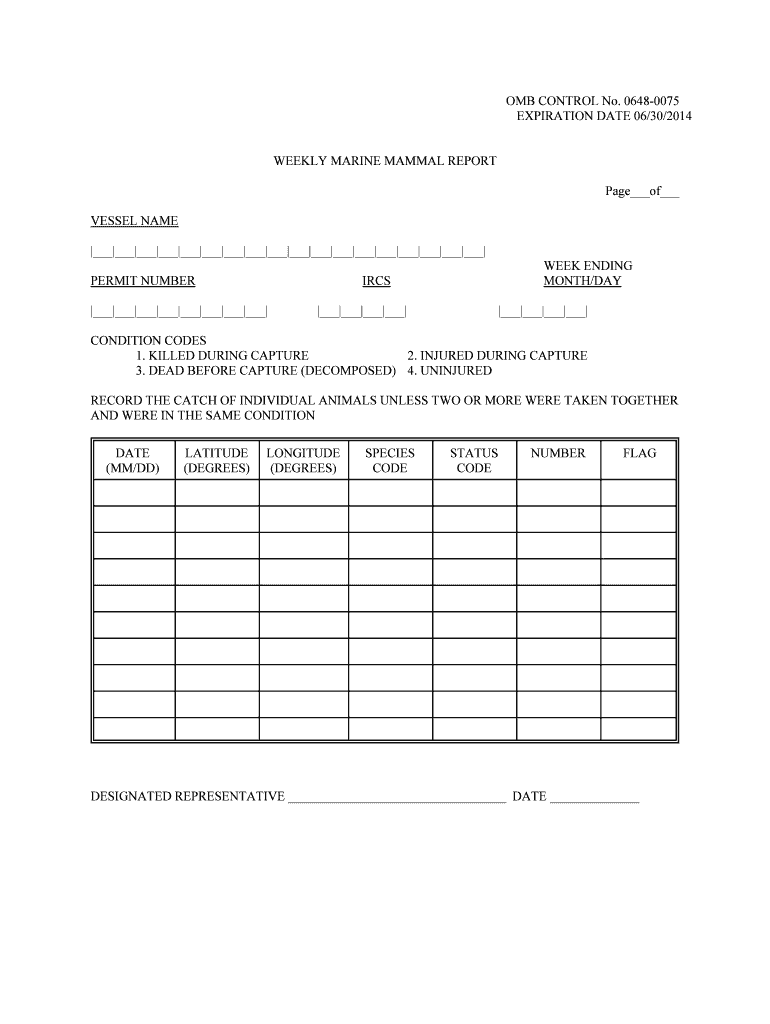
The Weekly Marine Mammal Report is a crucial form used for documenting data related to marine mammal captures. It is essential for those involved in the capture and handling of marine mammals, as it provides a detailed account of each instance, specifying information such as vessel name, permit number, and relevant capture details. This report, associated with OMB CONTROL No. 0, serves as a record to support conservation efforts and ensure compliance with marine conservation laws.
How to Use the Weekly Marine Mammal Report
To effectively use the Weekly Marine Mammal Report, users must diligently record specific details of each marine mammal capture event. This includes capturing data about the date, location, species code, and condition codes of the animals. Each section of the form is designed to capture comprehensive data that supports regulatory compliance and enables efficient analysis for marine conservation efforts.
- Date and Location: Each capture event must be precisely documented with the date and geographical location to track patterns and inform research.
- Species Codes and Condition Codes: Utilize standard codes to record species and condition, ensuring uniformity and clarity in reporting.
Steps to Complete the Weekly Marine Mammal Report
- Gather Required Details: Before completing the form, collect all necessary information pertaining to the marine mammal capture.
- Document Vessel Information: Input the name of the vessel and the permit number.
- Specify Capture Details: Record the date, location, species code, and condition of the animal at the time of capture.
- Review for Accuracy: Double-check all entered information for errors or omissions.
Key Elements of the Weekly Marine Mammal Report
The form contains several critical sections that must be accurately completed to satisfy reporting requirements:
- Vessel and Permit Information: Identifies the operating vessel and its authorization for marine mammal handling.
- Capture Specifics: Detailed capture information includes species-specific data and physical condition assessments.
- Observer Notes: Provides space for additional observations or relevant notes about the capture process or the animals involved.
Who Typically Uses the Weekly Marine Mammal Report
The report is typically used by professionals in marine biology, environmental research, and sectors involved with marine mammal management. Organizations responsible for marine conservation or research rely on this documentation to ensure compliance with legal requirements and to promote the effective conservation of marine life.


Legal Use of the Weekly Marine Mammal Report
Complying with federal regulations, the Weekly Marine Mammal Report aids in monitoring and managing marine populations. The form must be used in accordance with legal mandates, ensuring that all marine mammal captures are documented accurately to support sustainability efforts and legal enforcement.
State-specific Rules for the Weekly Marine Mammal Report
While the report primarily adheres to federal guidelines, users should be aware of any state-specific regulations that might affect the completion of the form. Individual states may impose additional reporting requirements or conservation measures that need to be reflected in the documentation process.
Examples of Using the Weekly Marine Mammal Report
Consider the case of a research vessel conducting a study of dolphin populations along the California coast. Each week, researchers record dolphin encounters on the Weekly Marine Mammal Report, noting the species and condition of each group encountered. These detailed reports contribute to broader conservation strategies and regulatory compliance, offering insight into population health and trends.




