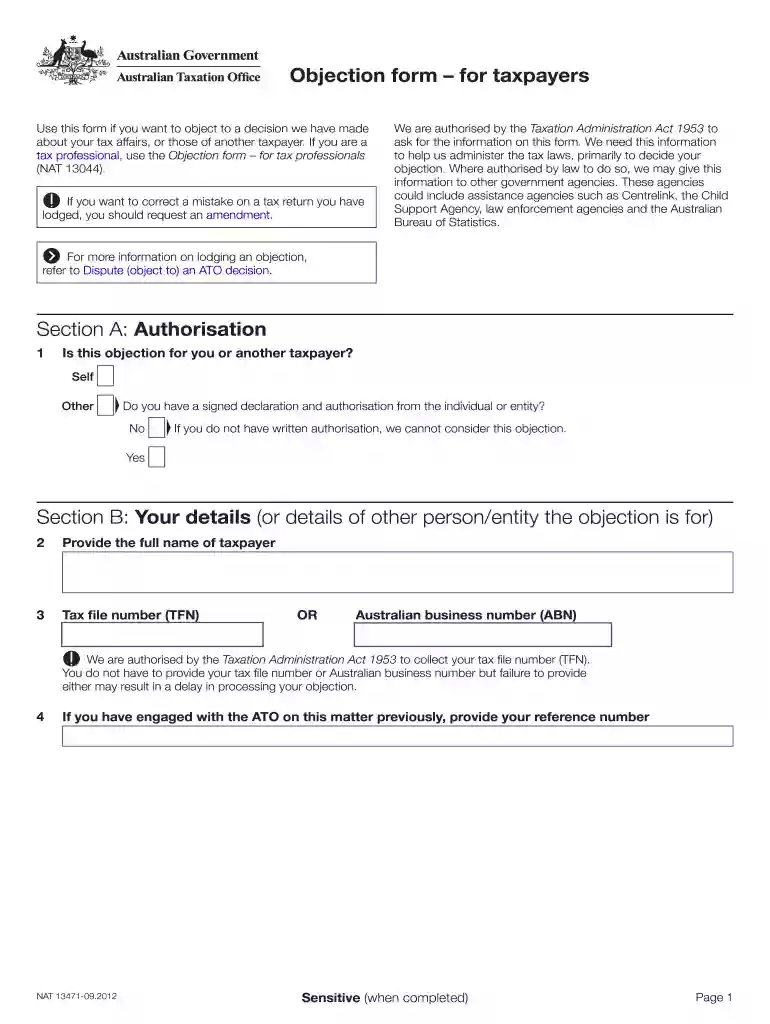
Objection form for taxpayers 2025

Get Form
nat 13471 Preview on Page 1

Here's how it works

01. Edit your nat 13471 online
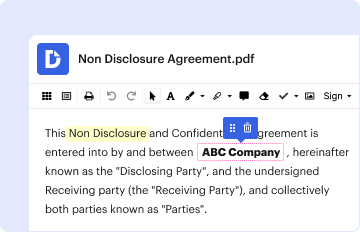
Type text, add images, blackout confidential details, add comments, highlights and more.

02. Sign it in a few clicks
Draw your signature, type it, upload its image, or use your mobile device as a signature pad.

03. Share your form with others
Send objection form for taxpayers via email, link, or fax. You can also download it, export it or print it out.

Definition and Meaning of the Objection Form for Taxpayers

The objection form for taxpayers serves as an official document allowing individuals and entities to contest decisions made by the Internal Revenue Service (IRS) regarding their tax obligations. This process is vital for ensuring that taxpayers can challenge unfavorable determinations, such as incorrect tax assessments, decisions on claims for refunds, or penalties imposed. The form is designed to capture essential information that substantiates the objection, facilitating a transparent review by the IRS.

When filing an objection, taxpayers must provide personal identification details, including their name, address, and taxpayer identification number. The form requires a clear statement of the decision being contested along with the taxpayer's reasoning for the objection. Supporting documentation, such as financial records or correspondence, may also be necessary to reinforce the claim. This thorough collection of information aids the IRS in reviewing and adjudicating the dispute effectively.

Steps to Complete the Objection Form

Filing an objection form involves several specific steps that taxpayers must follow to ensure a successful submission. Here’s a systematic approach:

  1. Gather Necessary Information: Collect personal details, including identification numbers and address, that reflect the taxpayer’s status.
  2. Identify the Decision: Clearly indicate the decision made by the IRS that is being contested. Provide reference numbers or dates associated with the decision to avoid confusion.
  3. Articulate the Grounds for Objection: Write a detailed explanation outlining why the taxpayer believes the decision is incorrect, incorporating any relevant law or policy.
  4. Attach Supporting Documents: Include all necessary documentation that supports the objection. This may encompass past tax returns, receipts, communications from the IRS, and any other relevant records.
  5. Review and Sign the Form: Before submission, ensure that all provided information is accurate and thoroughly review the form for completeness. Sign the form where indicated, and note if it’s being filed on behalf of another taxpayer.
  6. Submit the Form: Choose an appropriate submission method, whether electronically through the IRS website or by mailing a physical copy to the specified address.

By following these steps, taxpayers can navigate the objection process more efficiently, reducing the likelihood of delays or additional complications.

Required Documents for Submission

When completing the objection form for taxpayers, submitting proper documentation is crucial for bolstering the claim. Taxpayers should include the following types of documents:

  • Personal Identification Documents: Social Security cards or other identification to validate the identity of the taxpayer or the representative.
  • IRS Correspondence: Any letters or notices received from the IRS that show the details of the decision being contested.
  • Financial Records: Relevant tax returns from the applicable years, W-2 forms, 1099s, and any additional tax documents that help clarify the taxpayer's circumstances.
  • Supporting Affidavits or Statements: Written statements from relevant parties can be included, detailing their perspectives on the tax issue at hand.
  • Legal Documents: If applicable, tax court records or legal opinions from tax professionals that help substantiate the objection should be appended.

Having all necessary documents ready for submission enhances the credibility of the claim and may facilitate a quicker resolution by the IRS.

Common Reasons for Filing an Objection

Taxpayers may encounter various situations that necessitate the filing of an objection form. Some common reasons include:

  • Disagreeing with IRS Assessments: When the IRS has adjusted the tax amount due based on their review, and the taxpayer believes the adjustment is unwarranted.
  • Contesting Penalties: Taxpayers may object to penalties applied for late filings or underpayments where they believe reasonable cause exists for their tax position.
  • Errors in Tax Calculations: Discrepancies may arise in the taxpayer's calculations versus the IRS's, warranting an objection based on proper accounting or interpretation of tax laws.
  • Disputing Audit Findings: Following an audit, findings may be challenged if the taxpayer believes that their evidence was not correctly evaluated.
  • Tax Refund Denial: When requests for tax refunds are denied, an objection can provide grounds to seek reconsideration based on overlooked aspects or new evidence.

Recognizing these scenarios can help taxpayers understand when it may be appropriate to file the objection form.

Penalties for Non-Compliance with Objection Procedures

Failing to adhere to the proper procedures when submitting an objection form may result in several penalties or complications, including:

  • Denial of Objection: Inadequate submissions, such as incomplete forms or lack of necessary documentation, can lead to an immediate denial of the objection.
  • Increased Interest and Penalties: If the objection pertains to underreported income or unpaid taxes, the IRS may continue to accrue interest or impose additional penalties while the objection is pending.
  • Extension Delays: Failing to comply with submission deadlines or regulations can lead to extended processing times and further complications in resolving the tax issue.
  • Legal Repercussions: In severe cases, ignoring communication from the IRS or failing to follow objection protocols could lead to legal actions, including liens or wage garnishments.

Understanding these potential penalties highlights the importance of following established protocols when contesting IRS decisions.

Best Practices for Taxpayers When Filing an Objection

To enhance the likelihood of a successful objection, taxpayers should consider the following best practices:

  • Consult a Tax Professional: Engaging a tax advisor or attorney who specializes in tax law can provide expert guidance and improve the quality of the objection.
  • Maintain Comprehensive Records: Keeping organized records of all tax-related documents, communications, and submissions aids in preparing a robust objection.
  • Be Clear and Concise: When writing the objection, clarity is key. Avoid overly technical language and focus on straightforward explanations supported by evidence.
  • Follow Up Regularly: After submitting the objection form, maintaining regular contact with the IRS can ensure timely processing and address any queries that may arise.

Implementing these best practices can make the objection process more defined, ensuring taxpayers effectively communicate their positions and achieve a satisfactory resolution.

See more objection form for taxpayers versions

We've got more versions of the objection form for taxpayers form. Select the right objection form for taxpayers version from the list and start editing it straight away!
Versions Form popularity Fillable & printable
2019 4.8 Satisfied (37 Votes)
2012 4.4 Satisfied (113 Votes)
be ready to get more

Complete this form in 5 minutes or less

Get form

Got questions?

We have answers to the most popular questions from our customers. If you can't find an answer to your question, please contact us.
Contact us
What is a tax Notice of Objection? A taxpayer who disagree with an assessment or re-assessment issued by the CRA can submit a Notice of Objection. Any Notice of Objection must clearly explain your objections and why you disagree with that assessment or determination, including all relevant facts and documents.
Tax resistance is the refusal to pay tax because of opposition to the government that is imposing the tax, or to government policy, or as opposition to taxation in itself. Tax resistance is a form of direct action and, if in violation of the tax regulations, also a form of civil disobedience.
Begin by providing essential information concisely: your name, address, the application details (including the address and planning/development application number), and clearly outline the reasons for your objection. This approach helps streamline the process and ensures your concerns are effectively communicated.
Notice of Objection Template / Notice of Objection Example Ideally, an objection can be structured in a similar manner, making sure to reference all of the issues in dispute, relief sought, the reasons and the relevant facts. Stating the issues is key.
Most importantly, a taxpayer has 90 days from the date on the Notice issued by the CRA to file a Notice of Objection. If the 90-day deadline is missed a taxpayer can file an extension request with the objection.

People also ask

A Notice of Objection is the method by which an individual or business can inform the CRA that they disagree with its assessment of their income situation and/or taxes payable. The CRA doesnt always get it right, and a dispute with the CRA can be time-consuming, complex and frustrating.
Notice of Objection means the record adopted by the committee that indicates the committees formal objection to a proposed rule.
The easiest way to lodge an objection is by signing into Online services for business using myID. After youve signed in, select Lodgments, Reports and forms and then Lodge an objection.

ato objection form