







Definition & Meaning
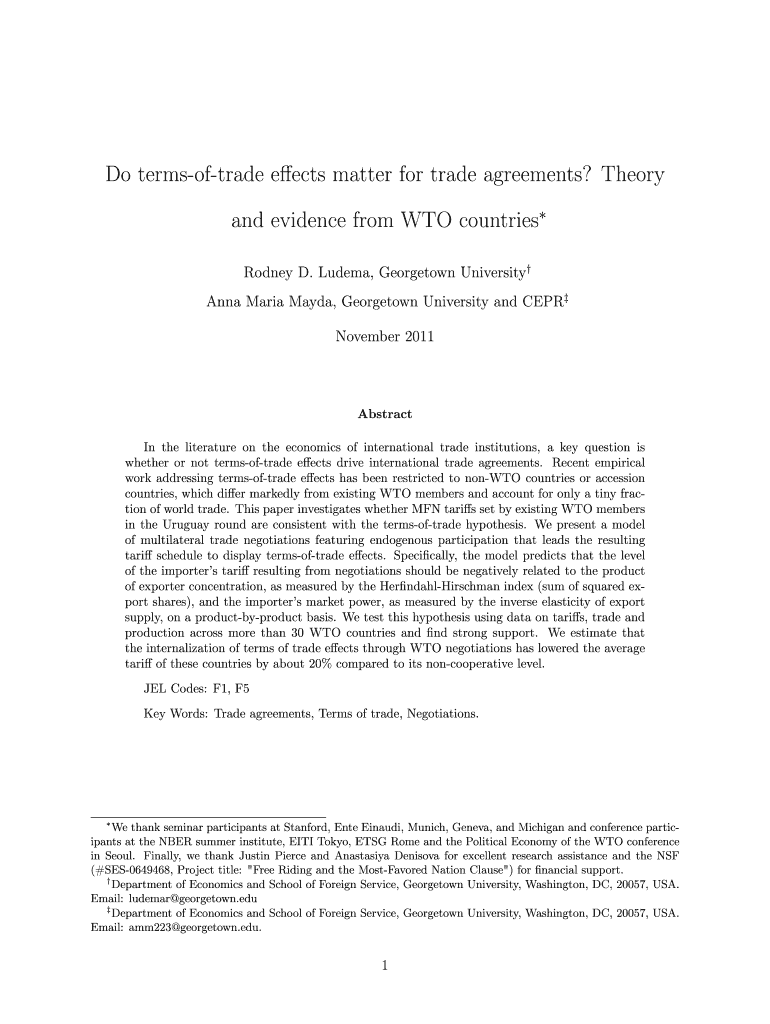
The term "terms-of-trade effects" refers to the changes in relative prices of exports and imports that a country engages in. This economic concept is crucial for understanding the dynamics of trade agreements as it directly influences a nation's economy by affecting the efficiency and gains from trade. Trade agreements often consider terms-of-trade effects to ensure that the agreements are mutually beneficial and do not disproportionately advantage one party over the other. Analyzing how these effects matter in trade agreements helps in designing policies that can improve overall economic welfare.
Importance of Terms-of-Trade Effects in Trade Agreements
Understanding terms-of-trade effects is pivotal in the drafting and implementation of trade agreements. These effects are significant as they can alter the balance of trade by impacting prices. For instance, a country with strong import market power may intentionally use tariffs to deteriorate the export prices of trade partners. Therefore, trade agreements often include provisions to minimize such manipulative practices and ensure fair trade conditions. The most-favored-nation (MFN) tariffs are one example where negotiation strategies aim to mitigate unfavorable terms-of-trade shifts and encourage collaboration and stability in international markets.
Key Elements of Terms-of-Trade Effects in Trade Agreements
Several elements are fundamental when considering terms-of-trade effects in trade agreements:
- Export and Import Prices: The primary focus is on how tariffs or subsidies alter export and import prices, influencing a country's trade balance.
- Market Power: Participating countries assess each other's market power, which may affect their ability to influence trade terms unilaterally.
- Policy Adjustments: Agreements often detail specific policy adjustments to counteract adverse terms-of-trade effects, ensuring economic equilibrium.
- Cooperative Gains: Establishing mechanisms within agreements to distribute the cooperative gains from trade fairly.
Understanding these elements helps in structuring trade agreements that are resilient to adverse terms-of-trade shifts.
How to Analyze Terms-of-Trade Effects in Trade Agreements
Analyzing the impact of terms-of-trade effects on trade agreements requires a deep understanding of economic models and market data. Here is a step-by-step approach:
- Model Development: Design comprehensive models that simulate multilateral trade negotiations, incorporating variables like exporter concentration and importer market power.
- Data Analysis: Use empirical data from relevant trade partners to test the models and identify trends.
- Policy Impact Evaluation: Assess how different policy measures within trade agreements have historically altered trade terms.
- Scenario Testing: Conduct scenario analyses to predict possible future outcomes of trade agreements under varying terms-of-trade conditions.
Examples of Terms-of-Trade Effects in Existing Trade Agreements
Several international trade agreements provide real-world scenarios of how terms-of-trade effects are integral to negotiations. For example, during the Uruguay Round of the World Trade Organization (WTO) negotiations, countries agreed on MFN tariffs that align inversely with exporter concentration and importer market power. This agreement demonstrated the strategic use of tariffs to internalize terms-of-trade effects, leading to a decrease in average tariffs by about 20% among WTO members. Such examples underscore the importance of meticulously managing terms-of-trade effects to foster equitable international trade environments.
Legal Considerations in Managing Terms-of-Trade Effects
Incorporating terms-of-trade effects into trade agreements necessitates consideration of several legal aspects:
- Compliance with International Laws: Trade agreements must adhere to international trade laws and regulations to ensure legality and enforceability.
- Dispute Resolution Mechanisms: Establishing effective dispute resolution processes is critical to addressing conflicts over terms-of-trade-related conditions.
- Non-Discriminatory Practices: Agreements should mandate non-discriminatory practices to prevent one nation from exploiting terms-of-trade shifts at another's expense.
Market Dynamics and Terms-of-Trade Effects
The interaction between market dynamics and terms-of-trade effects is complex, as it involves multiple economic variables:
- Supply and Demand: Changes in global supply and demand can significantly affect terms-of-trade by altering the relative cost of exports and imports.
- Exchange Rate Fluctuations: Currency valuation plays a crucial role by impacting the competitiveness of goods on the international market.
- Economic Growth Indicators: A country's economic growth and stability often correlate with its terms-of-trade, influencing long-term trade strategies.
Appropriately understanding these dynamics can enable negotiators to better predict and manage the outcomes of trade agreements, ensuring they remain beneficial over time.
Software and Tools for Analyzing Terms-of-Trade Effects
The use of modern analytical tools and software can facilitate detailed analysis of terms-of-trade effects:
- Economic Modeling Software: Platforms like EconModel or GTAP offer sophisticated tools for analyzing trade policies and projecting terms-of-trade impacts.
- Data Analytics Programs: Software such as R and Python provide the capability for comprehensive data analysis and visualization of trade-related metrics.
- Trade Simulation Tools: These tools enable countries to run simulations of trade agreement impacts under varying terms-of-trade scenarios, aiding in strategic planning.
Selecting the right tool is essential for obtaining precise insights and formulating effective trade strategies.




