







Definition and Meaning of Gross Receipts
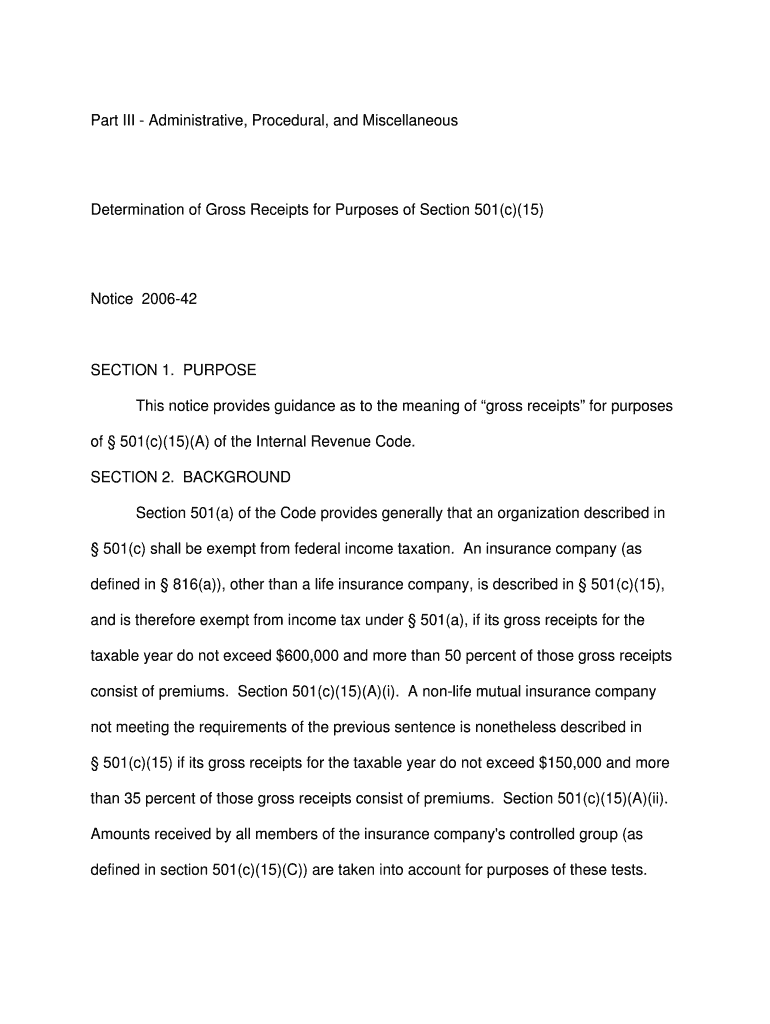
Gross receipts, as outlined in "This notice provides guidance as to the meaning of gross receipts for purposes," are critical for evaluating the tax obligations of non-life insurance companies under Section 501(c)(15) of the Internal Revenue Code. Gross receipts encompass the total revenue generated by a business, which include premium income and investment returns. However, specific exclusions apply, such as capital contributions. Comprehending these elements is essential for tax purposes, as gross receipts determine eligibility for tax exemption and compliance with legislative changes enacted in 2004.
Key Components of Gross Receipts
- Premium Income: Refers to the revenue collected from insurance policies.
- Investment Income: Includes dividends, interests, and other financial gains that contribute to gross receipts.
- Exclusions: Capital contributions and other non-revenue receipts that should not be factored into the total gross receipts.
These definitions help distinguish taxable income from exempt amounts, ensuring businesses remain compliant with federal tax laws.
How to Utilize the Notice
Understanding how to apply "This notice provides guidance as to the meaning of gross receipts for purposes" requires a thorough analysis of the income sources and exclusions. Businesses must accurately categorize all incoming funds to ascertain their tax responsibilities.
Practical Steps
- Gather Financial Records: Compile all income sources, including premiums and investments.
- Classify Exclusions: Clearly identify any exclusions, such as capital infusions, that do not contribute to gross receipts.
- Calculate Gross Receipts: Sum eligible revenue streams to determine the total gross receipts.
By following these steps, companies can accurately determine their compliance status and potential tax liabilities.
Who Typically Uses This Notice
The primary users of this notice are tax professionals and accountants handling non-life insurance companies. These entities must adhere to specific tax guidelines outlined in Section 501(c)(15).
Common Users
- Non-Life Insurance Companies: As the main subjects of this notice, their financial officers must ensure adherence to the defined criteria.
- Tax Consultants: Professionals providing compliance services to eligible firms.
These users leverage the guidance to verify their clients remain compliant with changing tax laws.


IRS Guidelines on Gross Receipts
The Internal Revenue Service (IRS) mandates that gross receipts follow specific reporting guidelines, ensuring accuracy and compliance with tax laws. According to the IRS, entities must quantify gross receipts precisely to uphold tax exemption benefits.
Compliance Areas
- Legislative Alignment: Ensure practices follow 2004 legislative amendments.
- Documentation: Maintain detailed records of all income and exclusions.
Abiding by these guidelines is imperative for avoiding penalties and securing exemptions.
Important Documents Required
To accurately apply this notice, businesses must prepare several essential documents. These records provide a foundation for calculating gross receipts and demonstrate compliance during audits.
Required Documentation
- Financial Statements: Comprehensive account of all income and expenditures.
- Premium and Investment Schedules: Detailed breakdown of all revenue-generating activities.
Having these documents ready aids in accurate calculation and simplifies IRS reporting and review processes.
State-Specific Rules for Gross Receipts
While the federal guidelines provide the main framework, specific states may impose additional rules impacting gross receipts calculations. Businesses must be aware of these variations to ensure full compliance.
Notable Differences
- Variations in Deductions: Some states may allow different deductions from gross receipts.
- Additional Filing Requirements: States might require supplementary documentation or declarations.
Understanding these nuances helps firms align their practices with both federal and state regulations.
Digital vs. Paper Version of the Document
Organizations can choose between digital and paper versions of documents related to gross receipts guidance. Each format offers unique advantages depending on user needs.
Format Comparisons
- Digital Format: Offers easy sharing and better integration with accounting software like QuickBooks.
- Paper Format: Useful for those requiring physical documentation for detailed audits or reviews.
Selecting the appropriate format enhances efficiency in handling the guidance notice and the associated calculations.
Business Types Benefiting Most from the Notice
The notice is especially beneficial for non-life insurance companies. However, other business types may also use this procedure to streamline their tax obligations if exempt under similar legislative categories.
Key Beneficiaries
- Corporations: Especially those eligible for tax exemption under Section 501(c)(15).
- Partnerships and LLCs: Potential use if conditions align, benefiting from a clear understanding of gross receipts.
By applying the notice effectively, eligible businesses can optimize tax savings and ensure legal compliance.




